




Classical Academic Nude Art
Classical academic nude art captures the human form through rigorous traditional training, offering collectors timeless studies in anatomy and mythological narrative.
Classical Academic Nude Art
Classical academic nude art represents traditional figure studies and mythological compositions rooted in rigorous institutional training. Buyers seeking classical academic nude art will find works spanning the eighteenth century through the mid-twentieth century, encompassing both British and continental European schools.
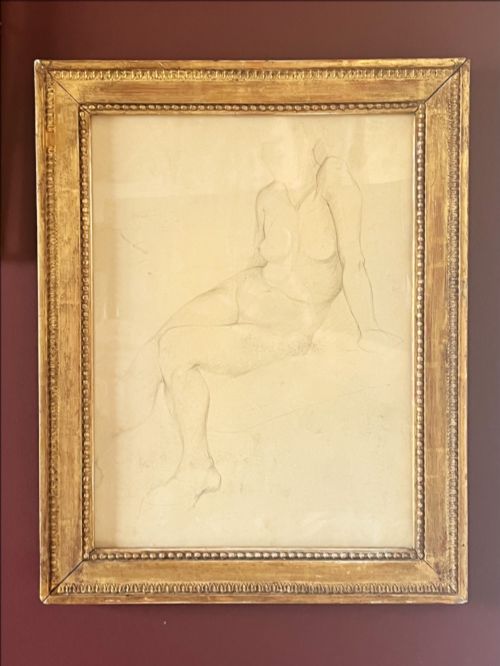
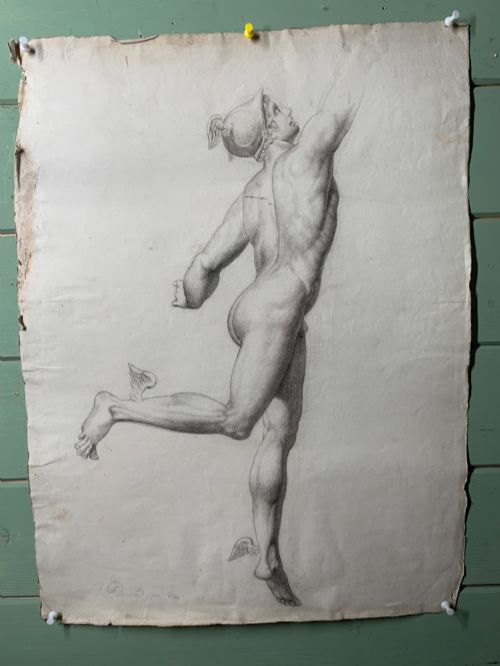
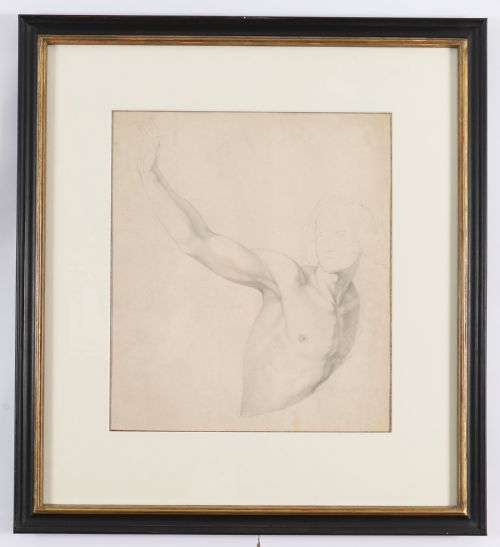
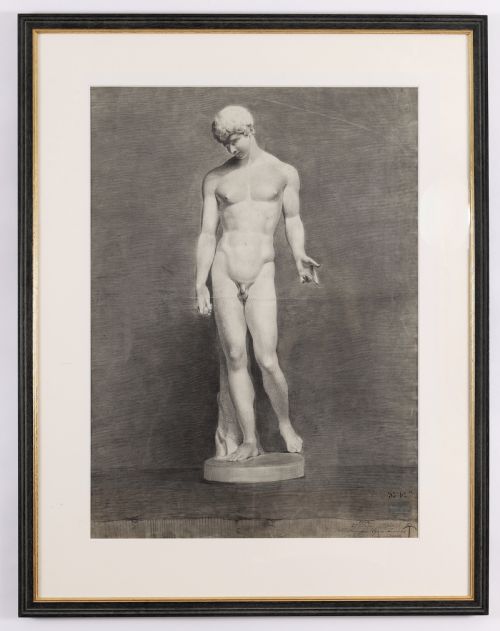
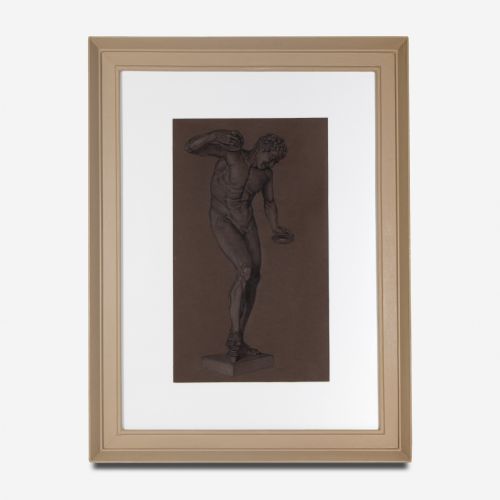
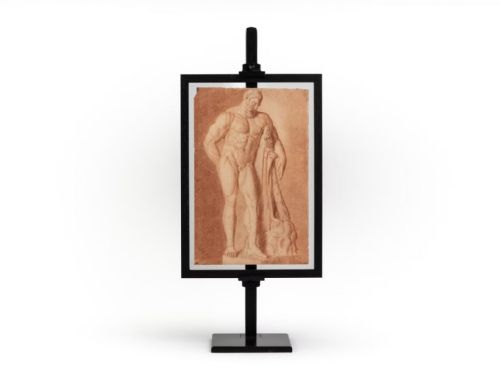
The selections on this page range from detailed graphite and red chalk drawings to oil paintings on panel and bronze sculptures. Subjects frequently draw upon classical mythology, depicting figures such as Hermes, Hercules, and Ariadne.
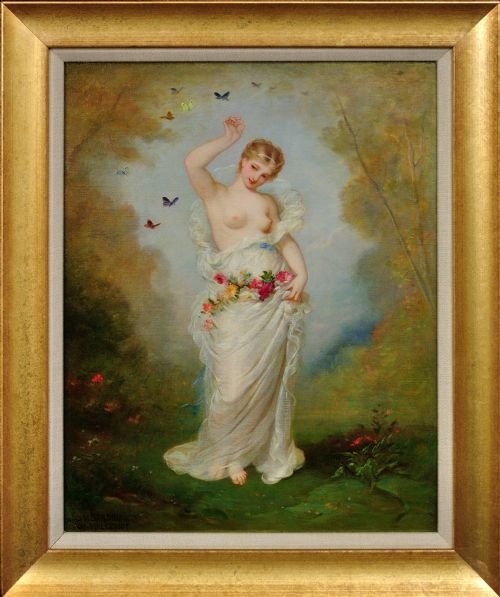
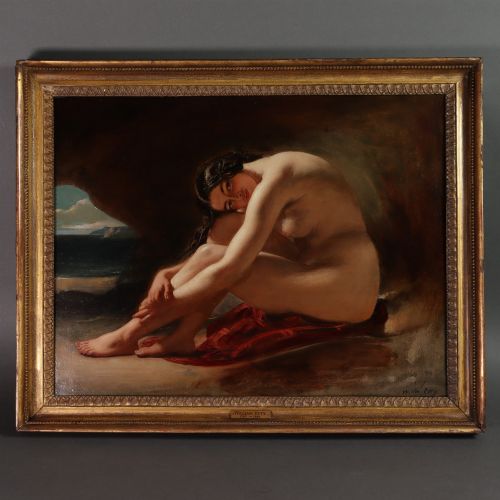
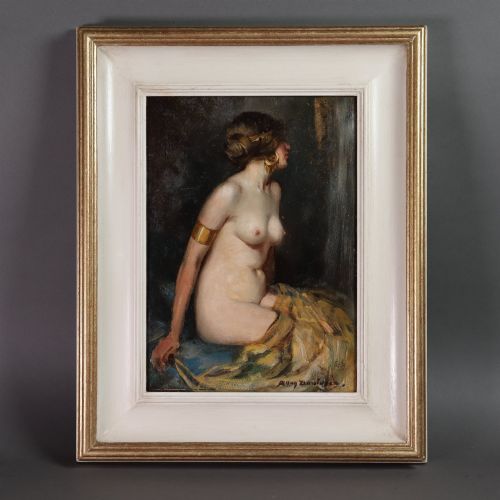
Drawings and framed works dominate the available selection, often preserved in antique gilt wooden frames. These pieces reflect the standard curriculum of European academies where the naked human form served as the primary test of artistic skill.
Materials and Technique
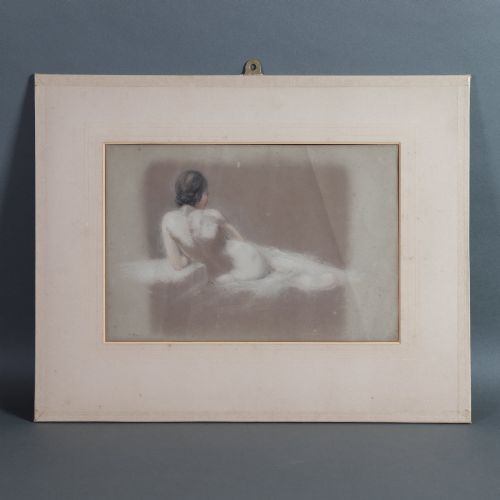
Artists relied on paper, canvas, and wooden panels as supports for their compositions. Graphite, charcoal, and red chalk enabled precise tonal gradations and careful rendering of musculature in preparatory life studies.
Oil paint and mixed media allowed painters to build rich colour harmonies and luminous flesh tones in finished canvases. Sculptors utilised bronze cast with fine detail to capture the contours of the human body in three dimensions.
Framing materials typically included carved wood, frequently finished with gilt. These traditional mountings protect fragile works on paper while complementing the formal presentation of the academic tradition.
Some eighteenth-century Italian drawings display spirited figure studies on both the front and back, offering two artworks for the price of one.
Assessing Quality and Execution
Quality rests upon the artist's command of human anatomy, proportion, and tonal depth. Superior examples demonstrate confident line work and subtle understanding of light falling across muscle and bone.
The handling of materials distinguishes accomplished execution from routine practice, particularly in the blending of chalk or the application of oil glazes. Finished oil paintings and signed works by established academic painters occupy the upper tier of the range.
Condition and preservation of the original support significantly influence the standing of any piece. Works retaining their period frames and untouched surfaces offer greater historical integrity.
William Etty·André Charles Voillemot·Henry Arthur Roberts·Allan Douglas Davidson·James Clark·William Edward Frost·Arthur Hacker·Fernand Jean Barbier
The Classical Academic Nude Art Glossary
- Academic Realism
- A style of painting and sculpture produced under the influence of European academies of art. It combines neoclassical idealism with realistic observation of the human model.
- Red Chalk
- A brownish-red drawing material made from iron-rich haematite. Artists utilised it extensively for life studies due to its capacity for subtle shading.
- Recto and Verso
- Terms denoting the front and back of a sheet of paper or panel. Works sometimes feature drawings on both sides.
- Neoclassical
- A Western cultural movement drawing inspiration from the art and culture of classical antiquity. It emphasises proportion, clarity, and restrained emotion.
- Life Study
- A work of art executed directly from a live model. These studies formed the core of academic training.
Classical Academic Nude Art: Frequently Asked Questions
What is classical academic nude art?
Classical academic nude art comprises drawings, paintings, and sculptures created within traditional European academy systems. These works focus on the human form as the ultimate test of draughtsmanship and composition.
Subjects often derive from classical mythology and history, rendered with strict attention to anatomical accuracy and proportion.
How were these art pieces originally used?
Artists produced life studies and academic drawings as part of their rigorous institutional training or as preparatory steps for larger history paintings. Submitting such works was essential for competitions like the Prix de Rome.
Finished paintings and bronze figures were also created for exhibition and private collection among wealthy patrons of the arts.
How do I date these artworks?
Dating relies on inscribed dates, signature styles, and the historical period of the school or academy associated with the piece. Costumes, framing styles, and the specific type of paper or medium also provide chronological clues.
Nineteenth-century pieces frequently exhibit the characteristic romantic or classical revival traits popular during that era.
How should I display academic art at home?
Academic drawings on paper require conservation-grade framing with UV-protective glass to prevent fading from light exposure. Hanging them in rooms with stable temperature and humidity preserves both the paper support and the antique gilt frames.
Bronze sculptures and oil paintings benefit from stable placement away from direct heat sources and strong sunlight.