
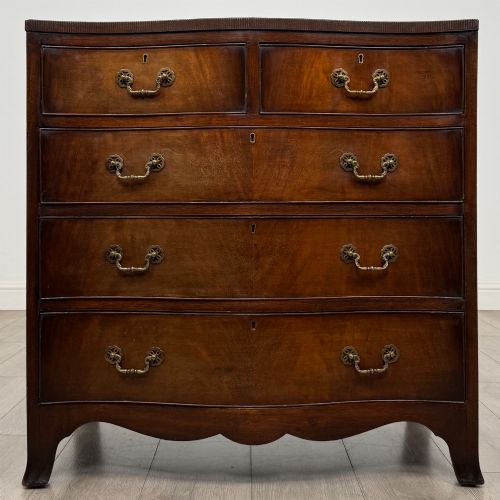
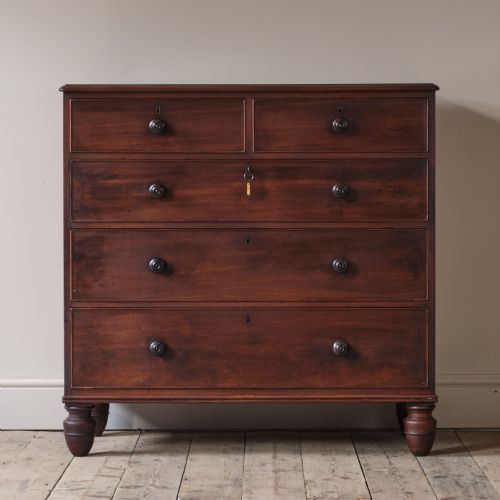
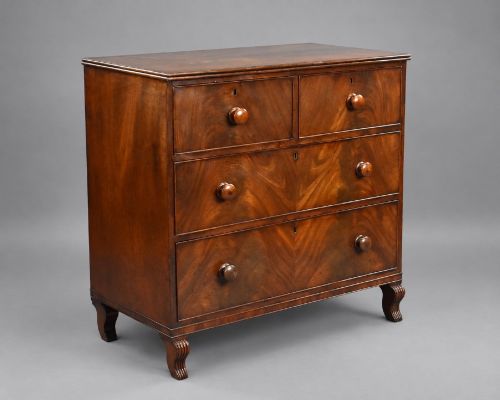
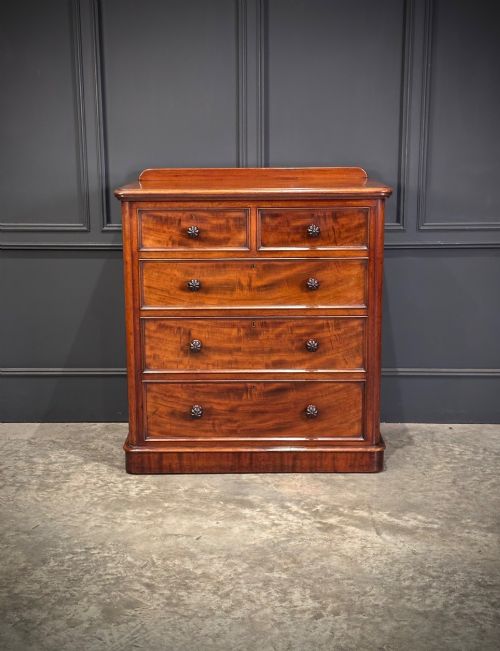
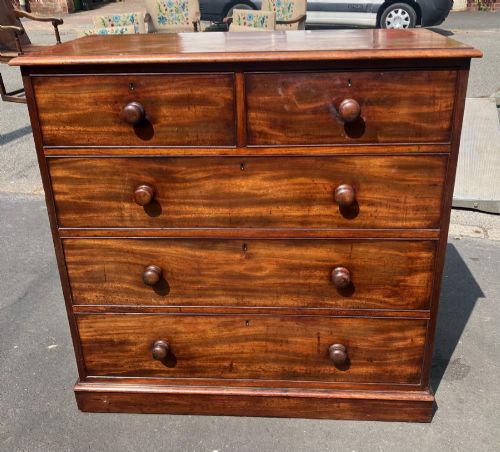
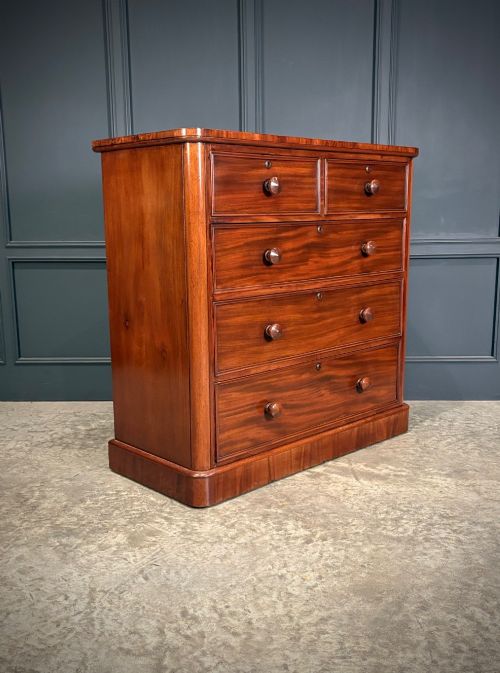
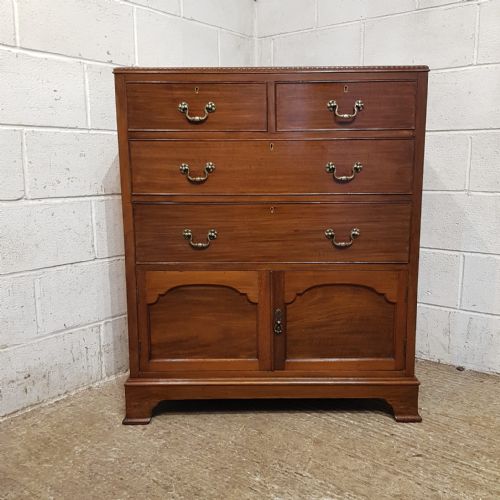
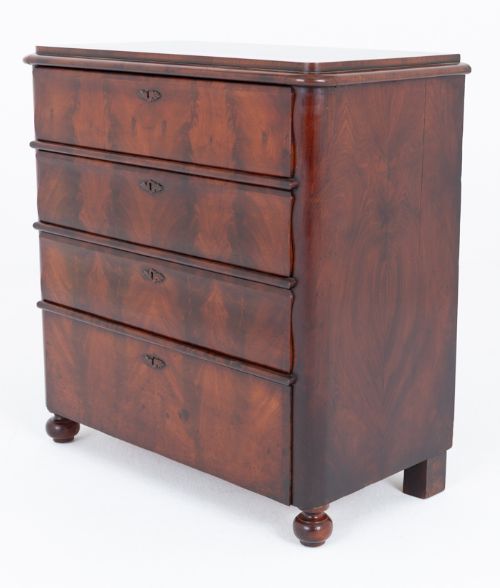
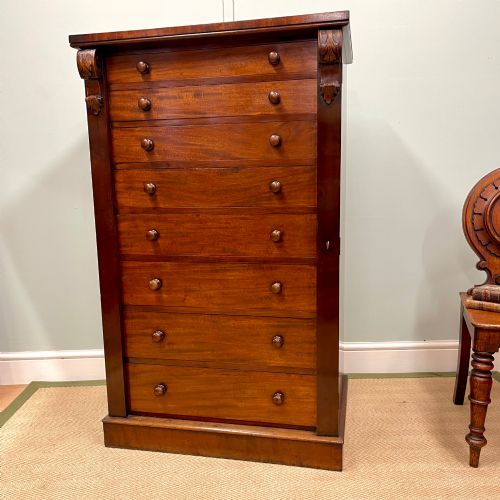
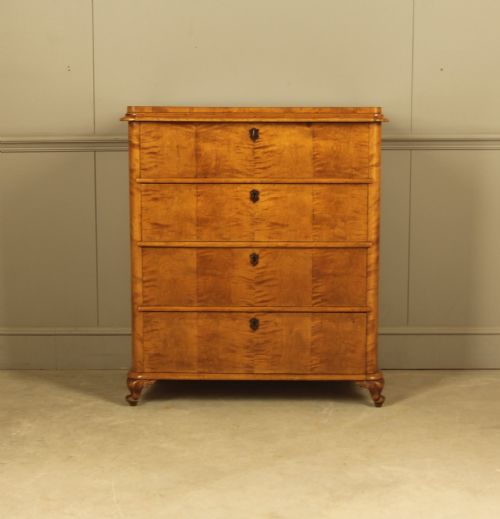
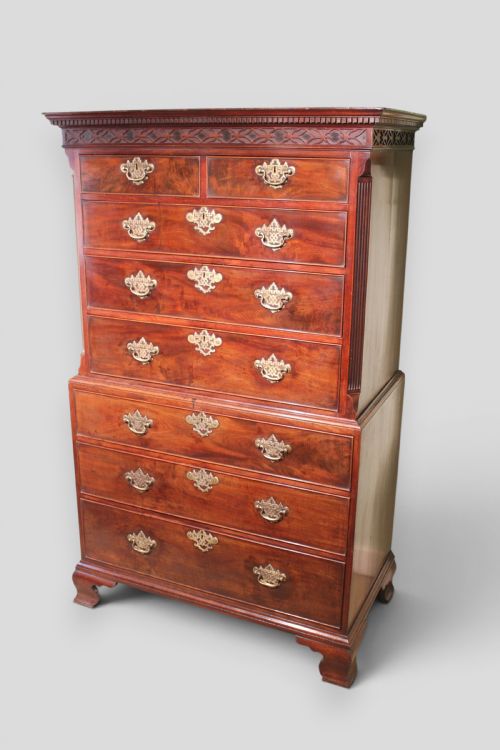

Classic Tallboy Drawers
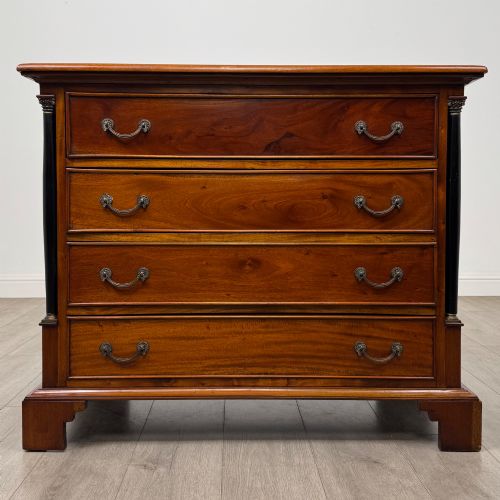
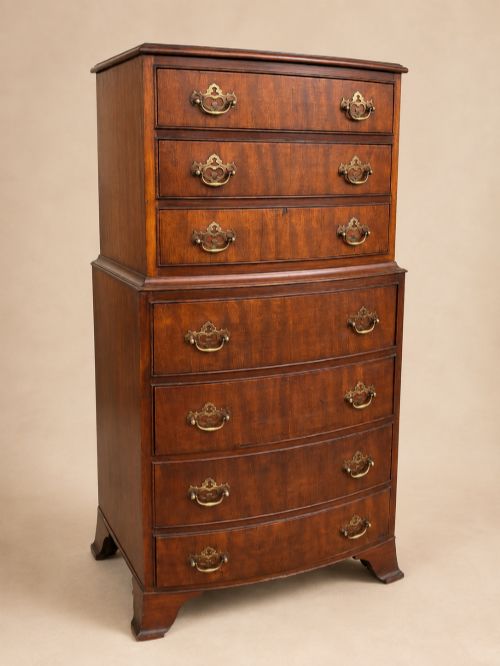
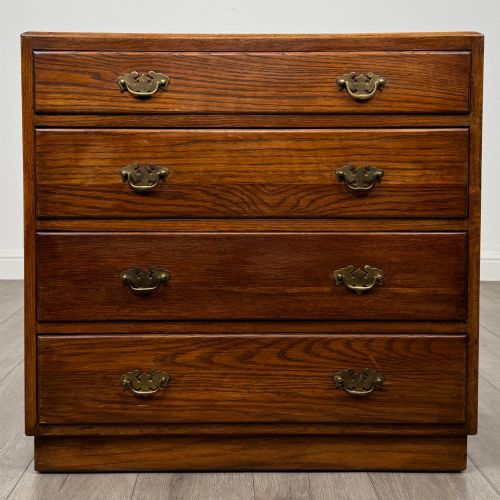
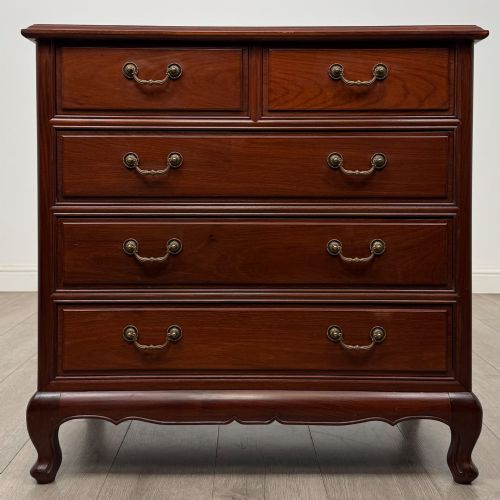
Classic tallboy drawers offer vertical storage and architectural presence, combining generous drawer capacity with a compact footprint that suits historic and modern interiors alike.
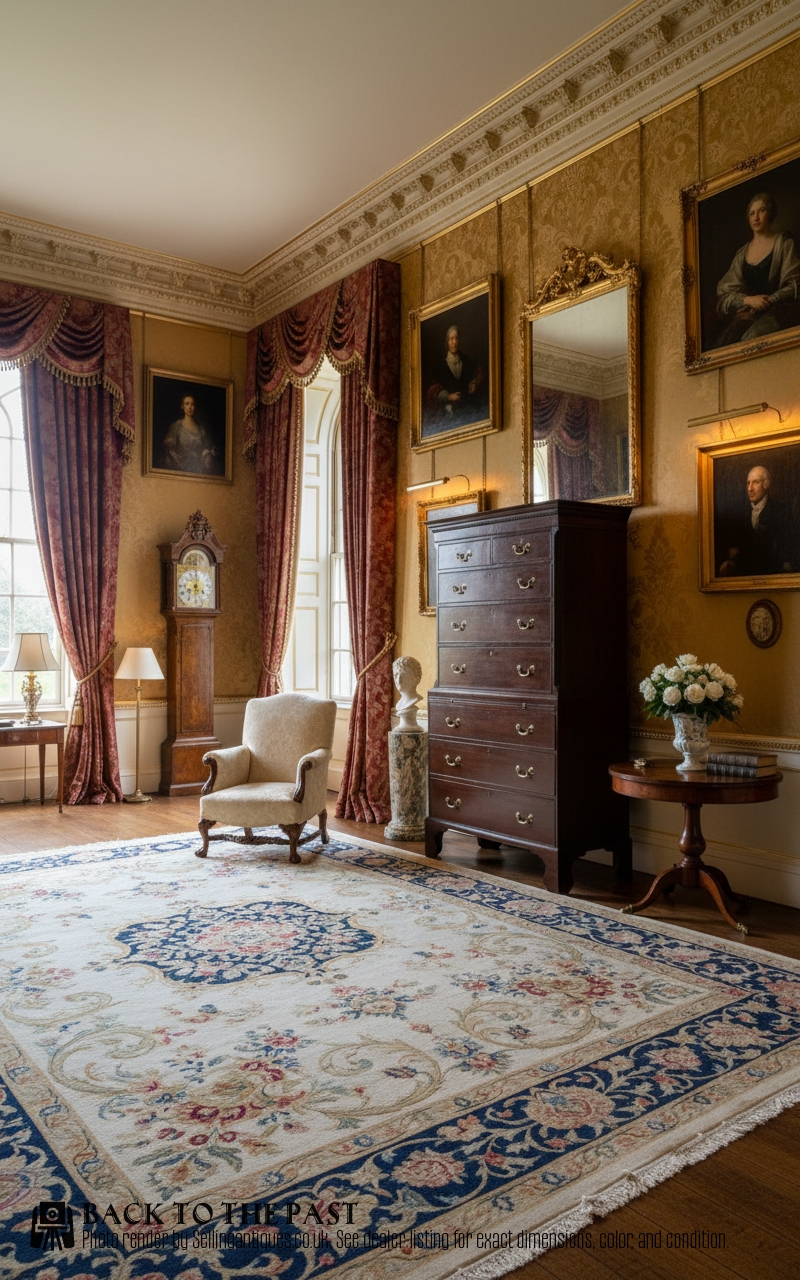
Classic Tallboy Drawers
When searching for classic tallboy drawers, buyers encounter substantial chests built to maximise storage while occupying minimal floor space in domestic interiors. The pieces on this page span several centuries, with particular emphasis on Georgian, Victorian, and Edwardian periods.
Most examples take the form of tall chests of drawers, chests on chests, or secretaire chests rising vertically. Mahogany dominates the selection, often enriched with flame veneer or complemented by walnut, oak, pine, and flame birch.
Makers and cabinetmakers from the Georgian era through to the twentieth century utilised traditional timber framing to construct these tall storage units. Regional variations and revivalist movements such as Queen Anne style and Biedermeier appear frequently among the listings.
Distinguishing quality in tall chests
Superior examples display careful timber selection, where flame veneers are matched symmetrically across drawer fronts to create harmonious patterns. Lesser pieces rely on plain sawn boards without deliberate grain alignment or veneer bookmatching.
The refinement of internal drawer construction separates standard workshop production from finer cabinet work. Smooth operation, tight dovetail joints, and original brass hardware indicate higher initial manufacture.
Form variations range from standard chests of drawers and secretaire cabinets to double-body chests on stands and chests on chests.
T & G Seddon·C Hindley
The Classic Tallboy Drawers Glossary
- Tallboy
- A tall chest of drawers, often constructed as one chest sitting atop another chest of similar width. This form emerged to provide extensive storage without taking up excess floor space.
- Chest on chest
- A two-part tallboy where a smaller upper chest rests on a larger lower chest. This construction method made heavy furniture easier to transport up staircases.
- Secretaire chest
- A chest of drawers featuring a fitted top drawer that folds down to reveal a writing surface and small compartments. It combines the functions of a bureau and a tall storage chest.
- Flame mahogany
- A veneer cut from the fork of a mahogany tree where the branches join the trunk. This cutting method produces a distinctive flickering flame pattern across the wood surface.
- Dovetail joint
- A traditional interlocking woodworking joint used to secure drawer corners. Fine, closely spaced pins indicate skilled hand craftsmanship.
Classic Tallboy Drawers: Frequently Asked Questions
What is the difference between a tallboy and a standard chest of drawers?
A tallboy typically rises higher than a standard chest by stacking storage units vertically, often in a chest-on-chest configuration. This design provides maximum drawer capacity while maintaining a narrow floor footprint.
Such pieces suit rooms where horizontal wall space is limited but vertical height allows for tall furniture arrangements.
How do I identify a Georgian tallboy?
Georgian tallboys often feature solid mahogany or flame mahogany veneer, complemented by period brass drop handles and bracket feet or shaped bases. Their proportions reflect eighteenth-century design canons, emphasising architectural cornices and balanced drawer arrangements.
Interior construction typically reveals hand-cut dovetailing in secondary timbers such as oak or pine.
Where were tallboy drawers placed in historic homes?
Historically, tall storage chests found placement in bedchambers and dressing rooms to hold linens, garments, and personal accessories. Their vertical orientation kept floor space clear for movement in smaller rooms.
Today, they adapt readily to bedrooms, hallways, and living spaces needing structured vertical storage.
What timber types are most common in these pieces?
Mahogany is the predominant timber found across these listings, frequently enhanced with flame mahogany veneer for decorative effect. Other encountered woods include walnut, oak, pine, and exotic flame birch.
Internal framing and drawer linings often utilise secondary softwoods or oak depending on the workshop origin.