


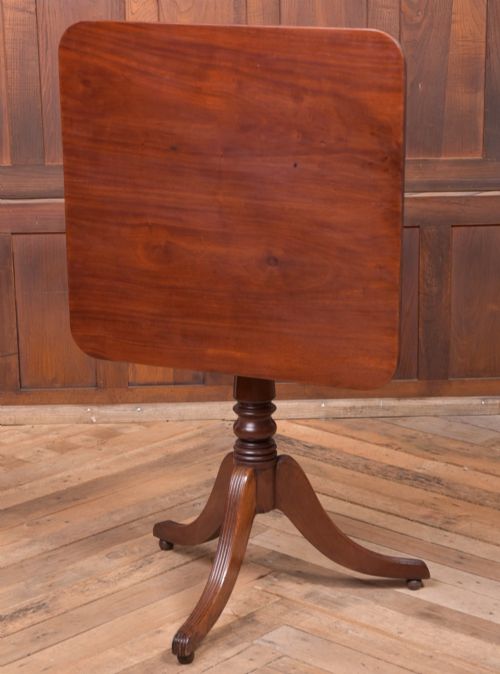


Classic Georgian Occasional Table
These classic georgian occasional table pieces offer compact surfaces and warm timber tones, giving any room a refined focal point.
Classic Georgian Occasional Table
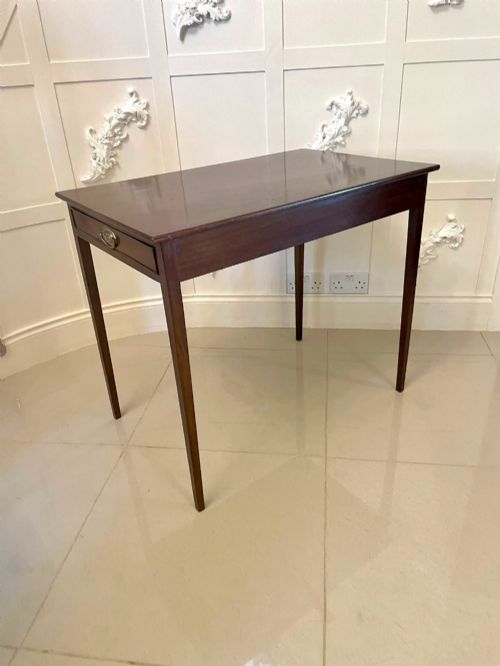
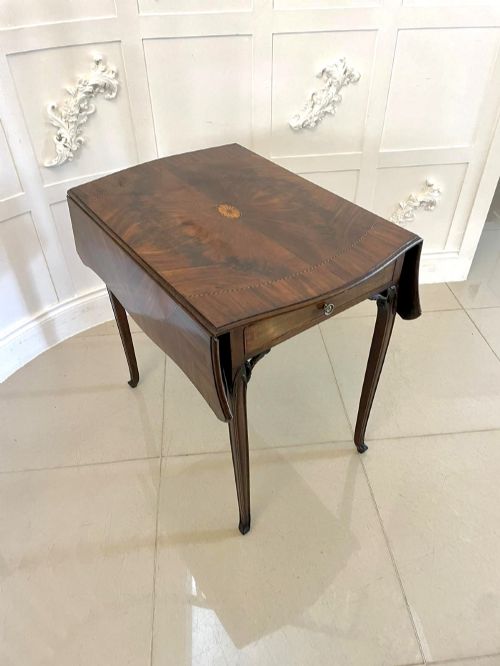
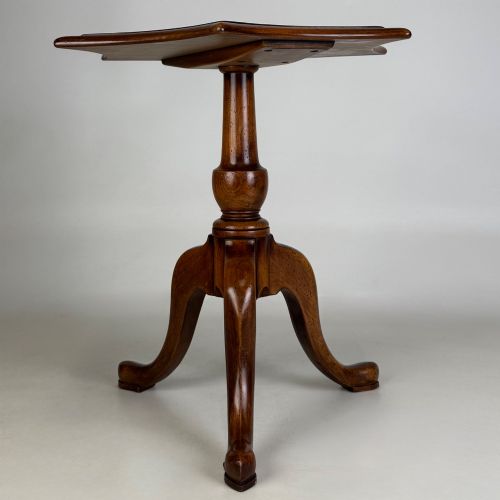
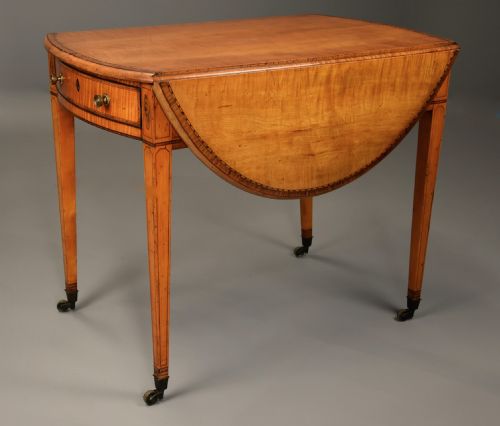
A classic georgian occasional table brings compact surface utility and refined timber grain to a room, appearing most frequently as a drop-leaf pembroke or a freestanding tripod design. The selection on this page spans distinct forms from the eighteenth century onwards, including side tables, nests of four tables, and plant stands.
Buyers encounter genuine period examples alongside later revivals from the Victorian and Edwardian eras. Mahogany dominates the forms, accompanied by walnut, satinwood, and sycamore timbers.
How they were made
Cabinetmakers constructed these tables using solid timbers and veneers, deploying mahogany as the primary wood alongside decorative highlights in satinwood and sycamore. Joinery techniques included dovetailing for drawers and mortise and tenon joints for frames.
Surface enhancement involved careful polishing to bring out the natural grain, occasionally complemented by delicate inlay work and brass fittings such as castors or tea caddy hardware.
One clever pembroke incorporates a tea caddy interior, keeping hospitality supplies hidden inside the occasional table.
What varies in quality
The distinction between tiers rests upon timber selection and the crispness of secondary details like stringing and inlay. Tables featuring figured veneers, such as fiddleback sycamore or rich mahogany, command attention through depth of grain.
Proportion and structural integrity dictate the upper echelon of these pieces, where balanced tripod legs or smooth-operating drop leaves indicate skilled craftsmanship from the workshop.
The Classic Georgian Occasional Table Glossary
- Pembroke table
- A small occasional table featuring two hinged drop leaves on opposing sides, often fitted with a single drawer.
- Tripod table
- A small freestanding table supported by a central pillar resting on three spreading feet.
- Snap top table
- A table designed with a hinged top that tilts into a vertical position when not in use.
- Quartetto nest
- A graduated set of four small tables that slide beneath one another to save space.
- Fiddleback sycamore
- A figured variety of sycamore wood displaying a wavy, undulating grain pattern resembling the back of a violin.
Classic Georgian Occasional Table: Frequently Asked Questions
What is a Pembroke table used for?
A Pembroke table served historically as a light, moveable writing or breakfast table, adapting easily to different rooms through its folding leaves.
Today, the drop leaves allow the piece to sit compactly against a wall or expand when extra surface area is required.
How do I identify a George III table?
George III pieces date from the reign spanning the late eighteenth to early nineteenth century, displaying characteristic restraint in their ornamentation.
Look for quality mahogany construction, subtle brass hardware, and classical proportions rather than heavy Victorian carving.
Where should I place an occasional table?
These tables suit smaller spaces where a full-sized desk or dining table would overwhelm the floor plan.
Position them beside seating areas to hold lamps, books, or decorative objects without cluttering the room.
What is a nest of tables?
A nest comprises multiple tables of decreasing dimensions designed to stack neatly within the footprint of the largest piece.
Victorian and Edwardian makers popularised these sets for entertaining, allowing hosts to deploy extra surfaces quickly.