




Classic French Desk Light
A classic French desk light brings practical task illumination and continental elegance to a study, blending heavy metals with painted shades.
Classic French Desk Light
A classic French desk light is primarily represented here by bouillotte lamps, candlestick lamps, and dual chamber stick forms designed for working surfaces. These pieces emerge predominantly from the nineteenth century through the early twentieth century, spanning periods such as 1890, 1900, 1920, and 1930.
The aesthetic vocabulary draws heavily from historical French design, including French Empire, Louis XV style, Art Deco, Neoclassical, and Rococo Revival. Buyers will frequently encounter pairs as well as single examples configured for modern electrical use.
Origins remain anchored in French workshops and studios, utilising established regional forms like the adjustable shade bouillotte or the column lamp. These objects combine historical lighting mechanisms with desk-friendly proportions.
Materials and construction
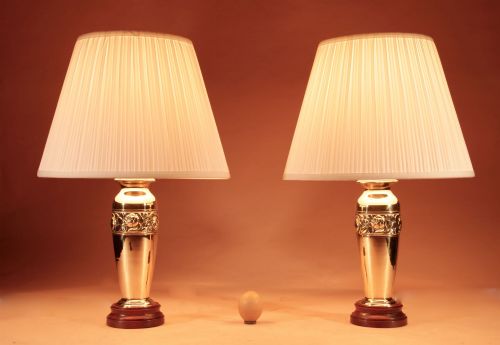
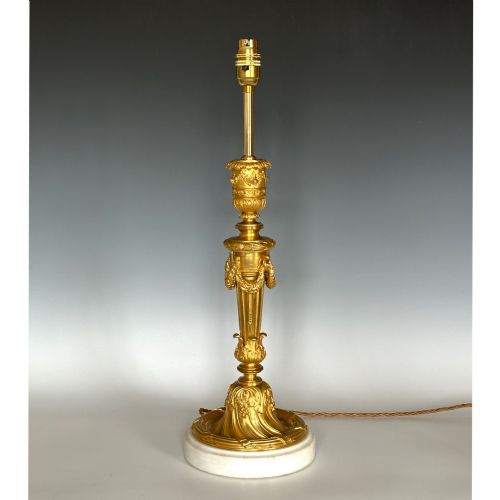
Construction relies on cast and turned metals, notably brass, bronze, gilt bronze, and ormolu, often paired with contrasting bases of marble or porcelain. Metal components provide structural weight and durability for daily desk use.
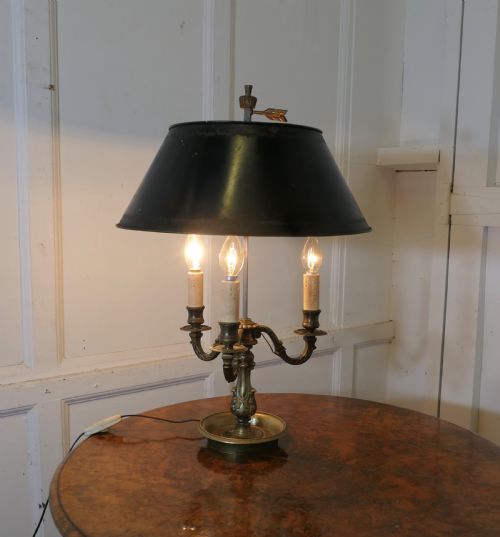
Painted toleware forms the characteristic adjustable shades on bouillotte lamps, offering targeted light control. Surface enrichment includes hand-painted porcelain panels and detailed bronze statuary figures such as putti and cherubs.
Bronze cherubs occasionally find themselves holding up the modern working world.
Assessing craftsmanship
Superior examples display crisp chasing and high relief in bronze and ormolu castings, whereas simpler pieces show softer surface details. The integration of materials, such as the precise fitting of marble bases and porcelain columns, separates standard production from finer studio work.
Original painted decoration on toleware shades and hand-painted porcelain retains greater distinction when executed with fine brushwork and layered pigments. The heft of the brass components and the structural integrity of converted candelabra also indicate higher grade manufacturing.
Aug. Moreau
The Classic French Desk Light Glossary
- Bouillotte lamp
- A traditional desk or table lamp featuring a central shaft, multiple candle arms, and a central adjustable painted metal shade. The shade slides up and down on a vertical rod to direct light across a gaming or writing surface.
- Ormolu
- Finely chased and gilt bronze mounted on decorative objects and lighting. The technique involves applying a gold amalgam to a bronze base.
- Toleware
- Lacquered or painted sheet metal used extensively for lamp shades and canisters. It provides a durable, matte surface that shields the eyes from glare.
- Porcelain de Paris
- A general term for porcelain produced by various independent workshops and factories in Paris during the eighteenth and nineteenth centuries. It is frequently incorporated into decorative lamp bases.
- Candelabra
- A branched candlestick holder designed to support multiple candles, frequently converted to electricity for use as a desk or table lamp.
Classic French Desk Light: Frequently Asked Questions
What is a bouillotte lamp?
A bouillotte lamp is a traditional desk light featuring a central upright shaft, multiple candle arms, and a sliding metal shade. This design was originally used for the card game bouillotte.
The adjustable shade allows the user to lower or raise the metal cover to direct light precisely where needed on a writing surface.
How do I date a French desk light?
Dating relies on stylistic clues, manufacturing techniques, and materials such as ormolu, toleware, and marble. Nineteenth-century pieces often feature heavier bronze casting and hand-finished details.
Twentieth-century examples transition toward cleaner Art Deco lines or simplified column forms while retaining traditional French motifs.
Were these lamps originally electric?
Many classic desk lights from the nineteenth century started as candleholders, oil lamps, or candelabra. These pieces were later converted to use electricity.
Converted items retain their original metalwork, patination, and structural forms while incorporating internal wiring for modern desk use.
What materials are typical for these lamps?
Common materials include cast brass, bronze, gilt bronze, and ormolu, frequently paired with marble bases or porcelain elements. Toleware is also standard for the adjustable shades.
These dense materials provide the necessary weight to keep the desk lamp stable during daily use.