



Classic Floor Standing Light
A classic floor standing light provides focused illumination and height, bringing character and period style directly to a living space.
Classic Floor Standing Light
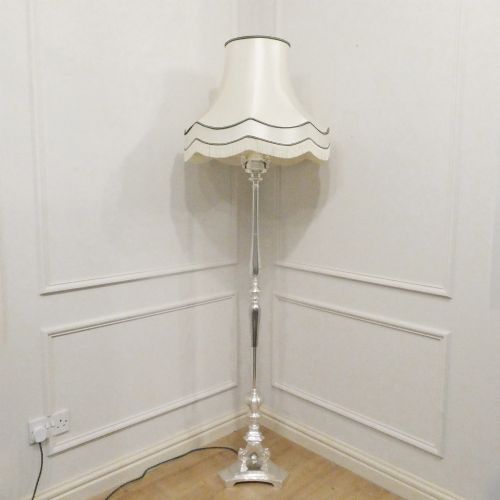
A classic floor standing light encompasses standard lamps and floor lamps spanning the Victorian, Edwardian, and early twentieth century periods. You will encounter various forms here, ranging from utilitarian brass standards to elaborate Italian Baroque giltwood columns.
The materials and styles reflect domestic lighting history, combining turned timber columns with adjustable metal mechanisms. Pieces frequently draw on Regency, Arts and Crafts, and French Chateau aesthetics to suit diverse interior settings.
Materials and construction methods
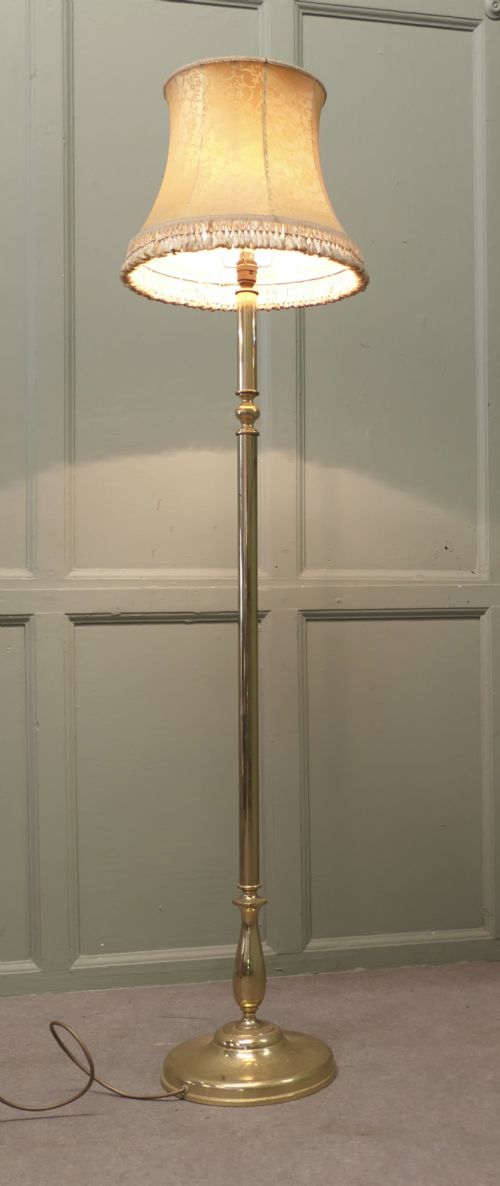
Makers utilised heavy brass and carved mahogany to construct stable vertical shafts, often incorporating telescopic mechanisms for height adjustment. Metal components were frequently cast, bronzed, or silver-plated to achieve a durable finish.
Giltwood and painted metal details appear on decorative continental designs, while shades utilise fabric and glass to diffuse the light. Turned wooden columns demonstrate traditional joinery techniques from the nineteenth and early twentieth centuries.
Several standards include telescopic stems, originally designed so families could lower the light while reading the evening paper.
Distinguishing quality in standards
The calibre of a standard lamp often rests on the weight and stability of its base, alongside the precision of any adjustable brass fittings. Solid timber turning and crisp metal casting separate utilitarian workshop output from more decorative examples.
The integrity of period wiring adaptations and the preservation of original glass or fabric shades contribute significantly to the overall integrity of the piece.
The Classic Floor Standing Light Glossary
- Standard lamp
- A tall floor-standing lighting fixture designed to illuminate a room from a raised height. These pieces often feature a central column supported by a weighted base.
- Bouillotte lamp
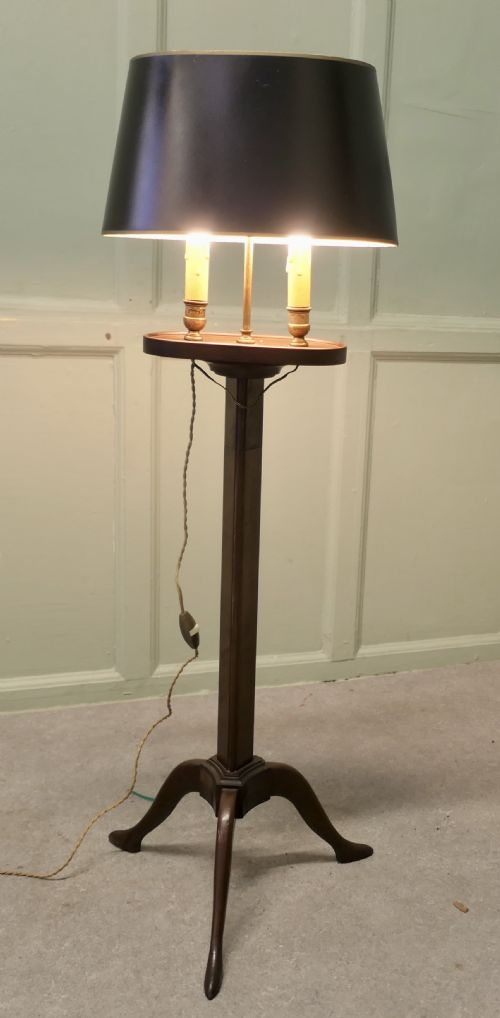
- A traditional lighting form featuring adjustable candles or bulbs shielded by a central shade. Originating in France, these pieces provide directed illumination for reading or desk work.
- Giltwood
- Timber treated with a thin layer of gold leaf or gold paint for decorative effect. This finish appears frequently on elaborate continental European pieces.
- Telescopic
- Describing a shaft mechanism that allows the height of the standard to be adjusted up and down. This functional adaptation permitted tailored lighting positions in period interiors.
Classic Floor Standing Light: Frequently Asked Questions
How do I date a brass standard lamp?
Dating relies on examining the casting techniques, base weight, and switch mechanisms integrated into the brass structure. Earlier nineteenth-century examples often feature heavy turned components, whereas 1920s pieces lean towards adjustable tripod frames.
Changes in domestic lighting technology from candles to electricity also help narrow down the period of manufacture.
Are these lamps suitable for modern bulbs?
Most standard lamps have been adapted over time to accommodate modern electrical standards and contemporary screw or bayonet bulbs. It remains prudent to check the internal wiring status upon acquisition.
Consulting a qualified electrician ensures the vintage brass or wooden standard operates safely within a modern home.
What is a bouillotte lamp used for?
Bouillotte lamps were traditionally utilised on card tables or desks to provide adjustable, focused light without glare. The central shade could be lowered as the candles burned down.
Today, they serve as versatile reading lights that bring a distinct French aesthetic to corners or side tables.
How do I care for a giltwood floor lamp?
Giltwood surfaces require gentle dusting with a soft, dry cloth to protect the delicate gold leaf finish from abrasion. Moisture and chemical cleaners should be avoided entirely.
Placing the lamp away from direct heat sources prevents the timber substrate from warping and the gesso from cracking.