




Classic Executive Writing Table
A classic executive writing table anchors a room with presence, offering a practical workspace shaped by Victorian, Edwardian and Georgian Revival traditions.
Classic Executive Writing Table
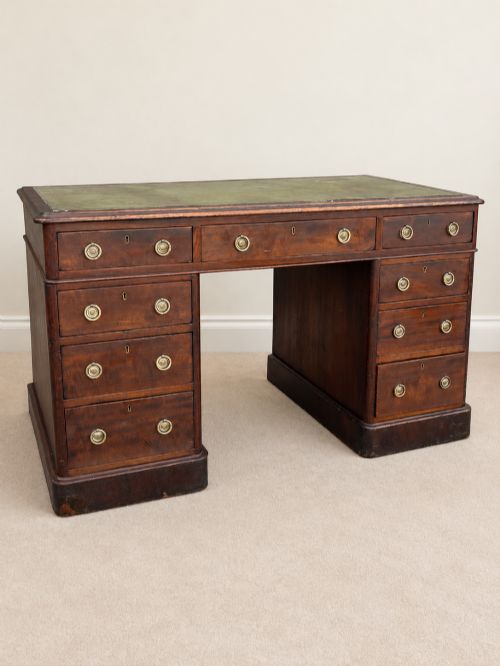
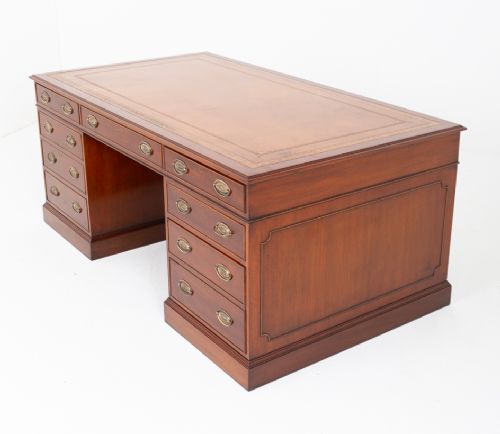
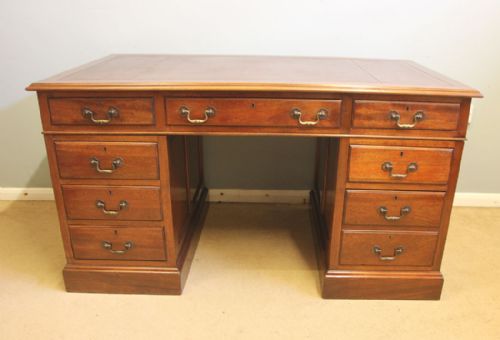
A classic executive writing table takes the form of a pedestal desk or partners desk designed for grand studies and libraries. These pieces provide substantial surface area atop twin pedestals containing banks of drawers for storage.
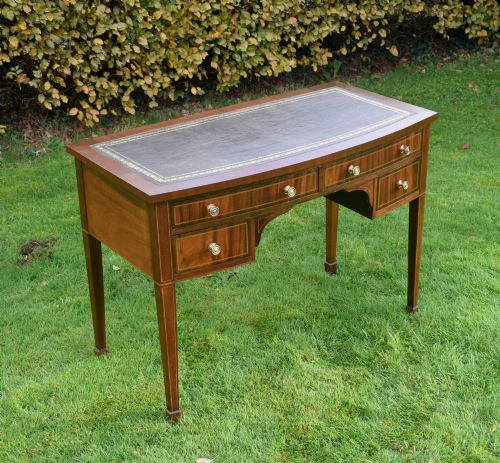
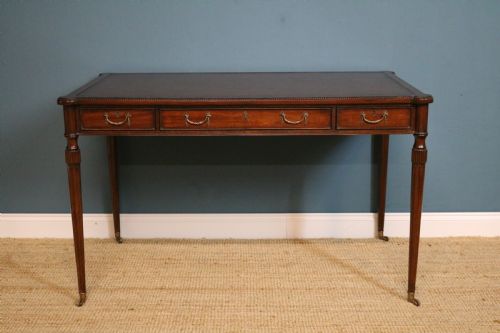
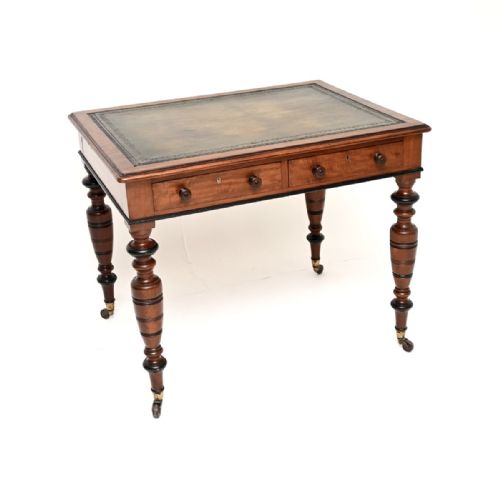
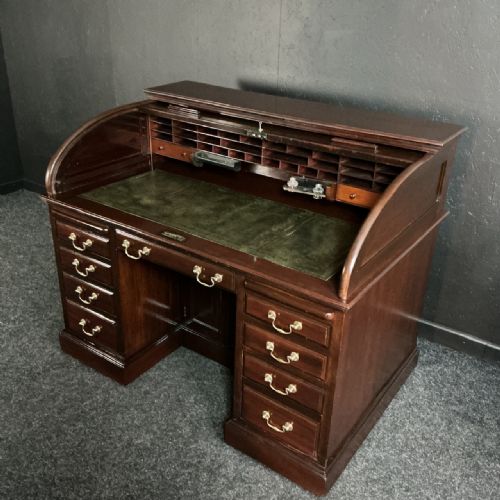
The pieces on this page span the Victorian and Edwardian eras alongside later Georgian Revival and Chippendale style interpretations. Mahogany and burr walnut dominate the forms, frequently fitted with inset leather writing surfaces.
Makers such as Maple and Co produced substantial burr walnut examples, while regional workshops turned out pedestal desks in golden oak and flame mahogany veneer. Buyers encounter everything from round cornered late Victorian proportions to French Louis XV style bureau plat designs.
Materials and construction methods
Cabinet makers utilised solid mahogany, oak and walnut for the primary carcases, often applying flame mahogany or burr walnut veneers to display rich grain patterns. Secondary timbers such as pine or oak lined the interior drawer boxes.
Worksurfaces typically incorporated inset tooled leather writing panels, bordered by blind tooling or gilt decoration. Brass handles, escutcheons and sometimes ormolu mounts finished the drawers and corners of more elaborate forms.
Classic Executive Writing Table Retail Price Guide 2026
Typical asking prices for classic executive writing table among the pieces listed under this phrase on Sellingantiques today, from the lower quarter to the upper quarter. They describe what is for sale here now, not the wider market.
Listings feature pedestal desks spanning the nineteenth century through the Edwardian period, utilising mahogany, burr walnut and oak.
Distinctions in quality
The grade of timber selection sets apart standard utility furniture from finer commissions. Pieces featuring carefully matched flame mahogany veneer or burr walnut display a higher level of artisan consideration than plain stock.
Hardware and secondary details reveal the original maker's intent. Heavy cast brass drawer furniture, finely cut dovetails on drawer linings and well executed carving in Chippendale or Sheraton Revival styles mark out superior examples.
Maple and Co
The Classic Executive Writing Table Glossary
- Pedestal desk
- A heavy freestanding desk comprising two separate drawer pedestals supporting a single top. It provides generous storage on both sides or a kneehole space on one.
- Partners desk
- A large double sided pedestal desk designed for two people to work opposite one another. Drawers and cupboards are duplicated on both long sides.
- Bureau plat
- A flat topped freestanding writing table developed in France during the eighteenth century. It usually stands on slender cabriole legs rather than pedestals.
- Ormolu
- Gilded bronze ornamentation applied to furniture mounts. It appears on French influenced desks of the nineteenth century.
- Escutcheon
- A protective metal plate surrounding a keyhole. Better examples are cast in brass and fitted flush into the wood.
Classic Executive Writing Table: Frequently Asked Questions
What is a classic executive writing table?
A classic executive writing table is a large pedestal or partners desk designed for private studies and offices. These pieces combine a spacious writing surface with extensive drawer storage built into twin pedestals.
They reflect periods such as the Victorian and Edwardian eras, alongside revival styles drawing on Georgian and Chippendale aesthetics.
What wood types are common on these desks?
Mahogany is the primary timber found across these listings, appearing in solid form or as flame mahogany veneer. Burr walnut and golden oak also feature prominently alongside decorative additions like ormolu mounts and brass hardware.
Many surfaces incorporate inset leather panels for writing.
How should I care for the leather top?
The leather writing surface benefits from occasional dusting and treatment with appropriate leather balms to prevent drying and cracking. Avoid using harsh chemical cleaners that can strip the gilt tooling.
Keep the timber frames conditioned with beeswax to nourish the polished mahogany or walnut finish.
How do I identify a Georgian Revival desk?
Georgian Revival desks date from later periods like the early twentieth century but copy the proportions, carvings and bracket feet of eighteenth century furniture. They utilise older styles of mahogany and hardware while maintaining the cleaner structural integrity of their manufacturing era.
Look for classic proportions combined with the crisp joinery typical of Edwardian and interwar workshops.