


Classic Column Reading Lamp
These classic column reading lamp designs bring sturdy proportions and functional height to a room, offering focused illumination with traditional architectural presence.
Classic Column Reading Lamp
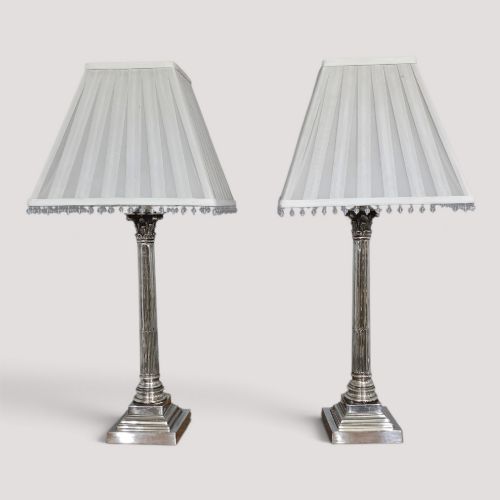
When you search for a classic column reading lamp, you encounter upright lighting fixtures rooted in architectural forms from the nineteenth and early twentieth centuries. These pieces appear in periods ranging from Victorian and Edwardian to the 1920s and 1930s, taking the shape of table lamps, floor lamps, and standard lamps.
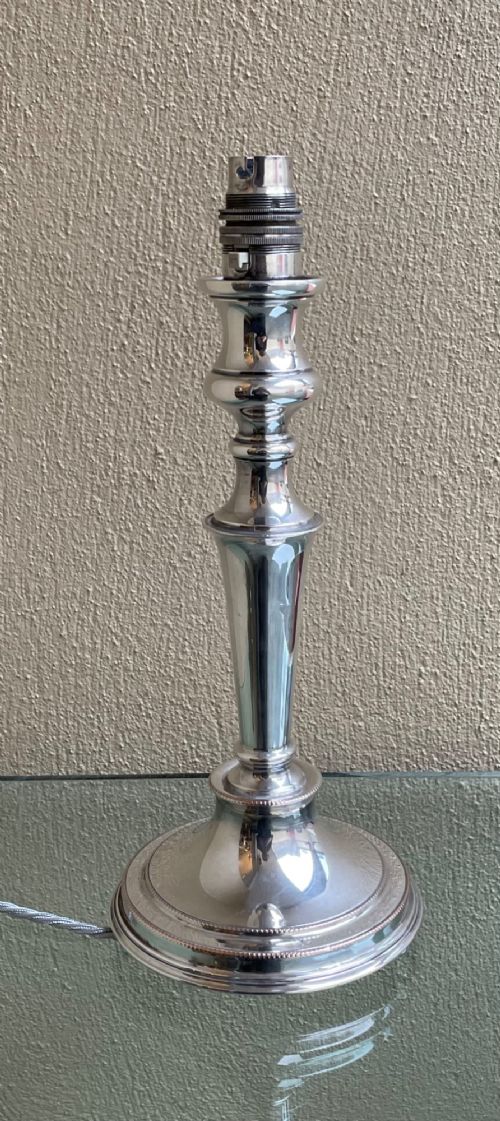
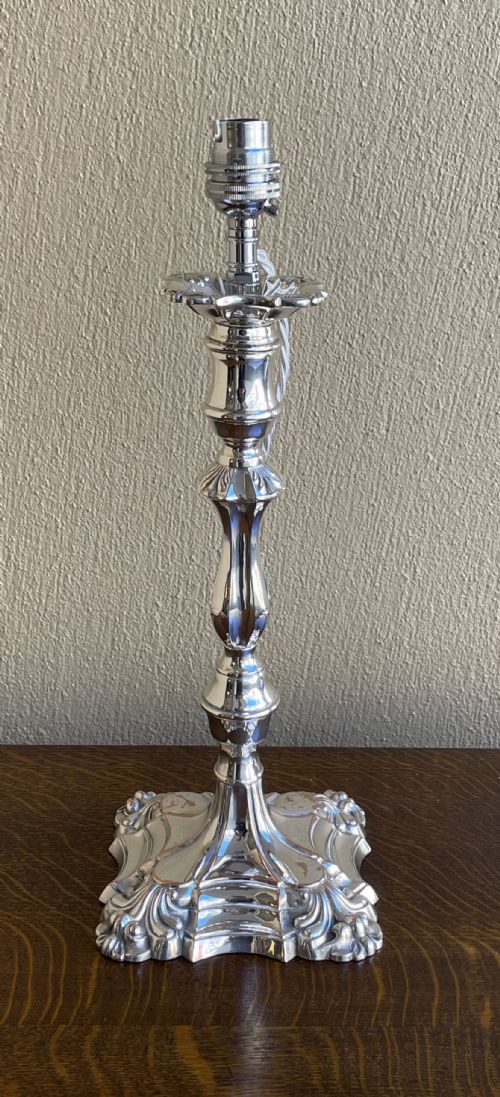
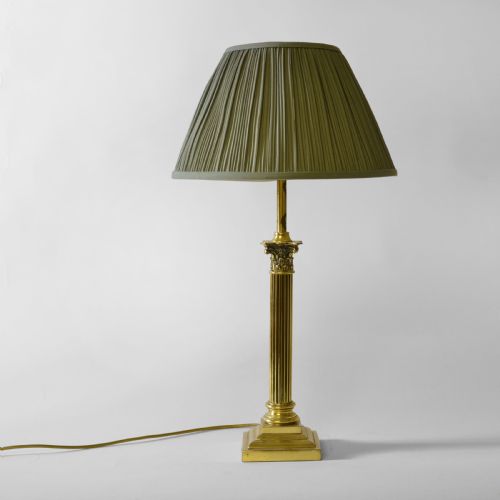
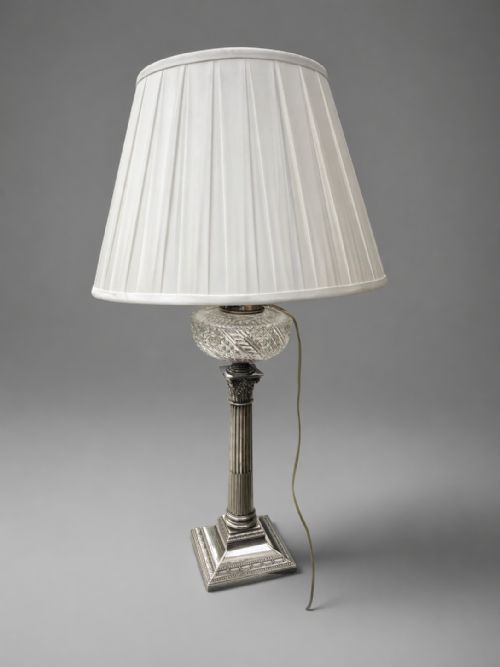
The most common versions on this page are constructed from brass or silver plate, often drawing on Neoclassical or Corinthian column motifs. Standard lamps and floor lamps provide height for reading beside a chair, whilst table lamps sit lower on desks and sideboards.
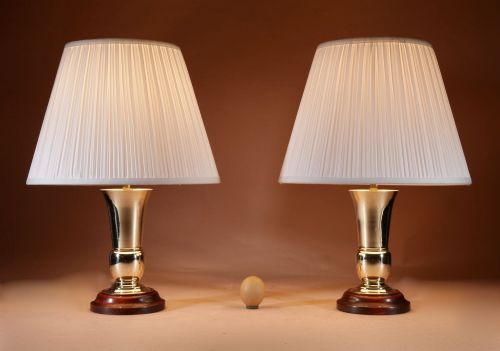
Variations include floor-standing telescopic models alongside desk lamps featuring solid brass or porcelain bases. Materials such as opaline glass, cut glass, and fabric shades complete the structural vocabulary of these pieces.
How they were made
Makers constructed these columns primarily using solid brass, cast metal, and silver plate, often mounting them onto heavy weighted bases for stability. Telescopic standards utilised sliding brass tubes to allow height adjustment, secured by thumbscrews or collars.
Decorative elements incorporated porcelain de Paris, porcelain de biscuit, and majolica alongside cut and opaline glass reservoirs or shades. Metal components were cast, turned on lathes, and finished with gilding, bronzing, or polishing.
Materials recorded across the inventory include solid brass, silver plate, opaline glass, cut glass, bronze, and porcelain de biscuit.
What varies in quality
The distinction between tiers rests upon the weight of the metal casting and the precision of the turning on the column shaft. Finer examples display crisp fluting, detailed Corinthian capitals, and substantial gauge brass rather than thin pressed sheet metal.
Proportion and stability separate standard pieces from superior ones, particularly in telescopic floor lamps where the extension mechanism must hold firm without wobble. The quality of secondary materials, such as heavy cut glass or fine porcelain mounts, elevates the overall execution.
The Classic Column Reading Lamp Glossary
- Corinthian column
- A classical architectural column style featuring an ornate capital decorated with acanthus leaves, frequently adapted for lamp stands. This form is common in Victorian brass lighting.
- Telescopic standard
- An adjustable floor lamp stem that extends vertically using nested metal tubes. This mechanism allows the height of the light source to be altered.
- Opaline glass
- A pale, translucent milk glass used for lamp bodies and shades. It diffuses light softly and appears in nineteenth-century examples.
- Silver plate
- A thin layer of silver fused to a base metal core such as brass or copper. It provides the appearance of solid silver at a different weight and cost.
- Porcelain de Paris
- Hard-paste porcelain produced in various factories in Paris during the eighteenth and nineteenth centuries. It often forms the decorative base or reservoir of a table lamp.
Classic Column Reading Lamp: Frequently Asked Questions
How do I adjust a telescopic floor lamp?
Telescopic lamps use an internal sliding tube secured by a tightening screw or collar near the upper section of the shaft. Loosing this collar gently allows you to raise or lower the lamp to the desired height before fastening it again.
Take care to support the upper weight of the fitting with one hand while adjusting the collar to prevent the mechanism from dropping too quickly.
Are these lamps suitable for reading?
Floor and standard lamp variants are designed to stand beside armchairs or desks, positioning the bulb at a height appropriate for task lighting. Their solid columns provide the necessary elevation to cast light downward over a book or workspace.
Table lamp versions suit lower placement on sideboards or smaller tables, providing more ambient room illumination rather than direct reading light.
How can I tell the period of a brass lamp?
Dating relies on stylistic clues such as the transition from Victorian ornate cast brass and Corinthian capitals toward cleaner Edwardian lines and 1920s Art Deco geometric forms. Examining construction methods, wiring channels, and base weights also helps distinguish nineteenth-century pieces from early twentieth-century reproductions.
Maker marks or registration numbers stamped into the metal base can provide more specific chronological markers where present.