




Classic Brown Desk
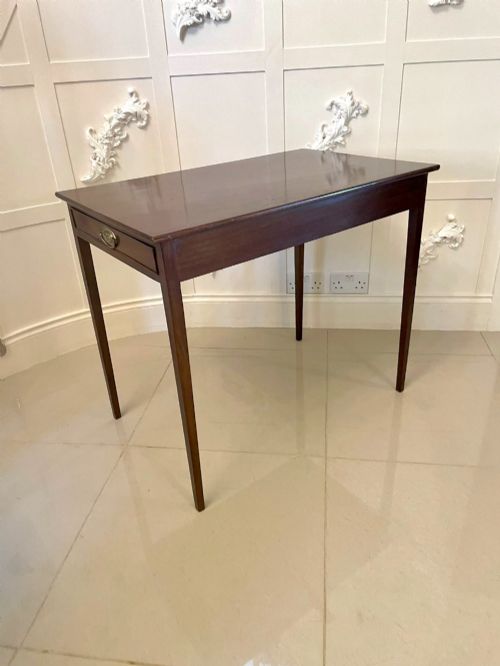
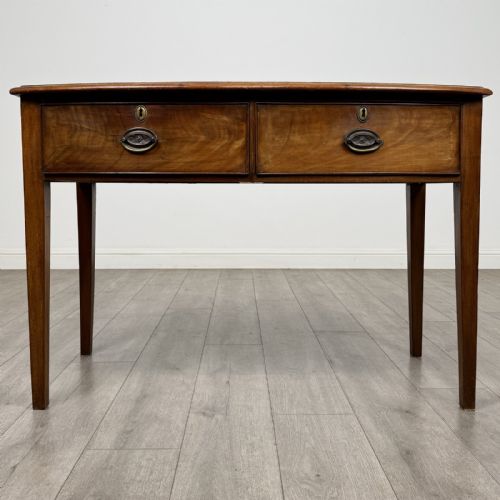
A classic brown desk brings rich timber grain and serious workspace presence into a room, offering functional drawers and deep surfaces.
Classic Brown Desk
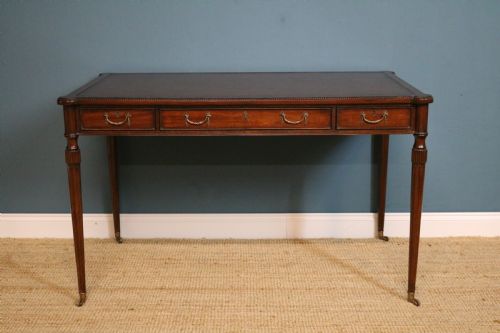
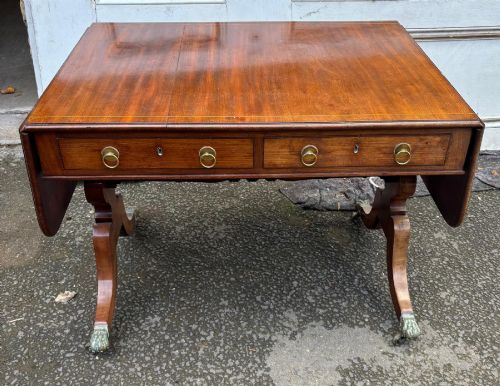
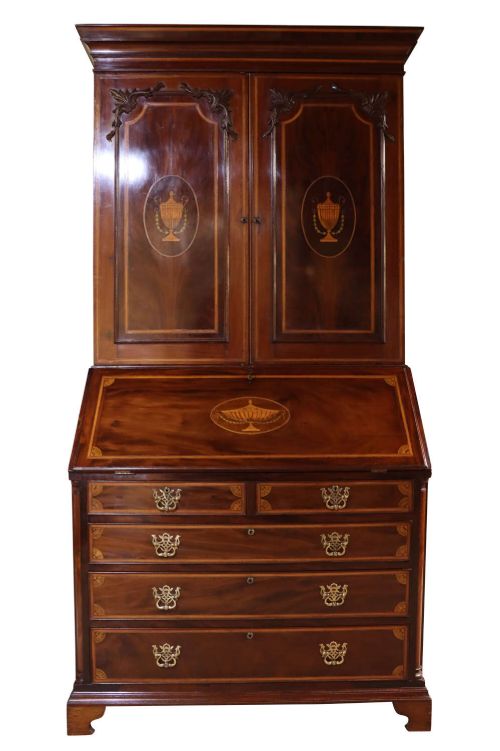
A classic brown desk is a hardworking workspace piece built from rich timbers like mahogany and walnut, designed to anchor a study or library. These items span periods from the Georgian era through to the Edwardian years, taking forms such as pedestal writing desks, tambour roll tops, and kneehole bureaus.
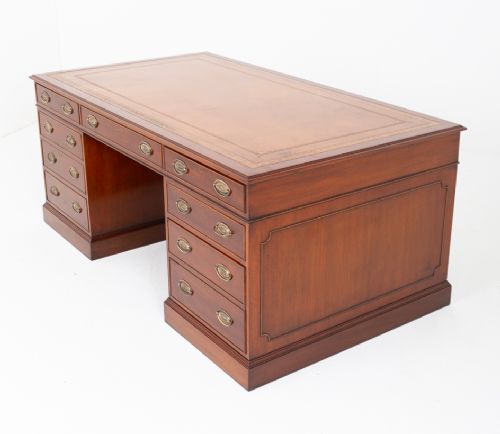
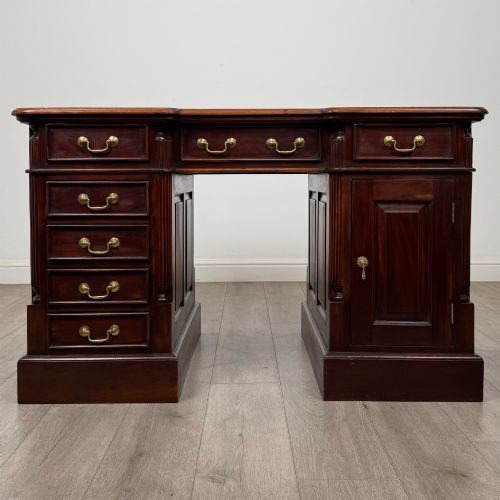
The version most commonly met on this page is the Victorian mahogany pedestal desk, featuring pedestal banks of drawers and classic proportions. Alongside these sit partners desks, writing tables, and occasional side furniture built from the same dark timber traditions.
Buyers seek these desks for their honest working surfaces and substantial presence. The combination of deep wood tones and traditional craftsmanship suits both period homes and modern interiors looking for grounded character.
Materials and construction
Cabinet makers relied primarily on solid mahogany and walnut, frequently utilising flame veneers and satinwood inlay to create visual depth across flat surfaces. Timber selection governed the weight and durability of each piece.
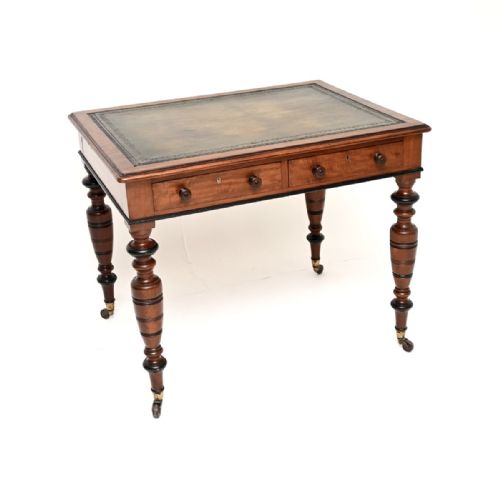
Functional hardware formed an integral part of the build, incorporating cast brass handles, escutcheons, and occasional ormolu mounts. Writing surfaces often featured inset panels of tooled leather to provide a smooth plane for daily correspondence.
Internal construction involved robust secondary timbers and hand-dovetailed drawer boxes designed to withstand heavy daily use. Structural stability came from solid pedestals and panelled carcases rather than applied decorative facades.
Classic Brown Desk Retail Price Guide 2026
Typical asking prices for classic brown desk among the pieces listed under this phrase on Sellingantiques today, from the lower quarter to the upper quarter. They describe what is for sale here now, not the wider market.
Listings feature mahogany, walnut, and yew wood across Georgian, Victorian, and Edwardian periods.
Distinctions in quality
Quality rests in the selection of the timber and the handling of the grain, particularly where matched flame veneers wrap across drawer fronts and tops. Superior pieces display thoughtful timber continuity rather than mismatched boards.
Construction details such as hand-cut dovetails, secondary oak or mahogany linings, and original brass hardware separate workshop pieces from mass-produced items. The fluidity of carved pillars and the precision of inlaid stringing reveal the hand of a skilled cabinet maker.
The Classic Brown Desk Glossary
- Pedestal desk
- A heavy workspace furniture form comprising two freestanding drawer pedestals supporting a wide top. It usually contains a central frieze drawer above the kneehole.
- Tambour
- A flexible sliding shutter formed from narrow strips of wood glued to a canvas backing. It rolls smoothly along tracks to conceal the pigeonholes and inner compartments of a roll-top desk.
- Kneehole bureau
- A compact writing cabinet featuring a central recess beneath a fall-front writing flap. Small banks of drawers flank the knee space.
- Ormolu
- Gilt bronze ornamentation cast and chased by hand then applied to furniture frames. It provides metallic contrast against dark mahogany surfaces.
Classic Brown Desk: Frequently Asked Questions
How do I date a mahogany desk?
Dating relies on observing construction methods, timber choice, and hardware styles across the carcase. Secondary woods inside the drawer boxes and the cut of the dovetails offer reliable clues to the period.
Later Victorian and Edwardian examples often feature machine-sawn components and different carcass depths compared to earlier Georgian originals. Comparing the handle types and lock plates to known historical timelines helps narrow the decade of manufacture.
What is a partners desk?
A partners desk is a large double-sided writing table created so two people could sit and work face-to-face. Both sides feature matching drawers, cupboards, or kneehole spaces.
These pieces were traditionally utilised in libraries, banks, and large estate studies where professional colleagues shared a workspace. Their finished backs and substantial proportions allow them to stand independently in the middle of a room.
How do I care for leather desk inserts?
Leather writing surfaces require gentle cleaning with a slightly damp cloth followed by a neutral leather cream to keep the hide supple. Avoid harsh chemical cleaners or excess water that can stain the skin or loosen the glue beneath.
Keeping the leather away from direct sunlight prevents the gold tooling from fading and stops the surface from drying out and cracking. Regular light waxing preserves the traditional feel of the writing plane.