




Classic Brass Holders
Classic brass holders provide dependable candle and light support, bringing period weight and polished metal to any interior.
Classic Brass Holders
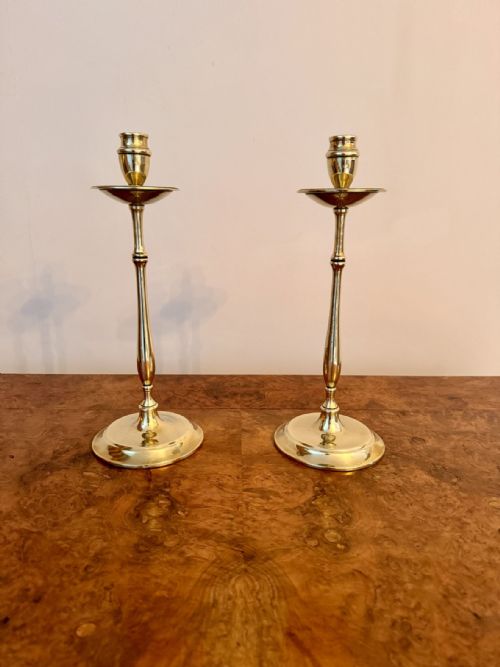
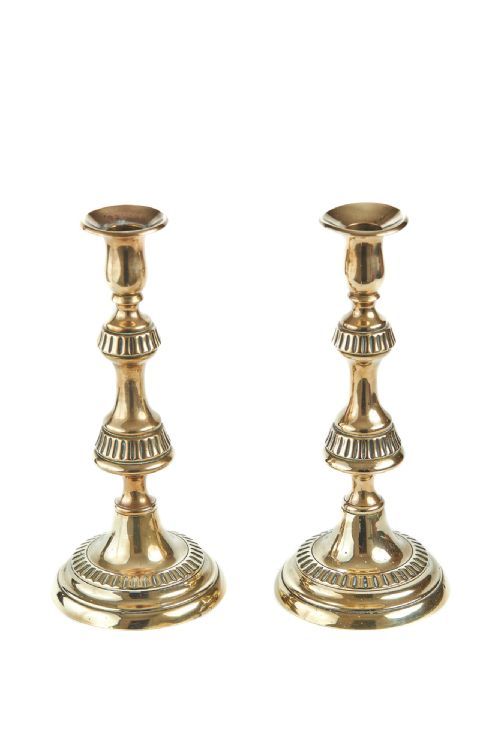
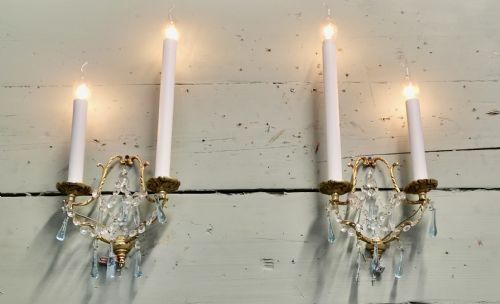
Classic brass holders encompass a variety of metal lighting supports spanning multiple centuries, dominated heavily by candlesticks, wall sconces, and multi-branched candelabras. These pieces arrive from Georgian, Victorian, Regency, and Edwardian periods, showcasing both English and continental origins.
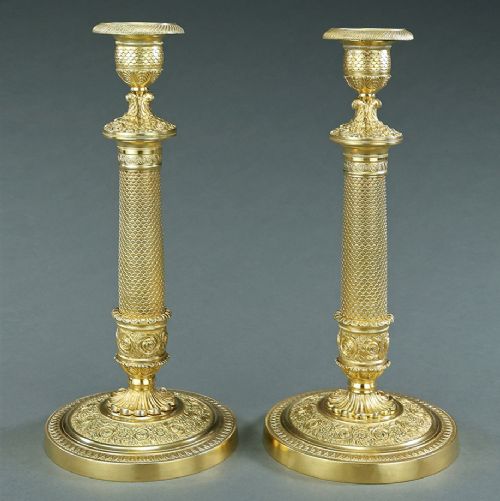
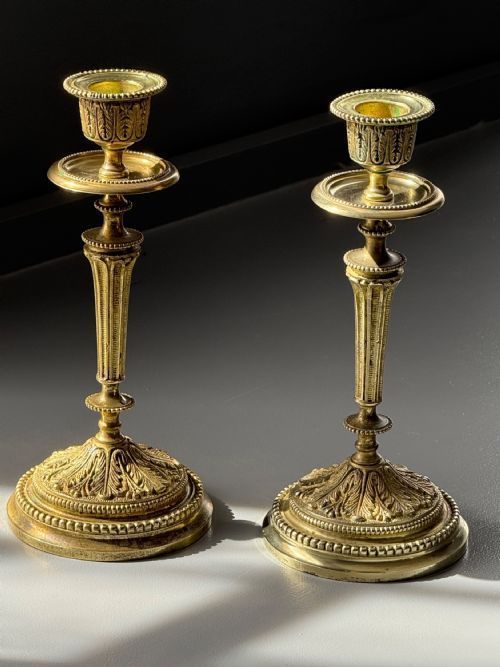
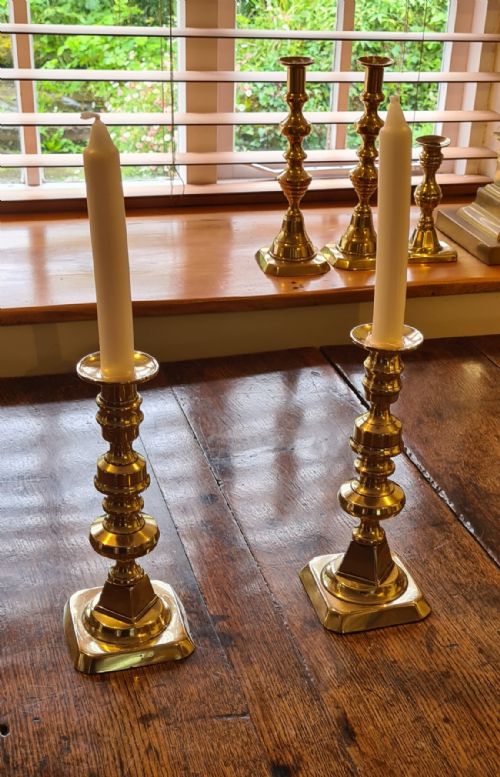
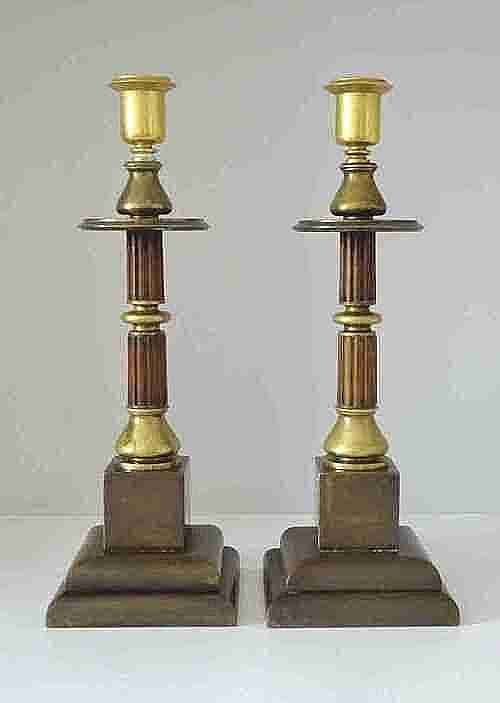
The buyer meets pairs of seamed ejector candlesticks, tall twist stems, and ornate Victorian designs alongside heavier French gilt bronze wall lights and Italian triple-arm candelabras. Occasional domestic variations incorporate mahogany columns, green marble bases, or paktong alloys.
Most examples function as table or mantel lighting, though wall-mounted sconces and hearth fire dogs also appear within the selection. Each item retains the structural integrity of its original period manufacturing method, whether turned, cast, or seamed.
Materials and construction
Makers utilised solid brass, gilt bronze, and ormolu, frequently combining these metals with cut glass, crystal, mahogany wood, and green marble inserts. Metalwork techniques involved sand casting, seaming, and detailed hand-finishing to achieve crisp mouldings and turned profiles.
Components were often cast in sections and joined mechanically or threaded together, allowing for weighted bases and secure socket construction. Ormolu and gilt brass finishes received chemical or fire-gilding treatments to create lasting surface lustre.
Several candlesticks include internal ejector spikes designed solely to pop out stubborn wax stubs without burning eager fingers.
Distinctions in quality
Quality rests upon the crispness of the casting detail and the proportion of the turning, where superior examples exhibit sharp foliate motifs and substantial metal weight. Poorer specimens show softened edges from worn moulds or lightweight hollow construction that lacks historical heft.
The integrity of the original assembly dictates value, distinguishing items retaining their authentic components from those altered or married over time. Surface preservation matters equally, with untouched patination and original gilding separating exceptional survivals from over-polished pieces.
The Classic Brass Holders Glossary
- Ejector candlestick
- A domestic candlestick containing an internal mechanism to push out the remaining candle stump. This clever device was especially common during the eighteenth and nineteenth centuries.
- Ormolu
- Finely ground high-carat gold applied to a bronze base using a mercury amalgam technique. This French finishing method yields a brilliant golden surface.
- Paktong
- A copper, nickel, and zinc alloy originating from China, valued for its bright silver-like appearance. English makers utilised this metal for high-status candlesticks during the eighteenth century.
- Candelabra
- A multi-branched lighting fixture designed to hold several candles simultaneously. These decorative objects often feature elaborate arms radiating from a central stem.
Classic Brass Holders: Frequently Asked Questions
How do I clean antique brass holders?
Maintain the metal using a soft cloth to remove dust without disturbing the historic surface. Avoid harsh chemical polishes that strip away age patination.
Preserve the integrity of the original finish by leaving minor tarnish within recessed details. Gentle dusting remains the safest approach for long-term care.
Are these holders suitable for daily use?
Most candlesticks accommodate standard taper candles securely and function well for dining tables or mantel displays. Electric conversions require professional safety checks before plugging in.
Ensure wax is removed carefully with warm water rather than sharp metal tools to prevent scratching the brass. Regular handling adds a natural warmth to the metal surface.
How do I identify a Georgian candlestick?
Georgian pieces typically feature heavy, square or petal-shaped bases with solid cast construction and simple turned columns. Ejector mechanisms and crisp proportions are hallmark indicators of this era.
Examine the underside for casting seams and file marks left by period artisans. Eighteenth-century examples feel remarkably heavy for their size compared to later reproductions.
What is the difference between brass and gilt bronze?
Brass is a solid alloy of copper and zinc throughout the entire object, offering a warm golden hue that darkens naturally over time. Gilt bronze consists of a bronze core covered in a thin layer of gold.
Gilt bronze, or ormolu, was favoured by French makers for high-end decorative wall lights and candelabras. It retains a brighter, more brilliant yellow finish than standard polished brass.