


Citrine Gold Jewellery
Citrine gold jewellery brings together warm yellow quartz and rich metals, offering bright colour and wearable history for daily use.
Citrine Gold Jewellery
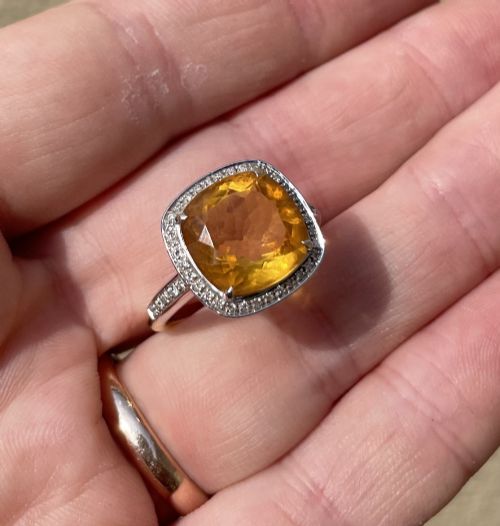
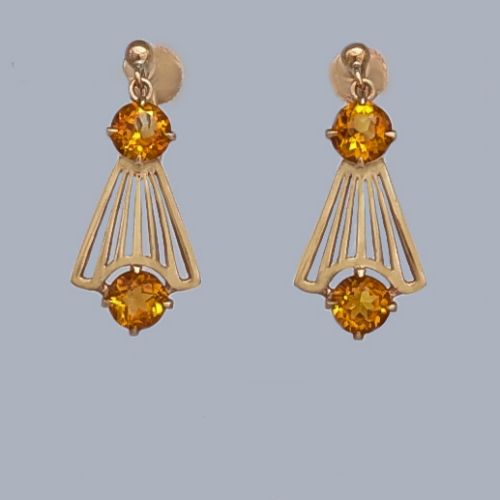
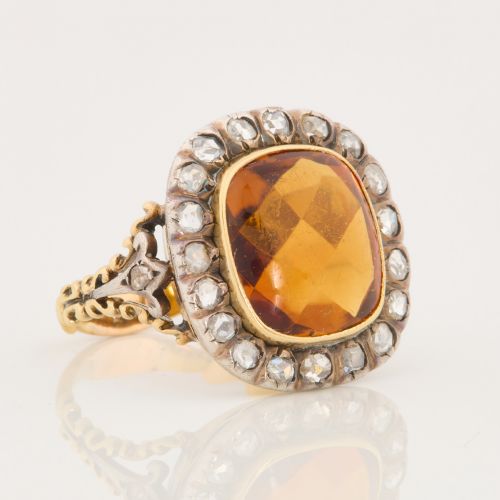
Citrine gold jewellery spans rings, brooches, necklaces, earrings, pendants, and bangles shaped across several eras. The pieces recorded here range from Georgian and Victorian designs through Edwardian, Art Deco, and mid-century modern periods. Buyers encounter items featuring golden quartz paired with various gold purities and supporting gems.
The most frequent examples on this page are rings and pendant necklaces set in nine-carat yellow gold. These items capture the aesthetic shifts from nineteenth-century cluster work to twentieth-century geometric cuts and vintage drops. Each form displays the enduring appeal of transparent yellow to orange quartz mounted in precious metal.
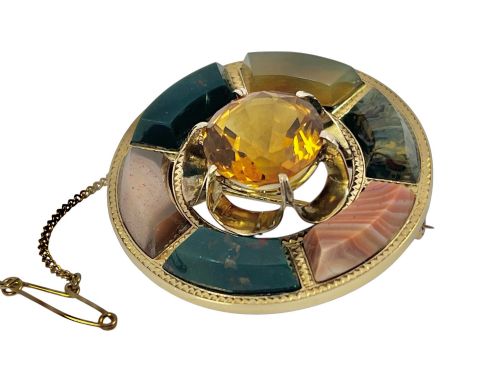
Makers and designers worked within distinct stylistic traditions, producing Celtic brooches, witch's heart charms, and hinged bangles. Pieces often incorporate pearls, diamonds, or garnets alongside the primary quartz stone. The selection reflects both British and continental European craftsmanship across more than a century of production.
How they were made
Goldsmiths utilised various gold purities, notably nine-carat, fourteen-carat, and eighteen-carat yellow gold, to mount the stones securely. Metalwork techniques included casting, bezel setting, and delicate wirework for cluster arrangements and hinged elements.
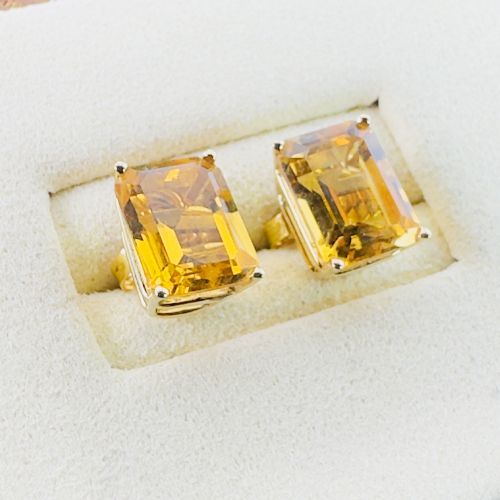
Gemstones were shaped into emerald cuts, cushion cuts, round facets, and trillion cuts to maximise brilliance within the gold settings. Jewellers combined citrine with seed pearls, diamonds, or garnets using traditional hand tools and soldering methods appropriate to each period.
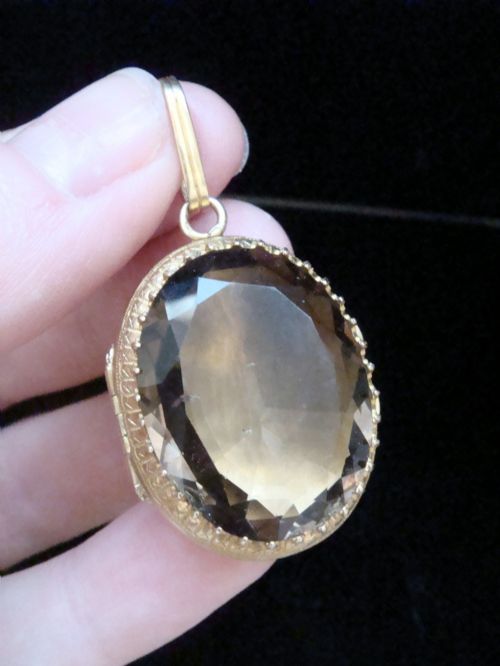
One heavy Victorian fob spins on a swivel, offering a playful kinetic element built into solid gold.
What varies in quality
Quality rests on the depth of colour and clarity within the citrine crystal, alongside the weight and purity of the gold mount. Superior items display well-matched secondary stones, such as pearls or diamonds, set with precision.
Design complexity and the preservation of original settings distinguish exceptional examples from standard production pieces. Artistry in mounting styles, from early Victorian clusters to clean Art Deco lines, dictates the overall character.
The Citrine Gold Jewellery Glossary
- Citrine
- A transparent yellow to orange variety of quartz used extensively in gemstone jewellery. Its warm tone mimics topazes and other golden stones.
- Seed pearl
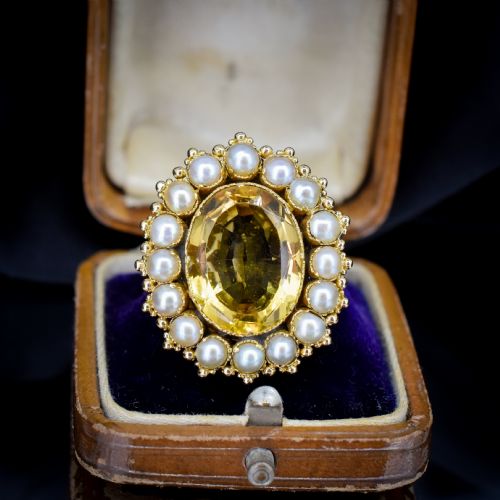
- A very small, natural or cultured pearl used in clusters and borders around central gemstones. These tiny pearls appear frequently in Victorian and Edwardian pieces.
- Cluster ring
- A ring featuring a central gemstone surrounded by a border of smaller stones, often diamonds or pearls. This arrangement maximises visual impact on the hand.
- Fob
- A short chain or ornament attached to a pocket watch, frequently adapted into pendants or charms. In this context, stones like citrine are mounted as spinning or stationary seals.
- Emerald cut
- A rectangular gemstone cut with cropped corners and step-cut facets. This geometry emphasises the clarity and depth of coloured quartz.
Citrine Gold Jewellery: Frequently Asked Questions
What is citrine gold jewellery?
Citrine gold jewellery comprises rings, brooches, necklaces, and earrings made from gold set with yellow quartz. These pieces span Victorian, Edwardian, Art Deco, and mid-century periods.
Items range from delicate pearl-bordered cluster rings to large emerald-cut drop earrings and heavy brooches. The combination of warm quartz and yellow gold creates a distinct golden aesthetic.
How do I date these pieces?
Dating relies on stylistic clues, mounting techniques, and hallmarks stamped into the metal. Victorian and Edwardian examples often feature intricate wirework and seed pearls.
Art Deco items show geometric emerald or cushion cuts with streamlined metal settings. Mid-century pieces typically utilise nine-carat gold with clean lines and faceted drops.
Are these stones natural citrine?
The stones used in these historic pieces are natural quartz varieties selected for their yellow and orange tones. Jewellers prized them for their durability and bright colour.
Craftsmen cut and faceted the quartz to enhance light return within gold bezels and claw settings. These stones appear alongside diamonds, garnets, and pearls.
How should I wear an antique brooch?
Antique brooches work well pinned to lapels, scarves, thick sweaters, or structured hats. Their secure pin and clasp mechanisms allow for versatile placement.
Larger statement pieces, such as citrine spinners or cluster brooches, serve as focal points on heavier fabrics. Ensure the fastening pin remains secure during daily wear.
How do I care for my jewellery?
Clean citrine gold jewellery using warm soapy water and a soft brush to remove dust from the settings. Avoid harsh chemical dips that might damage softer stones or pearls.
Store pieces individually in soft pouches to prevent scratching between gold mounts and faceted quartz. Regular checks by a jeweller ensure claws remain tight.