
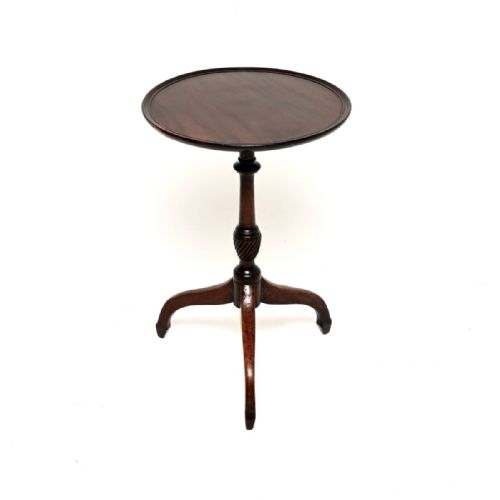
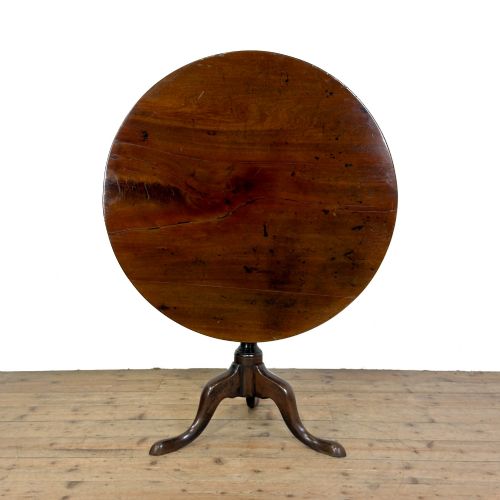

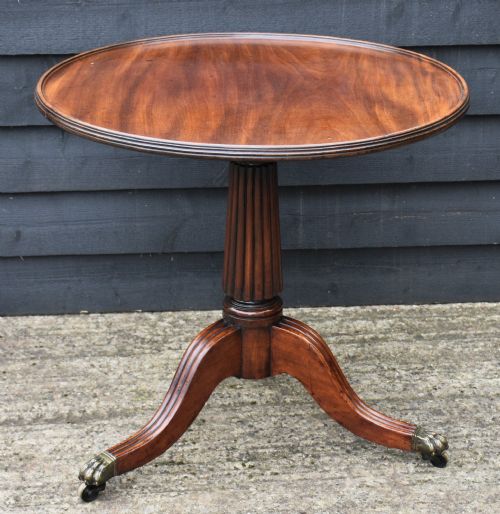
Circular Tripod Tea Table
A circular tripod tea table brings centuries of social history and compact, versatile design directly into a modern room.
Circular Tripod Tea Table
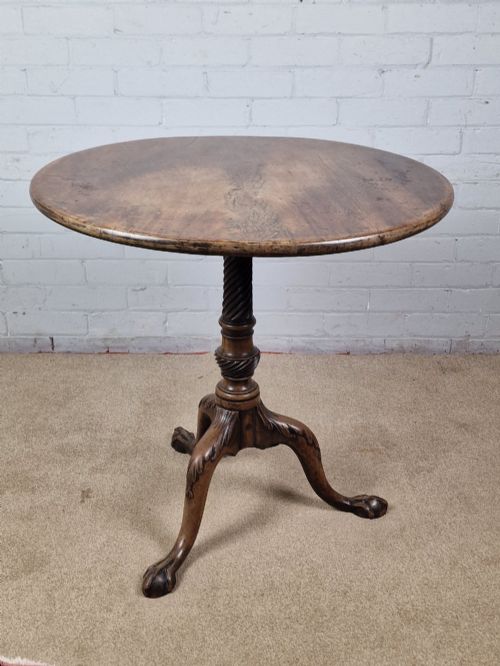
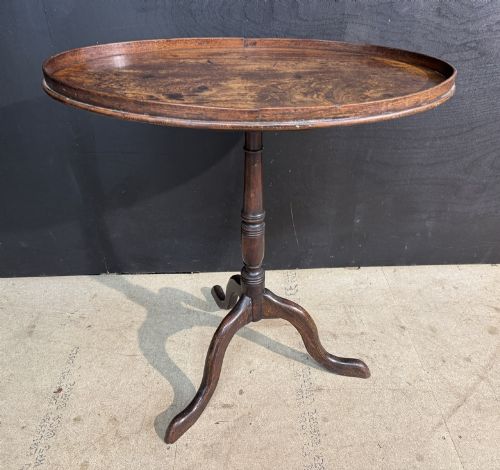
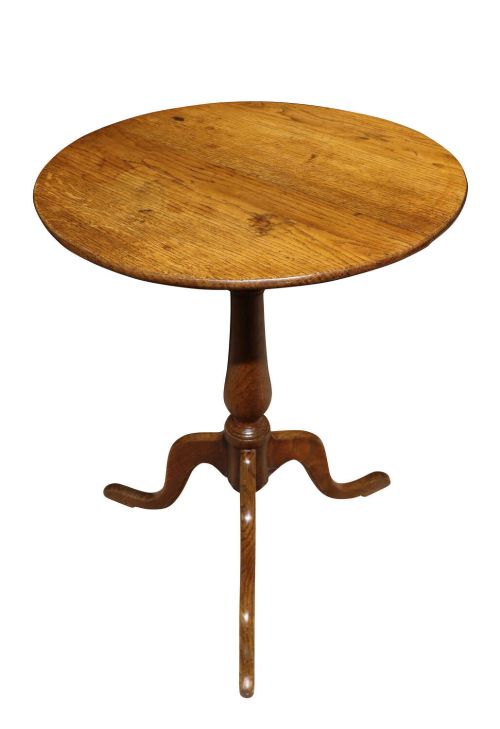
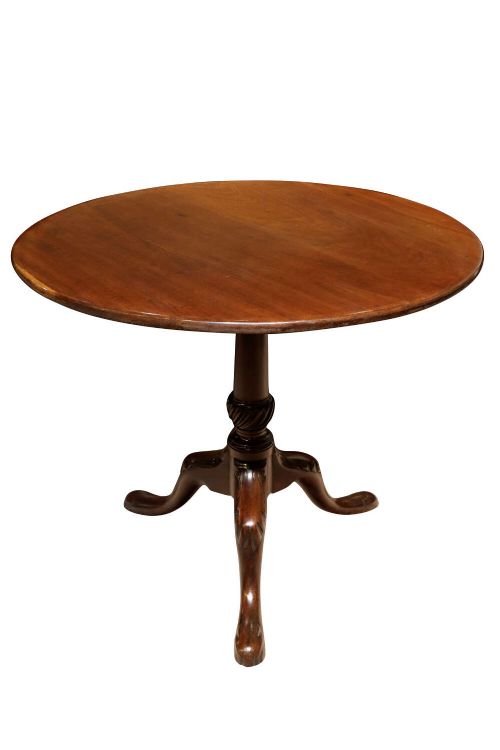
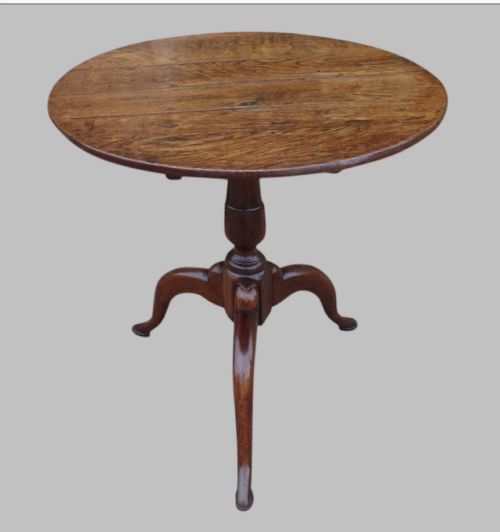
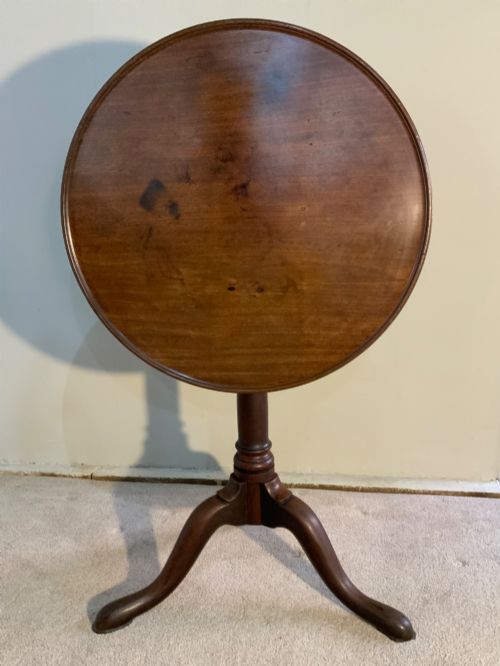
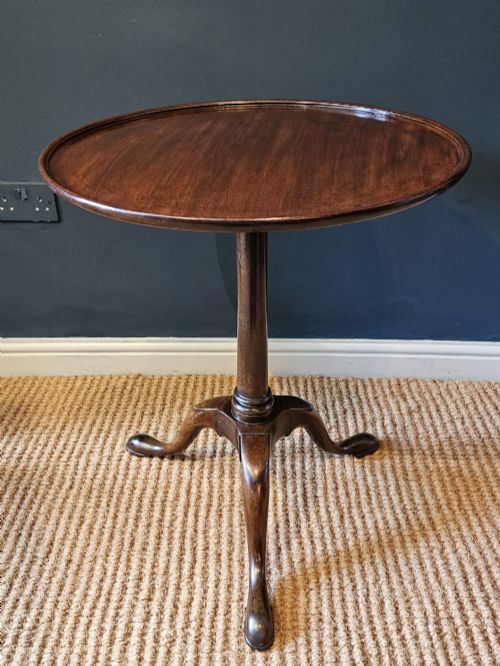
A circular tripod tea table is a classic form designed for sociable gatherings, supported by a central pillar and three legs. You will most frequently meet mahogany and oak versions originating from the eighteenth and nineteenth centuries.
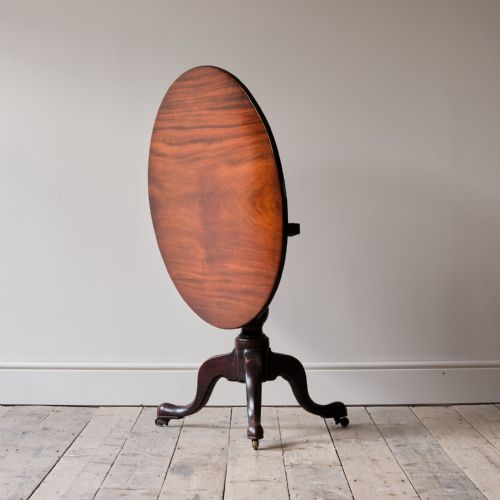
Many survivors incorporate a tilt top or snap top mechanism, allowing the surface to fold vertically when not in use. This practical feature enabled eighteenth-century households to store the furniture against a wall to save floor space.
Materials and Construction Methods
Cabinetmakers utilised dense timbers such as mahogany, walnut, oak, and fruitwood to construct the circular tops and supporting pillars. Mahogany and red walnut appear frequently in finer examples, whilst country pieces utilise local oak, elm, and fruitwood.
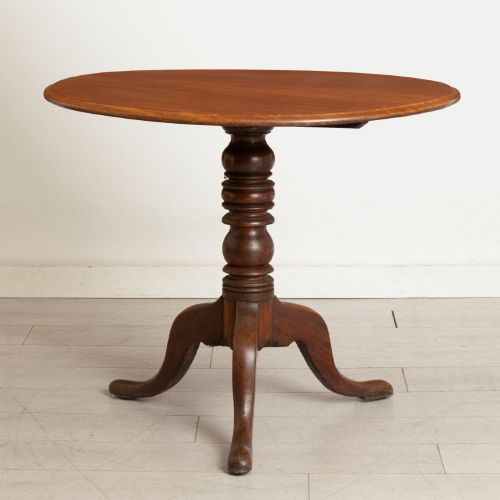
The structural stability relies on a three-legged tripod base joined to a turned central column, sometimes incorporating a birdcage mechanism to allow the top to rotate. Joinery techniques from the period ensured that the central pivot and leg tenons remained secure under daily domestic use.
Listings feature woods including mahogany, oak, walnut, burr walnut, fruitwood, and elm, spanning the 18th, 19th, and early 20th centuries.
Assessing Craftsmanship and Proportion
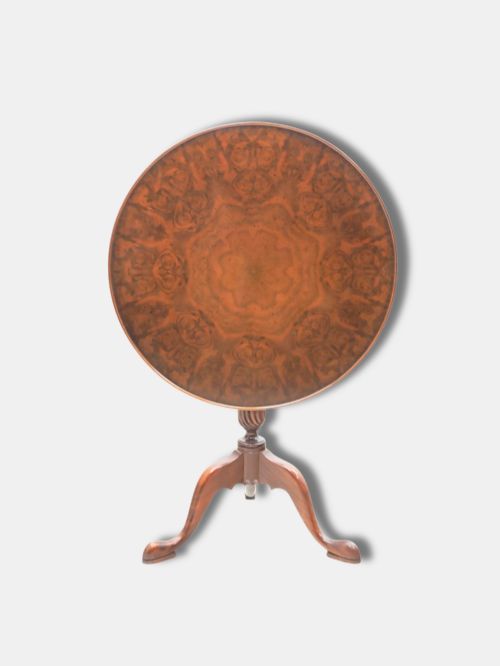
Quality reveals itself in the selection of figured timber veneers and the crispness of turned or carved details on the central column. Superior examples display balanced proportions between the diameter of the circular top and the splay of the tripod legs.
The engineering of the tilt top mechanism distinguishes workshop standards, with finer pieces operating smoothly through integrated catches and birdcage assemblies. Refined joinery in the leg joints and the absence of clumsy repairs mark the upper tier of surviving tables.
The Circular Tripod Tea Table Glossary
- Tilt top
- A table mechanism allowing the circular surface to pivot vertically on its base. This historical feature saved precious floor space in period rooms.
- Birdcage
- A revolving wooden framework beneath the table top that permits both rotation and tilting. It connects the central column to the surface above.
- Snap top
- An alternative term for a tilt top table utilising a spring catch to lock the surface horizontal. The mechanism secures the table firmly during use.
- Tripod base
- A support structure composed of three legs radiating from a central pillar. This design prevents rocking on uneven historical floors.
- Tripod table
- A small occasional table supported by three legs and a central pedestal. Forms range from plain country oak to highly carved mahogany versions.
Circular Tripod Tea Table: Frequently Asked Questions
What were circular tripod tea tables used for?
These tables provided a stable surface for serving tea, wine, or light suppers in eighteenth-century drawing rooms. Their compact size made them easy to move near a hearth or seating area.
When not in use, the tops were tilted vertically and placed against the wall. This allowed households to clear the floor for other domestic activities.
How do I tell an 18th-century table from a Victorian one?
Eighteenth-century examples often feature dense mahogany, red walnut, or country oak with hand-turned pillars and simple peg joinery. The timber patination tends to show deeper warmth from decades of waxing.
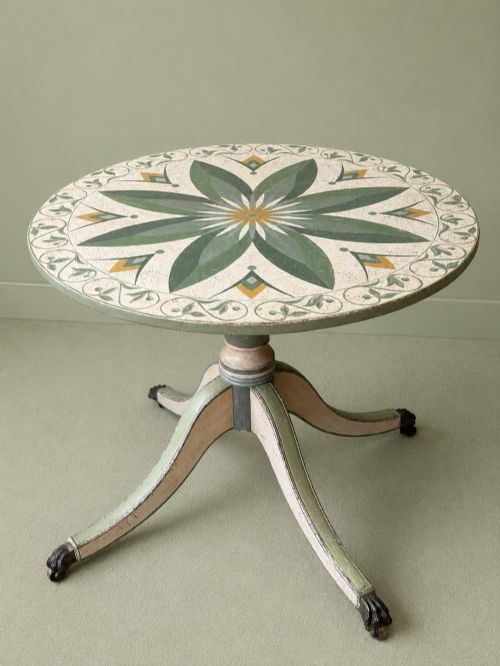
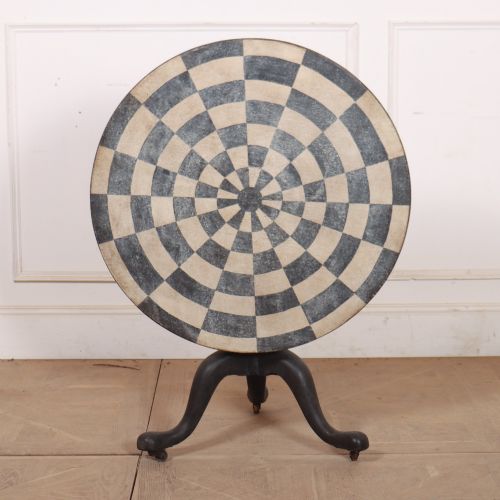
Victorian pieces frequently introduce burr walnut veneers, brass fittings, or later decorative paintwork. Their proportions and turning styles reflect nineteenth-century revivals of earlier Georgian aesthetics.
How do tilt top mechanisms work?
A typical tilt top uses a pivot block or a birdcage frame situated at the top of the central column. The table top fastens to this assembly with hinges or wooden pins.
A small wooden catch or wedge locks the surface into a horizontal position when in use. Releasing this catch allows the table top to fold flat against the pedestal.
Where should I place a tripod table at home?
Their compact circular footprint makes them ideal as lamp tables beside a sofa or as freestanding accent pieces in a hallway. The narrow base requires minimal floor space.
Because many examples feature tiltable tops, you can position them flat against a wall as a decorative console when floor space is limited.