

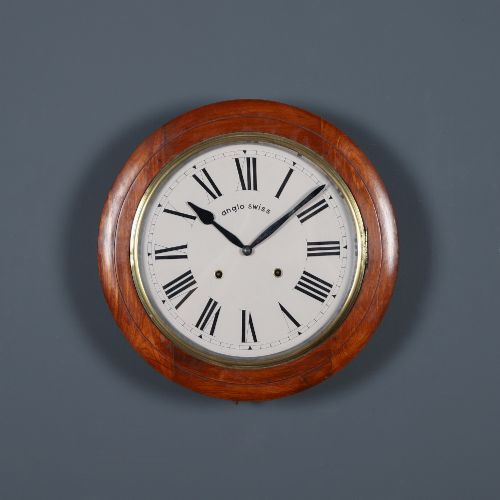
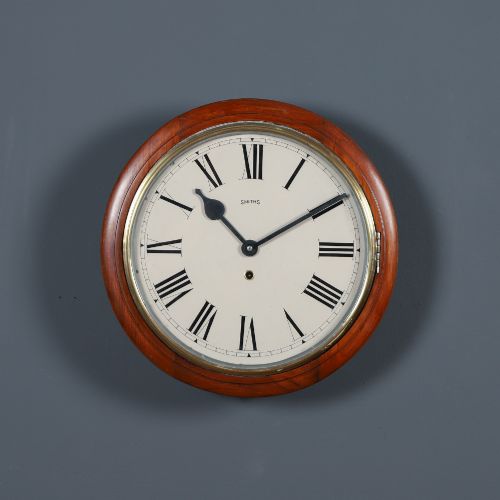
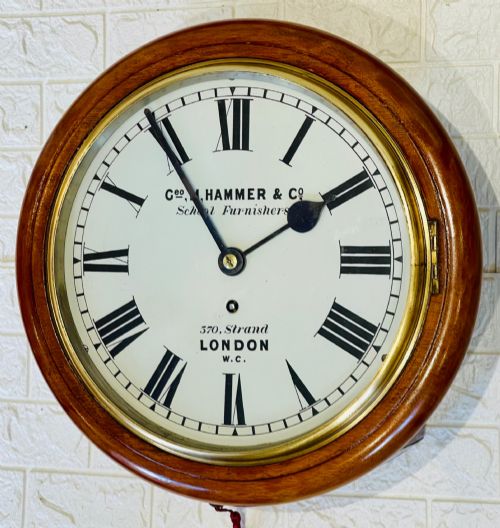
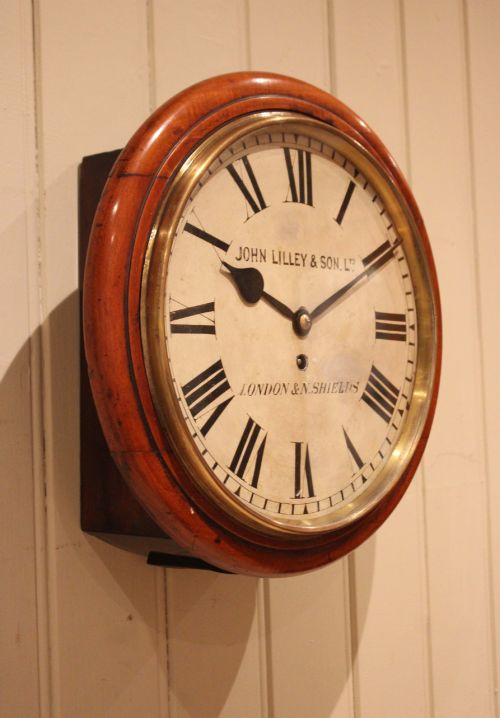
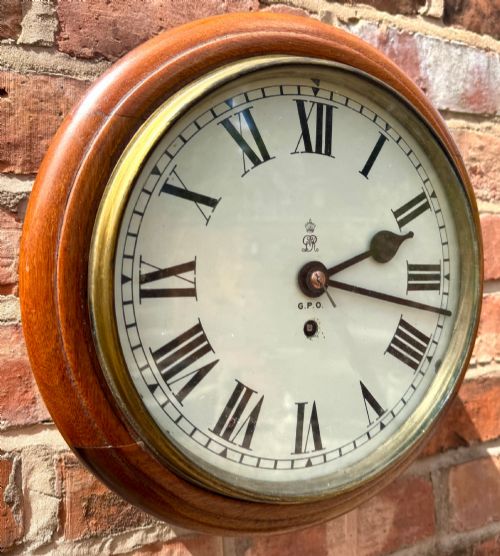
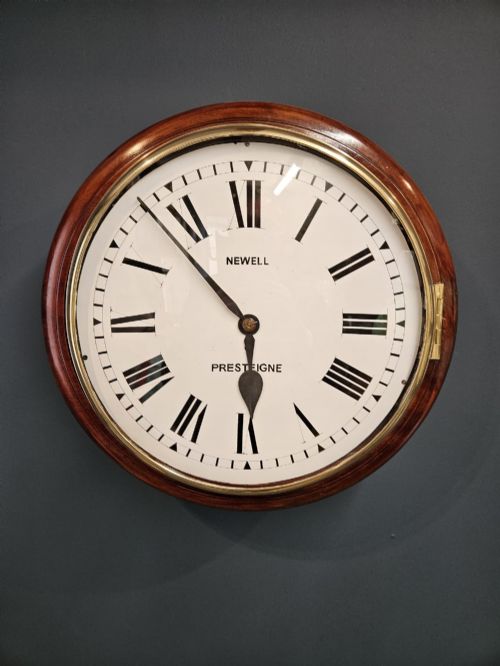
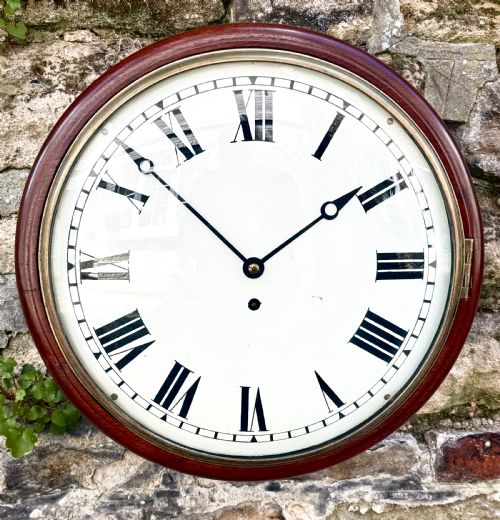
Circular Mahogany Wall Clock
A circular mahogany wall clock delivers solid timekeeping and distinct presence, spanning Georgian origins to twentieth-century railway stations.
Circular Mahogany Wall Clock
A circular mahogany wall clock is a round timekeeper housed in a wooden surround, built to hang firmly in domestic rooms, offices, and bustling transport hubs. These pieces range from restrained Georgian examples to robust Victorian and early twentieth-century railway variants.
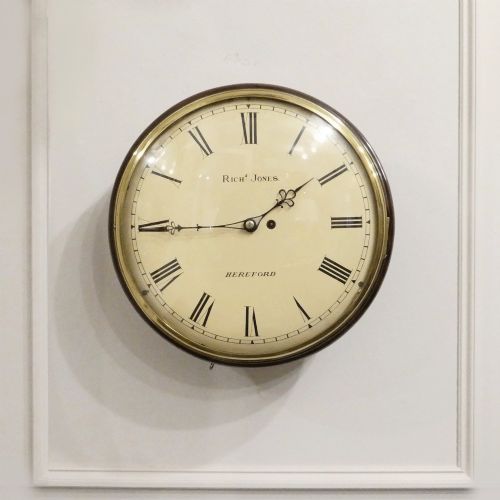
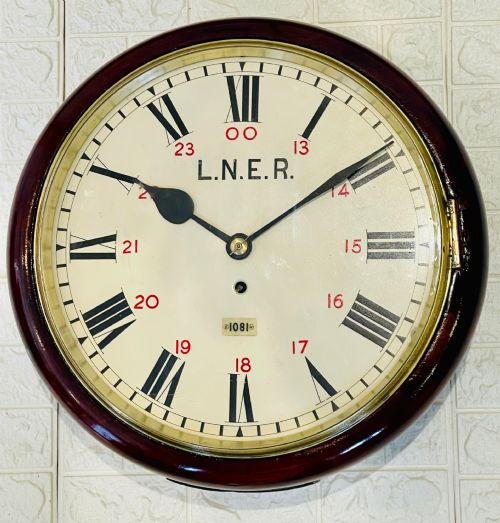
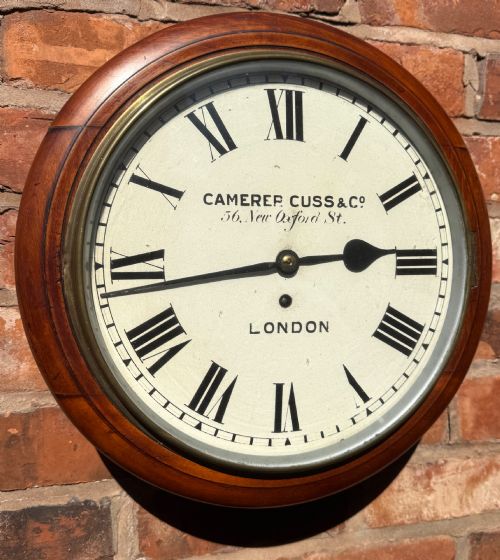
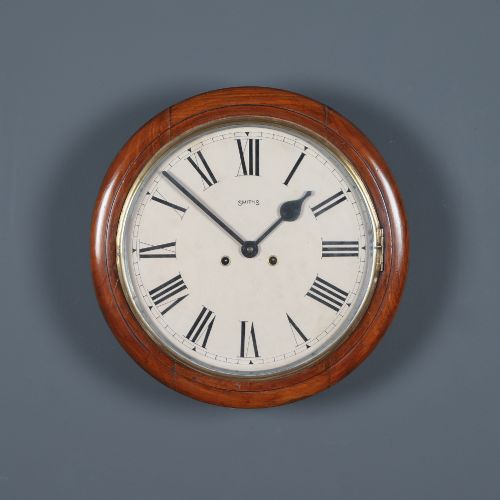
The versions most commonly met on this page are fusee wall clocks and railway or school dial clocks originating from nineteenth-century workshops and later corporate networks. They combine simple geometric forms with legible painted faces designed for quick reading at a distance.
How They Were Made
Makers constructed the timber cases using solid mahogany, often shaped into a deep drum or surround with a hinged bezel allowing access to the dial. Brass and iron formed the internal gear trains and movements, whilst glass protected the delicate hands and painted metal faces.
Movements relied on fusee or pendulum mechanisms to maintain steady tension and accurate timekeeping across hours of operation. Dials featured painted iron or wood, finished with clear numerals and maker signatures applied by hand.
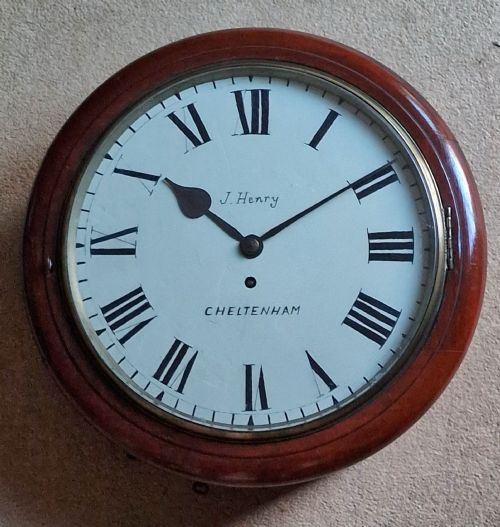
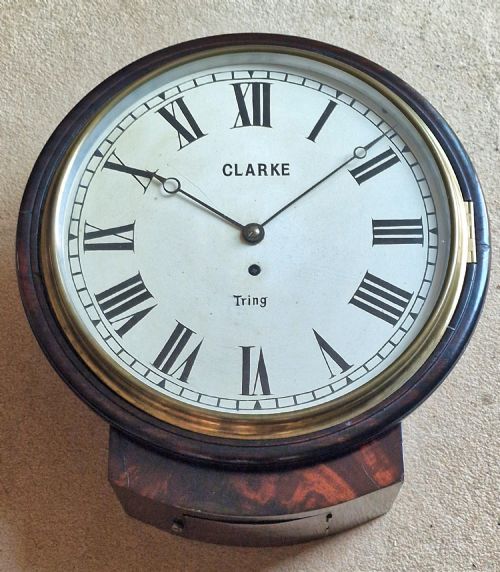
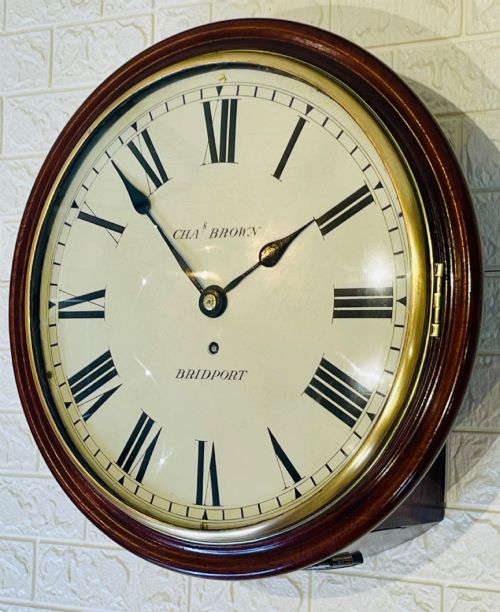
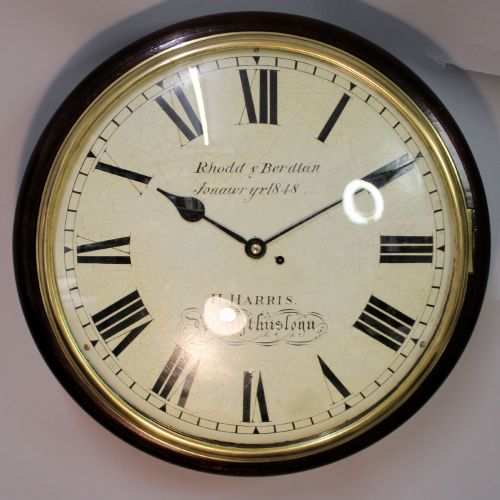
The selection includes railway station and school round dial formats alongside traditional fusee wall clocks.
What Varies in Quality
The standard of a circular mahogany wall clock rests on the crispness of the movement and the precision of the timber cabinetry. Finely cut fusee movements and clean, unblemished painted dials demonstrate superior workshop execution.
Proportion and dial legibility also distinguish finer examples from standard utility pieces. Original components, well-maintained mahogany grain, and documented maker signatures elevate the standing of an individual clock.
Richard Jones of Hereford·Camerer Cuss and Co London·Henry Harris of Monythusloyn·Thomas Hedge of Colchester·John Walker London·Francis Perigal London
The Circular Mahogany Wall Clock Glossary
- Fusee
- A conical pulley used in clock movements to equalize the declining power of a mainspring as it unwinds. This mechanism ensures consistent force is delivered to the gear train.
- Dial
- The face of the clock where hours and minutes are displayed, typically made of painted metal or wood. Railway and school variants often featured bold black numerals for rapid reading.
- Bezel
- The hinged ring, usually brass or mahogany, that holds the glass protecting the dial. It allows easy access for winding and hand adjustment.
- Timepiece
- A clock that measures and indicates time without including a striking or chiming mechanism. These movements focus purely on accurate timekeeping.
Circular Mahogany Wall Clock: Frequently Asked Questions
How do I wind a fusee wall clock?
Open the side door or glass bezel carefully and insert the winding key into the dial aperture. Turn the key gently clockwise until resistance indicates the mainspring is fully wound.
Avoid over-winding the mechanism, as this can strain the chain and internal components. Support the pendulum if moving the clock housing during maintenance.
What is a railway wall clock?
Railway wall clocks were robust timepieces installed in stations, offices, and operational hubs to maintain strict transport schedules. They typically feature clear dials and sturdy mahogany cases built to withstand constant use.
Many bear company initials or station names on the dial or case. Their dependable movements made them essential fixtures across the network.
How do I date an antique wall clock?
Examine the construction of the mahogany case, the style of the numerals, and any maker signatures inscribed on the dial or movement. Fusee movements and specific framing techniques often point to particular decades.
Engraved railway company ciphers or administrative stamps also provide clues to a clock's working history. Comparing these details with documented makers narrows down the period of manufacture.
Where should I hang a heavy mahogany clock?
Mount the clock directly onto a solid wall stud or use heavy-duty wall anchors capable of supporting the weight of the timber case and movement. Secure fixing prevents vibrations from disrupting the pendulum.
Ensure the clock hangs at a comfortable eye level for reading and routine winding. A stable wall surface keeps the beat even and accurate.