
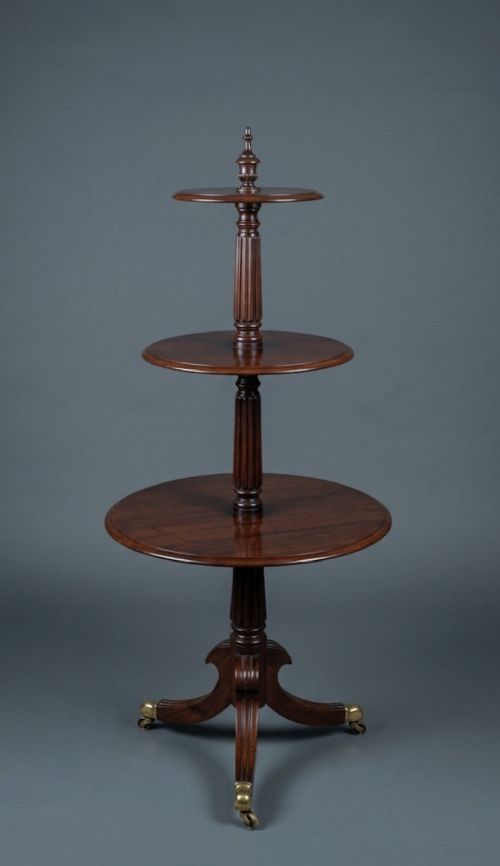
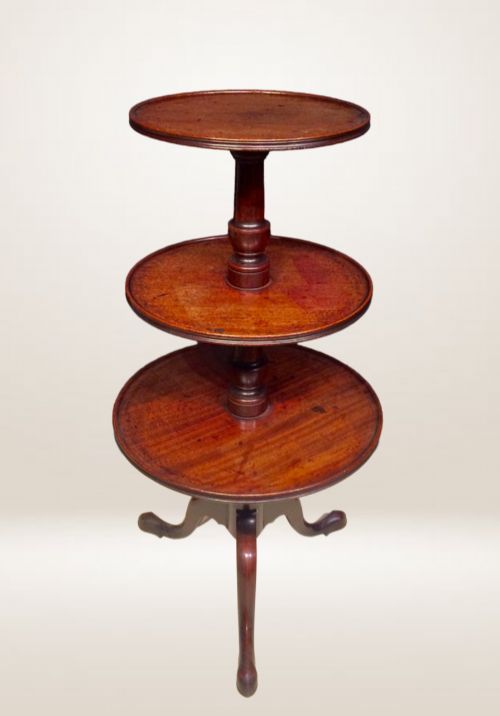


Circular Mahogany Tier Table
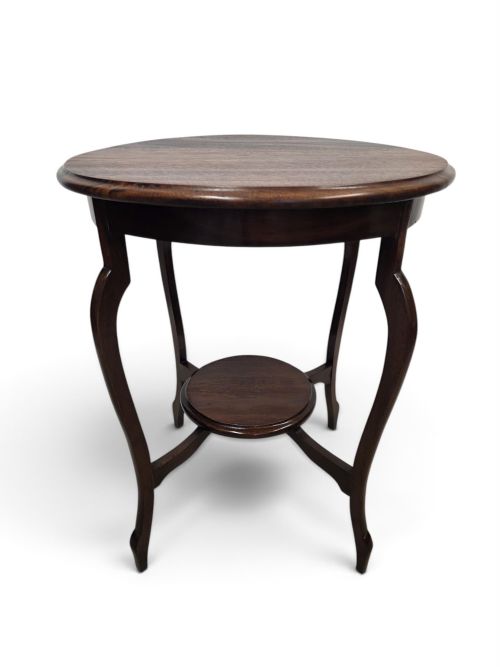
A circular mahogany tier table offers tiered surfaces for serving or display, combining practical stacking with rich timber grain.
Circular Mahogany Tier Table
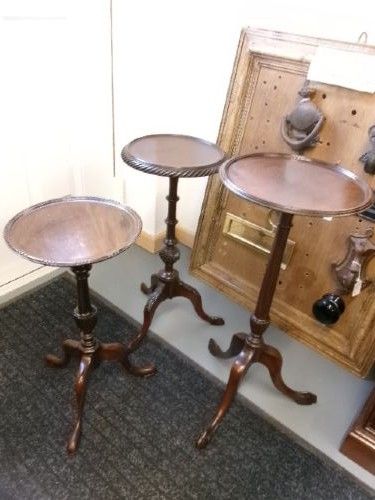
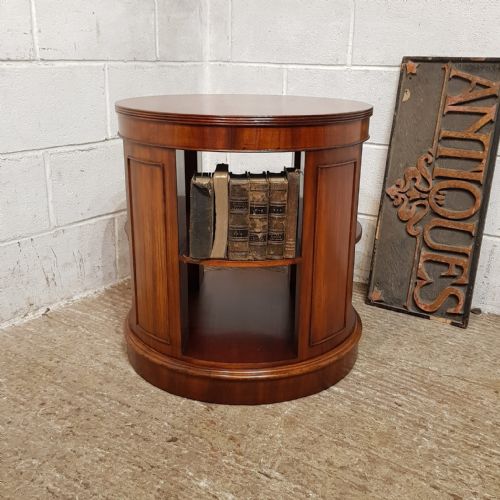
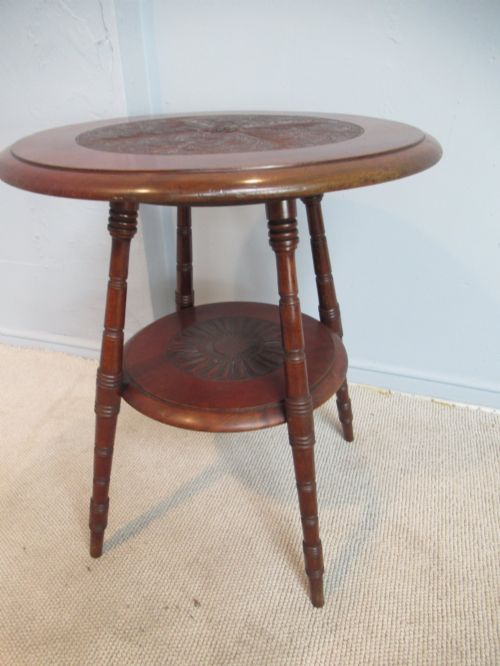
A circular mahogany tier table provides multiple round wooden levels supported by a central column or upright supports, designed for serving, dining or display. These pieces range from compact occasional stands and wine tables to multi-level dumbwaiters and etageres dating from the Georgian period through to the Edwardian era and the 1930s. Buyers encountering this selection will find examples featuring revolving shelves, drop leaves and brass castors.
The most frequent forms met on this page are two-tier and three-tier occasional tables, alongside traditional dumbwaiters and revolving bookcases constructed from rich dark timber. Many pieces reflect classic revival aesthetics including Georgian, Regency, Chippendale and Sheraton styles, while others lean towards Edwardian refinement or French-influenced designs.
Originating as practical dining room servers for holding dishes or bottles without requiring servants close at hand, these multi-level pieces evolved into versatile items used for lamps, plants and books in sitting rooms and libraries. Their tiered construction maximises vertical space while maintaining a compact footprint on the floor.
How they were made
Construction relies heavily on solid mahogany and mahogany veneers shaped into round trays, shelves and tops, often supported by turned pedestals and tripod legs. Cabinet makers employed mortise and tenon joints to secure uprights and pillar columns, ensuring the stability required for stacked tiers bearing weight.
Detailing on these pieces incorporates subtle decorative elements such as satinwood inlay, brass castors, ormolu mounts and marble inserts set into wooden rims. Some sophisticated examples feature revolving mechanisms that allow tiers to turn independently or drop-down flaps supported by folding brackets.
Several tables include folding drop leaves designed to tuck flat against the central pillar when the dining room needed extra space.
What varies in quality
The degree of refinement in the turning of the central column and the choice of timber grain distinguishes standard utility pieces from finer examples. Superior specimens display well-figured mahogany with deep natural lustre, balanced tripod legs terminating in original brass hardware, and precise joinery that keeps multiple tiers level.
The complexity of the mechanism also sets pieces apart, particularly in multi-tier dumbwaiters where revolving tiers or folding drop-leaves must operate smoothly without sagging under weight. Tables retaining original surfaces and authentic period mountings command greater appreciation from collectors seeking untouched historical integrity.
Gillows
The Circular Mahogany Tier Table Glossary
- Dumbwaiter
- A multi-tier freestanding piece of furniture designed to hold food, glassware or bottles during meals without the need for attendants. These tables feature circular graduated shelves stacked vertically on a central pillar.
- Etagere
- A set of open shelves for displaying small objects, books or ornaments, constructed here with circular tiers in mahogany. It provides tiered storage arranged around a central support.
- Satinwood inlay
- A contrasting decorative woodwork technique using light golden satinwood veneer inserted into recesses cut into darker mahogany surfaces. This creates geometric or botanical borders and panels.
- Ormolu
- Gilt-bronze decorative mounts applied to furniture edges and feet, commonly found on pieces influenced by French design traditions. The metallic detailing adds ornamental contrast to the dark timber.
- Tripod base
- A three-legged support structure radiating from the base of a central column, offering stability on uneven floors. This configuration is standard for many small circular occasional tables and dumbwaiters.
Circular Mahogany Tier Table: Frequently Asked Questions
What were circular mahogany tier tables used for?
These tables originally served dining rooms as dumbwaiters, holding dishes, wine bottles and silverware to reduce reliance on servants during meals. Over time, their multi-level surfaces made them useful in sitting rooms for holding books, tea services and lamps.
Today, buyers utilise them as versatile lamp stands, bedside tables or decorative display surfaces in hallways and drawing rooms. The stacked design provides ample surface area without taking up excessive floor space.
How do I tell a Georgian tier table from an Edwardian one?
Georgian examples, particularly those from the George III period, tend to feature heavier proportions, robust turned central pillars, and functional mechanisms designed for heavy dining use. Their mahogany often exhibits a rich, deep patina acquired through centuries of polishing.
Edwardian pieces generally present lighter constructions, sometimes incorporating delicate satinwood inlay or fretwork characteristic of the Sheraton Revival. The turning on Edwardian supports is typically sharper and less substantial than earlier Georgian work.
Can the tiers on these tables rotate?
Many multi-tier tables and dumbwaiters feature revolving shelves that turn independently around the central column for easy access from any seating position. Others are fixed-tier designs where the shelves remain stationary.
Revolving mechanisms require careful inspection of the pivot point and central spindle to ensure smooth rotation without wobbling. Fixed versions rely on rigid column supports and glued joints to keep each shelf level.
How should I care for a mahogany tier table?
Mahogany benefits from occasional treatment with quality beeswax to nourish the timber and maintain its natural lustre. Avoid placing these tables in direct sunlight or near heat sources to prevent the wood from drying out and the veneer from lifting.
Use coasters and felt pads beneath lamps or decorative objects to protect the polish from moisture and scratches. Regular dusting with a soft, dry cloth preserves the finish without abrasive buildup.