



Church Communion Plate
These church communion plate pieces are historic ecclesiastical vessels crafted for sacred services, offering collectors tangible fragments of liturgical heritage.
Church Communion Plate
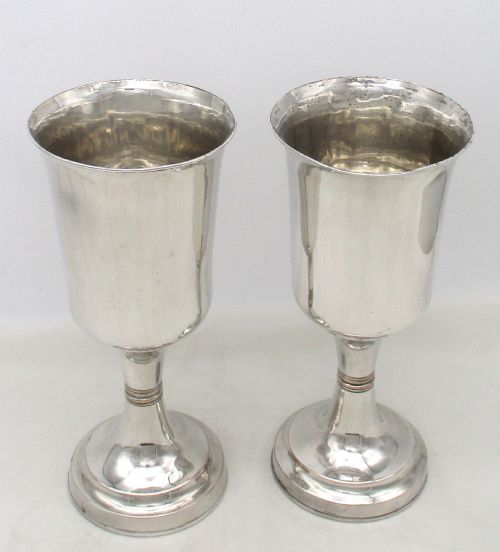
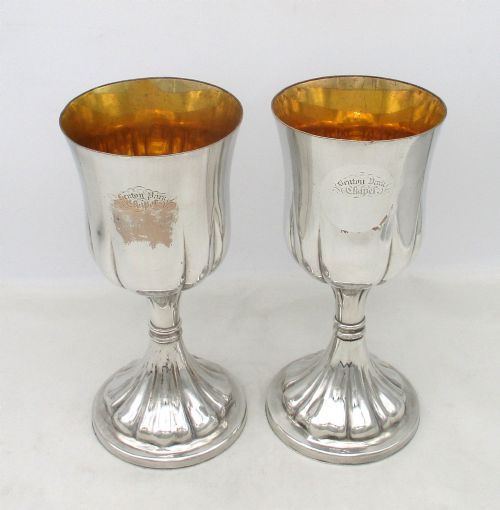
When you search for church communion plate, you encounter a specialised category of ecclesiastical metalwork designed for Christian liturgical worship. The selection on this page centres primarily on nineteenth century pieces, reflecting Victorian and William IV periods alongside earlier eighteenth century examples.
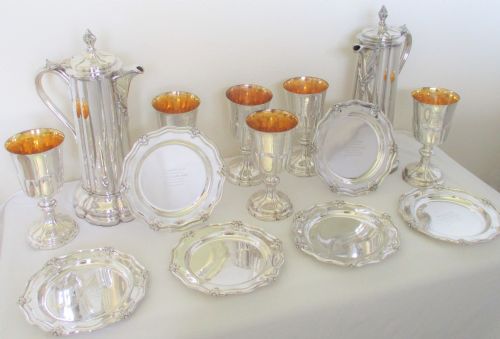
Victorian ecclesiastical styles dominate the current listings, alongside specific pieces attributed to the George I era. Buyers encounter individual goblets, paired chalices, and larger grouped sets originating from historical contexts such as Westminster and Poplar.
Materials and construction methods
Old Sheffield plate forms the foundation of many pieces, utilising a fused layer of silver upon a copper base through traditional plating techniques. This method imparts a durable construction visible in nineteenth century chalices, jugs, and flagons.
Silversmiths employed solid silver for specific items like the eighteenth century paten, applying traditional hammering and shaping methods. Gold gilding often enhances internal surfaces and decorative accents, creating a contrasting metallic finish against silver or plated exteriors.
Church Communion Plate Retail Price Guide 2026
Typical asking prices for church communion plate among the pieces listed under this phrase on Sellingantiques today, from the lower quarter to the upper quarter. They describe what is for sale here now, not the wider market.
Listings feature items from both the eighteenth and nineteenth centuries, spanning George I, William IV, and Victorian periods.
Judging the quality of ecclesiastical silver
The distinction between standard examples and superior pieces rests on the weight of the metal and the crispness of chased or engraved detailing. Items featuring complete boxed sets with fitted interiors demonstrate a higher level of original preservation.
Makers such as George Cooper or firms like Elkington Mason indicate a benchmark of manufacturing provenance that elevates certain pieces above anonymous workshop productions. The integrity of the underlying Old Sheffield plate surface, with minimal base metal exposure, defines the preservation state.
George Cooper·Elkington Mason
The Church Communion Plate Glossary
- Patten
- A small plate or dish used to hold the bread during the communion service. It is often paired directly with a matching chalice.
- Chalice
- A stemmed cup designed to hold sacramental wine during church services. These vessels frequently appear in matched pairs across the nineteenth century.
- Flagon
- A large vessel with a handle and spout used to hold wine before it is poured into individual chalices. Pairs of these jugs are documented in mid nineteenth century ecclesiastical contexts.
- Old Sheffield plate
- A composite material made by fusing a sheet of silver to a thicker copper ingot under heat. This historical technique creates durable wares that predate electroplating.
Church Communion Plate: Frequently Asked Questions
What is a church communion plate?
A church communion plate refers to liturgical vessels and patens used in Christian communion services. The items range from eighteenth century silver dishes to nineteenth century plated servers.
These pieces were fabricated for ecclesiastical use, often forming part of a larger service that included chalices and flagons.
How old are these communion vessels?
The available pieces predominantly date from the nineteenth century, including specific items from the 1830s and 1840s. Earlier examples stretch back into the eighteenth century.
Stylistic markers such as Victorian Gothic designs help date the pieces accurately.
What materials were used?
Makers utilised silver, copper, and Old Sheffield plate, frequently applying gold gilding to the interior surfaces of cups. These materials provided both durability and a suitable aesthetic for religious ceremonies.
Silver plating techniques evolved significantly between the Georgian and Victorian eras.
How were boxed communion sets used?
Boxed communion sets allowed clergy to transport chalices, flagons, and patens securely for services outside the main church building. These fitted cases protected the delicate metalwork during travel.
Complete sets remain intact with their original fitted compartments.