


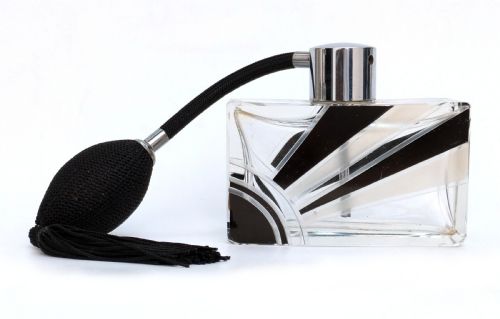


Chrome Perfume Spray
A chrome perfume spray brings Art Deco geometry and function together, offering a touch of 1930s dressing-table elegance.
Chrome Perfume Spray
When searching for a chrome perfume spray, buyers encounter dressing-table accessories primarily originating from the 1930s. These pieces belong firmly to the Art Deco style, combining metal hardware with glass vessels designed to mist fragrance.
The most common version met on this page is the perfume atomiser, often paired with stands or manufactured in substantial sizes. French and Czech origins dominate these listings, reflecting the major European centres of glass and metal production during the period.
Forms range from standard bottles to elaborate designs incorporating glass, enamel, and fabric details. Each piece serves as a functional container while displaying the characteristic geometric lines of the interwar decades.
Materials and construction
These items rely on a combination of chrome-plated metal and glass, often utilising cut crystal or pressed glass for the body of the bottle. The chrome hardware provides a bright, reflective finish that frames the coloured or clear glass beneath.
Makers integrated enamel and occasionally fabric elements to add decorative contrast to the metallic mounts. The glass vessels were moulded or cut into geometric shapes typical of the Art Deco repertoire before being fitted with the spray mechanism.
Many of these atomisers were designed to sit proudly on vanity trays, waiting to mist a bygone era's favourite scent.
Distinctions in quality
Quality in these pieces depends upon the weight and clarity of the glass, alongside the precision of the metal components. Heavier crystal bodies and intricate cutting elevate certain examples above standard moulded glass.
The sophistication of the design, such as the inclusion of a dedicated stand or applied enamel details, separates simpler items from more ambitious works associated with known designers and makers.
Rudolf Hlousek·Hermanova
The Chrome Perfume Spray Glossary
- Chrome
- A metallic plating applied to brass or other base metals to provide a bright, corrosion-resistant finish. This treatment defines the industrial aesthetic of 1930s vanity items.
- Atomiser
- A device that uses a squeeze bulb and internal tube to turn liquid perfume into a fine mist. It forms the primary functional mechanism of these dressing-table bottles.
- Cut crystal
- High-clarity glass containing lead oxide, shaped with geometric facets by a grinding wheel. It refracts light more intensely than standard moulded glass.
- Enamel
- A glassy substance melted onto the surface of metal for decoration. It introduces flat areas of solid colour into the design.
Chrome Perfume Spray: Frequently Asked Questions
What is a chrome perfume spray?
A chrome perfume spray is a vanity accessory from the 1930s designed to dispense fragrance as a fine mist. These pieces utilise metal hardware mounted onto glass bottles.
They represent the Art Deco period, combining industrial metal plating with decorative glass bodies for dressing tables.
How do you use a vintage atomiser?
Vintage atomisers operate by attaching a squeeze bulb to the metal mechanism, which draws liquid up a small tube inside the bottle. Squeezing the bulb forces air across the aperture to create the spray.
Most surviving examples are collected for display rather than daily use due to the age of the rubber components.
Where were these perfume bottles made?
The listings show pieces originating from France and Czechoslovakia, which were major hubs for decorative glass and metalwork during the interwar years. Czech glassworks and French studios produced distinctive designs.
Regional differences appear in the cutting of the glass and the styling of the chrome mounts.
How do you date a chrome atomiser?
These items are dated primarily through their distinct Art Deco styling, materials such as Bakelite and chrome, and specific manufacturing techniques typical of the 1930s. Maker attributions also help confirm the era.
The combination of polished chrome and geometric glass forms points directly to this interwar decade.