



Art Deco Atomiser
An art deco atomiser brings modernist glamour to a dressing table, combining geometric style with functional perfume delivery.
Art Deco Atomiser
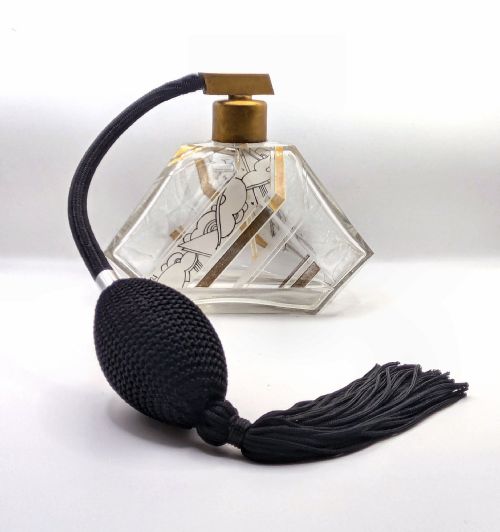
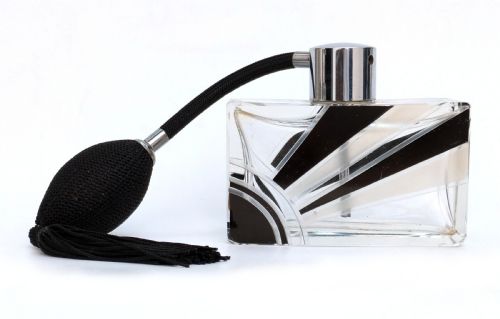
An art deco atomiser is a dressing table accessory designed to mist perfume, taking the form of scent bottles and perfume bottles produced during the 1920 and 1930 periods. You will frequently encounter glass, chrome, and enamel examples originating from France and Czechoslovakia.
The objects span simple glass bottles to complex combinations such as perfume atomisers mounted on stands or paired with powder compacts. Geometric forms and sunray motifs dominate the designs.
Makers and designers from Karl Palda to René Lalique shaped the output, resulting in pieces that function as both container and spray mechanism.
Materials and construction
Makers utilised moulded glass, crystal, and frosted glass for the body of the vessels, often incorporating amber, blue, or black glass colours. These glass bodies were frequently cut or shaped with geometric lines characteristic of the style.
Metal components in chrome, brass, and sterling silver provided the mounting and collar for the spray mechanism. Guilloche enamel added colourful decorative panels to silver bodies.
Fabric covered the squeeze bulbs that propelled the scent through the internal metal tubes, completing the atomiser assembly.
Art Deco Atomiser Retail Price Guide 2026
Typical asking prices for art deco atomiser among the pieces listed under this phrase on Sellingantiques today, from the lower quarter to the upper quarter. They describe what is for sale here now, not the wider market.
Some dressing table companions packed a double punch by hiding a powder compact right beneath the perfume spray.
Quality factors in design
The distinction between standard production and exceptional work rests on the complexity of the glass cutting and the presence of named designers. Pieces attributed to workshops like Karl Palda or makers such as René Lalique demonstrate superior execution in glass manipulation.
The inclusion of precious metals and detailed guilloche enamel elevates an example above plain glass and chrome versions. Stand-mounted pieces and combination sets represent more ambitious manufacturing efforts than standalone bottles.
Karl Palda·Rudolf Hlousek·René Lalique·Hermanova·Marcel Franck·Charles Green·DeVilbiss
The Art Deco Atomiser Glossary
- Atomiser
- A device designed to turn liquid perfume into a fine mist using a squeeze bulb and internal tube. It serves as the central mechanism for these vanity items.
- Guilloche enamel
- A decorative technique where an engraved metal surface is covered with translucent enamel. This finish appears frequently on high-end sterling silver mounts.
- Frosted glass
- Glass treated to achieve a matte, non-translucent finish. Makers utilised this effect to create textural contrast against clear or coloured glass bodies.
- Bakelite
- An early synthetic plastic utilised for decorative accents and caps on period pieces. It defines the modern material palette of the interwar years.
- Streamline
- A late art deco style emphasising smooth, aerodynamic curves and horizontal lines. It influenced the sleek profiles of 1930s perfume bottles.
Art Deco Atomiser: Frequently Asked Questions
How do I use an antique atomiser?
Most vintage atomisers retain their original mechanism, though the rubber bulbs often degrade over decades of storage. You should test the squeeze bulb gently before filling the vessel with modern fragrance.
Ensure the internal metal tube is clean and unobstructed to allow the perfume to mist correctly without leaking around the collar.
Where were these pieces made?
The evidence points primarily to French and Czech workshops, alongside domestic British production involving silver and enamel. Major glasshouses in Bohemia produced coloured and cut glass bodies that were fitted with metal hardware.
French makers contributed distinctive geometric and sculptural designs, particularly associated with the 1925 Paris exhibition aesthetic.
How do I date an art deco atomiser?
Dating relies on stylistic markers from the 1920 and 1930 periods, such as stepped geometric forms, chrome plating, and guilloche enamel. Maker marks stamped on the silver mounts or moulded into the glass base provide definitive attribution.
Objects featuring streamline curves typically date toward the later 1930s, whereas symmetrical block forms align with early twenties production.
Can I replace a missing fabric bulb?
Replacement bulbs and mesh-covered hosing can be sourced to restore non-functioning atomisers to working order. Care must be taken to match the threading and collar size of the original metal hardware.
Many collectors prefer to keep pieces with original fabric components intact, even if the rubber inside has hardened.