



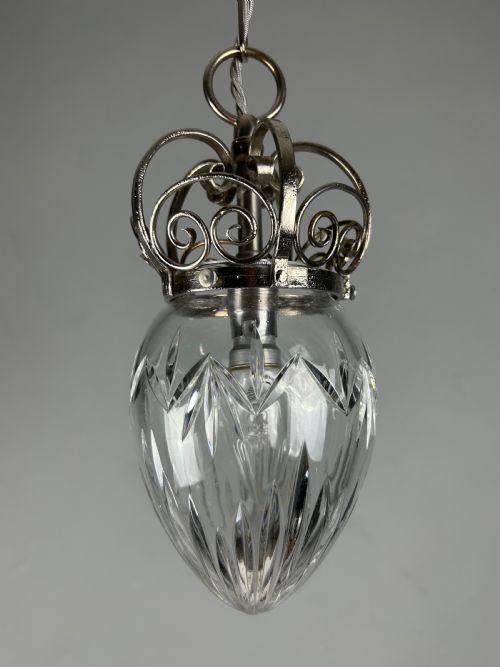


Chrome Ceiling Light Fixture
A chrome ceiling light fixture brings the clean lines of the Art Deco period straight into modern rooms through polished metal and glass.
Chrome Ceiling Light Fixture
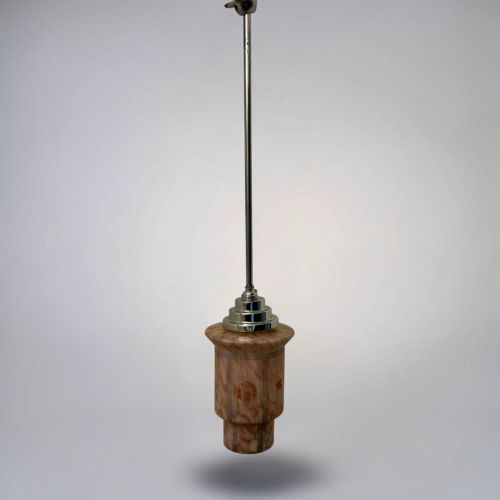
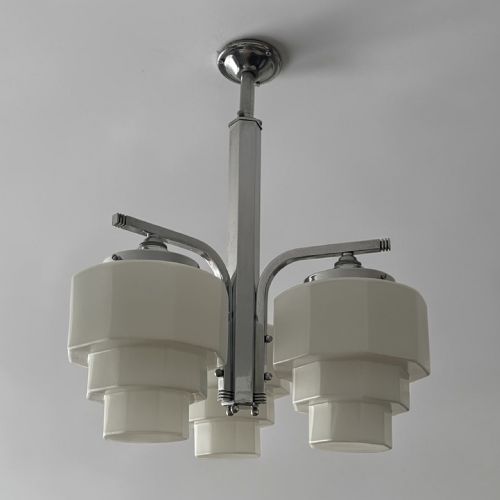
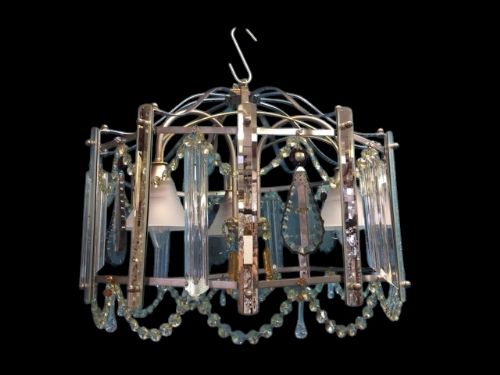
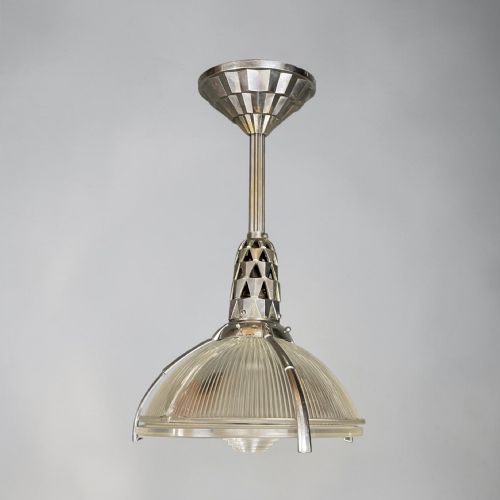
A chrome ceiling light fixture encompasses pendant lights, ceiling lights, and chandeliers originating from the 1920s and 1930s. These pieces include single pendant lanterns, bag chandeliers, and twin light lanterns designed to illuminate interiors with period style.
Art Deco and industrial Art Deco styles dominate the selection, often taking the form of pressed satin glass, frosted glass, or cut glass suspended on chrome or steel galleries. Buyers will frequently encounter French examples alongside rewired pendants featuring reeded designs and opaline glass.
How they were made
Manufacturers built these lighting fixtures using robust metals such as chrome and steel, paired with brass details to construct durable frames and galleries. These metallic elements provided both structural support and a sleek, reflective surface characteristic of the era.
Glass components were formed through specialised techniques, resulting in frosted, opaline, cut, and pressed satin glass shades. These varied glass treatments diffused light evenly while adding intricate geometric or textured patterns to each pendant and ceiling light.
Chrome Ceiling Light Fixture Retail Price Guide 2026
Typical asking prices for chrome ceiling light fixture among the pieces listed under this phrase on Sellingantiques today, from the lower quarter to the upper quarter. They describe what is for sale here now, not the wider market.
Fish scale opaline shades prove that early twentieth-century lighting designers found unexpected inspiration beneath the waves.
What varies in quality
The refinement of the glass shade largely dictates the quality of a chrome ceiling light fixture, distinguishing standard pressed elements from finely cut or moulded opaline and satin varieties. Superior pieces display crisp detailing and substantial weight in both the glass and the supporting metalwork.
The sophistication of the metal framework, including the integration of chrome, steel, and brass, separates basic utility lighting from high-status design suites. Pieces retaining specialised galleries and balanced proportions demonstrate superior manufacture from the interwar period.
Émile-Jacques Ruhlmann
The Chrome Ceiling Light Fixture Glossary
- Chrome
- A hard, corrosion-resistant metallic plating applied over base metals to provide a bright, reflective finish. This treatment defines the sleek aesthetic of 1930s lighting design.
- Opaline glass
- A milky, semi-translucent glass that diffuses light softly across a room. It frequently appears in reeded or fish scale pendant designs from the 1920s.
- Pressed satin glass
- Glass shaped in a mould to achieve a smooth, matte texture that scatters illumination gently. It is a hallmark of Art Deco ceiling lighting.
- Gallery
- The metal collar or rim at the top of a shade that secures it to the suspension wiring. These fittings often incorporate chrome or brass construction.
Chrome Ceiling Light Fixture: Frequently Asked Questions
What rooms suit a chrome ceiling light fixture?
These fixtures fit well in hallways, kitchens, and living spaces where a low-profile pendant or compact chandelier can provide direct illumination without overwhelming the room.
Their metallic finish and geometric glass shades complement both period properties and contemporary interiors seeking a touch of industrial elegance.
How do I identify a 1930s chrome ceiling light?
Look for characteristic Art Deco motifs, including stepped geometric patterns in the glass and the widespread use of polished chrome paired with steel or frosted glass.
Many of these fixtures feature specific shade types such as opaline fish scale or pressed satin glass typical of interwar manufacturing techniques.
Are these vintage lights rewired for modern use?
Many surviving pendant and ceiling lights are updated with modern wiring to meet current electrical standards while preserving their original metal and glass components.
Buyers should inspect the specific listing details to confirm whether the piece has been recently rewired for contemporary installation.
What is the difference between a pendant and a chandelier?
Pendant lights typically hang from a single suspension cord, chain, or rod, utilising one primary shade or lantern to direct illumination downward.
Chandeliers feature multiple light sources branching from a central frame, such as the cut glass bag chandeliers found in 1930s designs.