





Chippendale Style Server
A chippendale style server brings substance and classical proportion to a dining room, combining robust mahogany with intricate carved detail.
Chippendale Style Server
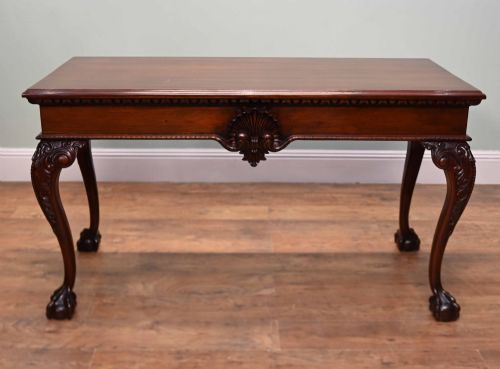
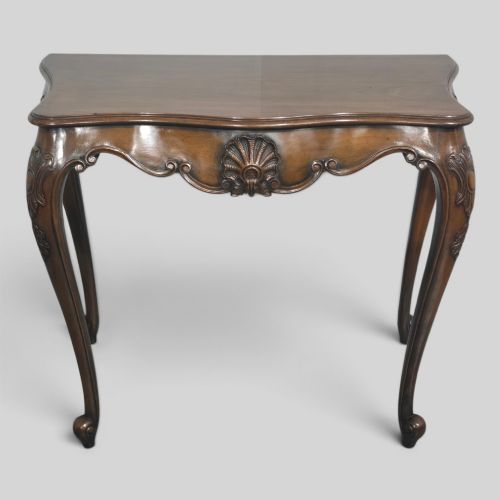
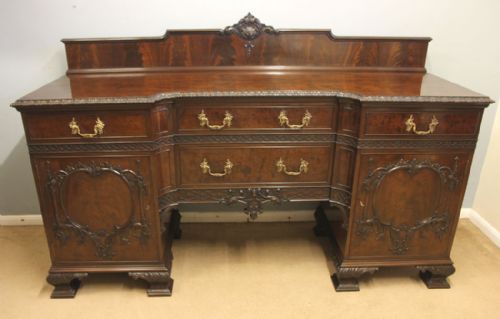
A chippendale style server encompasses robust serving tables, sideboards, side tables, and lowboys designed for practical use in dining spaces and halls. These pieces appear across various periods, from 18th century originals to 19th and 20th century revival interpretations.
The most common examples on this page are mahogany sideboards, console tables, and serving tables dating from the Georgian era through to the early 20th century. Makers often incorporated serpentine fronts, inverted breakfronts, and carved detailing to echo classical furniture patterns.
Buyers will also encounter regional variations, such as Irish and American pieces alongside English works, reflecting how widely the aesthetic travelled. Forms range from compact lowboys to large serpentine sideboards intended for grand dining rooms.
The Measure of Quality
The standard of a server rests upon the crispness of the hand carving and the selection of timber figures, particularly in flame mahogany and burr walnut veneers. Pieces displaying deep, sharp relief work on legs and friezes stand apart from simpler production.
Structural integrity and proportion also dictate the standing of a piece, with well-balanced serpentine fronts and substantial timber thickness marking out superior examples. Original hardware and untouched timber surfaces further distinguish finer historical pieces from later revival items.
Chippendale Style Server Retail Price Guide 2026
Typical asking prices for chippendale style server among the pieces listed under this phrase on Sellingantiques today, from the lower quarter to the upper quarter. They describe what is for sale here now, not the wider market.
Object forms range from compact lowboys and console tables to large serpentine fronted sideboards and serving tables.
Elkington and Co·Butler
The Chippendale Style Server Glossary
- Lowboy
- A small dressing table or side table featuring one or more rows of drawers beneath the flat top. These low tables frequently display cabriole legs.
- Serpentine
- A furniture front curved in a wave shape, convex at the centre and concave at the ends. This profile requires high skill in timber shaping.
- Breakfront
- A large cabinet or sideboard whose central section projects forward from the flanking portions. It creates visual depth across the elevation.
- Dresser base
- A sturdy wooden lower cabinet fitted with drawers or cupboards used for storage and serving. They originate from country house and farmhouse kitchens.
- Canteen
- A fitted box or chest designed to hold a set of cutlery securely. These cases often match the surrounding dining furniture style.
Chippendale Style Server: Frequently Asked Questions
What is the difference between a server and a sideboard?
A server typically functions as a slender table used specifically for presenting food and drink during meals. They often feature less enclosed cupboard space than a full sideboard.
Sideboards usually incorporate deeper storage compartments, drawers, and cupboards for stowing dining linen and silver. Both forms share similar decorative vocabulary in revival periods.
Where should I place a chippendale style server?
These tables find a natural home in dining rooms, positioned against a main wall to hold serving dishes or display silver. They anchor the room visually while remaining functional.
They also serve well in wide hallways as console tables or in drawing rooms beneath a mirror. Their finished backs and freestanding construction allow flexible placement.
How do I date a mahogany server?
Dating relies on examining timber preparation, structural joinery, and the style of the carving. 18th century pieces show hand-sawn markings and older construction methods.
Revival pieces from the 19th and 20th centuries often utilise machine-cut elements alongside traditional assembly. Secondary woods inside drawers help confirm the geographical origin and period.
Are these servers suitable for modern homes?
Their classic proportions and warm mahogany tones allow these pieces to complement contemporary interiors easily. They provide practical surface area and storage without dominating a room.
Using a traditional server in a modern setting adds textural contrast and historical depth. The durable timber surfaces stand up well to daily household use.