







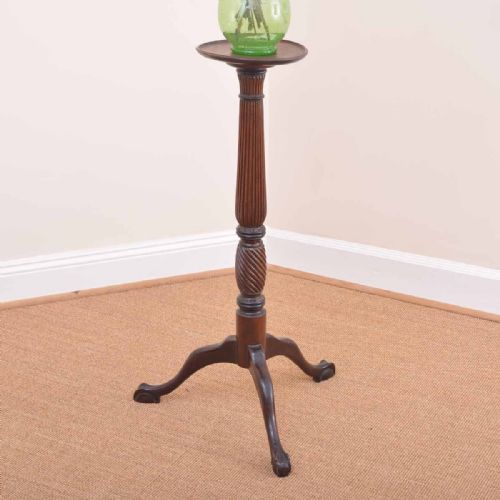

Chippendale Style Plant Stand
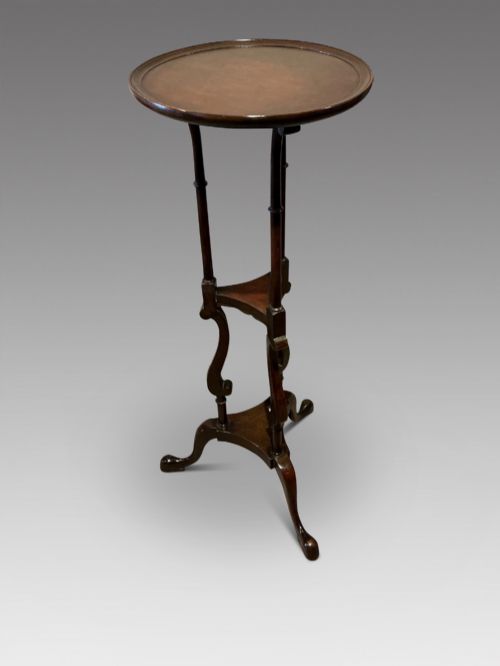
These chippendale style plant stand pieces are tall display supports and small tables that elevate ferns, vases or lamps.

Chippendale Style Plant Stand
A chippendale style plant stand serves as an elevated platform for floral displays, jardinieres or lighting within a room. The selection here spans the Victorian and Edwardian eras alongside the eighteenth and nineteenth centuries.
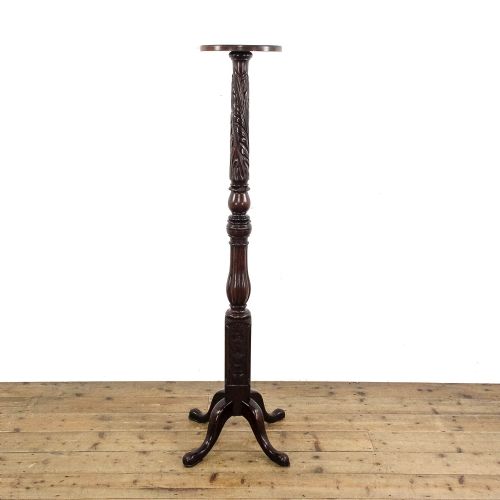
Most examples take the form of tall torchieres, pedestals, plinths and small wine or lamp tables. Mahogany predominates among the surviving pieces, accompanied by occasional examples in oak.
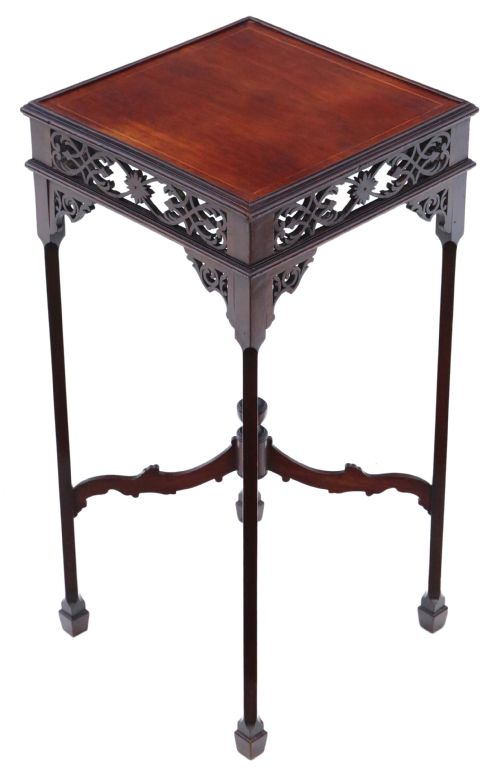
Makers drew on Georgian and Chinese Chippendale design vocabulary to create these slender occasional pieces. Buyers encounter various incarnations ranging from strict nineteenth-century interpretations to later revival pieces.
How they were made
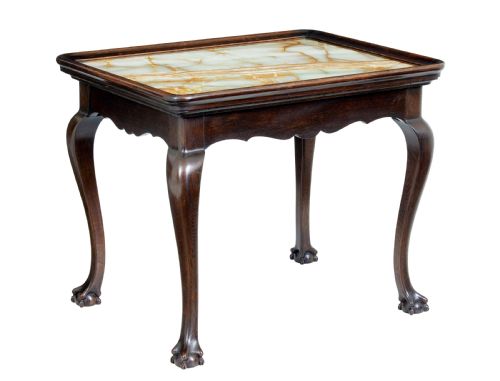
Joiners and cabinet makers utilised solid timber, primarily mahogany and oak, to construct these slender supports. Selected pieces incorporate brass or feature inset onyx tops.
Carving defines the surface detail, echoing the eighteenth-century motifs associated with the Chippendale style. Turning techniques shaped the central shafts and columns of the torchieres and pedestals.
Listings feature periods from the eighteenth century to the 1930s, constructed predominantly in mahogany and oak.
What varies in quality
Quality rests in the crispness of the timber carving and the structural stability of the tall, slender frame. Pieces with heavier, solid mahogany construction command greater attention than lighter alternatives.
The integration of contrasting materials, such as onyx tops or brass fittings, distinguishes finer decorative examples from plain utilitarian stands.
The Chippendale Style Plant Stand Glossary
- Torchere
- A tall, slender stand or pedestal designed to support a lamp or candle. These pieces often feature a small circular top supported by a turned column and tripod base.
- Wine Table
- A small occasional table with a circular top used for holding drinks. They frequently share similar proportions and pillar-and-tripod construction with plant stands.
- Pedestal
- A structural support or plinth used to elevate sculptures, vases or plants. These vertical stands lift decorative items to eye level.
- Chippendale Revival
- A nineteenth and twentieth-century design movement that recreated eighteenth-century furniture forms. Makers drew heavily on Thomas Chippendale pattern books for these pieces.
Chippendale Style Plant Stand: Frequently Asked Questions
What is a chippendale style plant stand used for?
These tall stands elevate plants, floral arrangements, jardinieres and lamps to create focal points in a room.
They function as decorative display furniture rather than heavy-duty storage tables.
Are these stands made from solid mahogany?
Many of the listed pieces utilise solid mahogany as the primary timber, reflecting traditional cabinet-making methods.
Some examples also employ oak, brass or onyx elements within their construction.
How do I date a plant stand?
Dating relies on timber characteristics, construction methods and stylistic revival periods visible in the piece.
The inventory includes examples from the eighteenth century through to the Edwardian era and the 1930s.
What is the difference between a torchere and a wine table?
A torchere is typically taller and narrower, designed specifically to elevate a light source or single decorative object.
A wine table provides a slightly lower surface intended for holding glasses or cups.