

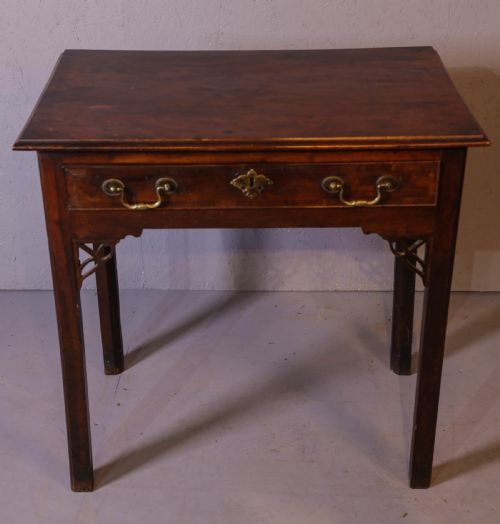


Chippendale Style Lowboy Table
These chippendale style lowboy table examples offer classic Georgian character and practical surface space for any traditional room.
Chippendale Style Lowboy Table
A chippendale style lowboy table is a compact serving or dressing table typically fitted with drawers beneath the surface. Buyers searching for a chippendale style lowboy table encounter forms originating from the eighteenth century alongside later revival pieces.
The evidence shows examples spanning the eighteenth century and the Georgian period, as well as Edwardian and twentieth century revivals. Most entries on this page take the form of lowboys, side tables, and dresser bases.
Wood selection defines the appearance of these tables, with mahogany dominating the listings alongside yew, burr walnut, walnut, and oak. Brass hardware frequently completes the drawer fittings on these lowboys and side tables.
Construction and materials
Cabinetmakers utilised solid timbers and veneers such as mahogany, yew, and burr walnut to build these tables. Grain patterns and natural figuring receive emphasis in the construction of both eighteenth century originals and later revivals.
Metal components like brass handles and escutcheons complement the wooden frames on lowboys and side tables. Joinery techniques from the periods represented ensure sturdy construction across side tables and dresser bases.
Chippendale Style Lowboy Table Retail Price Guide 2026
Typical asking prices for chippendale style lowboy table among the pieces listed under this phrase on Sellingantiques today, from the lower quarter to the upper quarter. They describe what is for sale here now, not the wider market.
One table arrives accompanied by an extensive eighty-six piece cutlery set in a fitted canteen.
Distinguishing quality
Quality in a chippendale style lowboy table rests upon the crispness of the carving and the selection of timber. Finer pieces display carefully chosen mahogany or burr walnut veneers with balanced grain matching.
Structural integrity and the retention of original brass hardware elevate certain tables above standard examples. The proportion of the legs and the depth of the drawer configuration distinguish superior specimens from simpler country house items.
Elkington and Co·Muirhead Moffat and Co
The Chippendale Style Lowboy Table Glossary
- Lowboy
- A small occasional table featuring one or more rows of drawers, commonly used as a dressing table or side table. These pieces typically stand on slender legs.
- Serpentine top
- A tabletop featuring a convex centre flanked by concave curves, or vice versa, creating a undulating front edge. This shape appears on select eighteenth century lowboys.
- Dresser base
- A low wooden sideboard or table fitted with drawers, originating from domestic dining rooms and kitchens. These items provide substantial surface and storage capacity.
- Burr walnut
- A highly figured wood veneer harvested from the burl growths of walnut trees. Cabinetmakers utilised this material to create decorative patterned surfaces on tabletops.
Chippendale Style Lowboy Table: Frequently Asked Questions
What is a lowboy table used for?
A lowboy functions primarily as a small side table or a compact dressing table with integrated drawer storage. Historically placed in bedrooms or parlours, these tables hold everyday items.
Today, buyers utilise lowboys in hallways, living rooms, or as compact writing desks. Their modest footprint allows them to fit into spaces where larger sideboards cannot go.
How do I date a mahogany lowboy?
Dating relies on examining the timber species, construction methods, and hardware style present on the piece. Eighteenth century originals display hand-cut dovetails and period specific timber patination.
Revival pieces from the Edwardian era or the nineteen-thirties often replicate earlier Georgian proportions using machine-assisted joinery or alternative secondary woods.
Are these tables made of solid wood?
Many examples utilise solid mahogany, yew, or oak for their primary frames and structural components. Cabinetmakers frequently applied fine veneers like burr walnut over secondary timber bases.
Examining the drawer linings and internal framing reveals the mix of solid timbers and applied veneers characteristic of each manufacturing period.
Where should I place a lowboy in my home?
These versatile tables suit entryways as a place to drop keys or display small decorative objects. Their shallow depth also makes them effective behind sofas or against hallway walls.
In bedrooms, a lowboy serves as a traditional dressing table paired with a small stool or chair.