
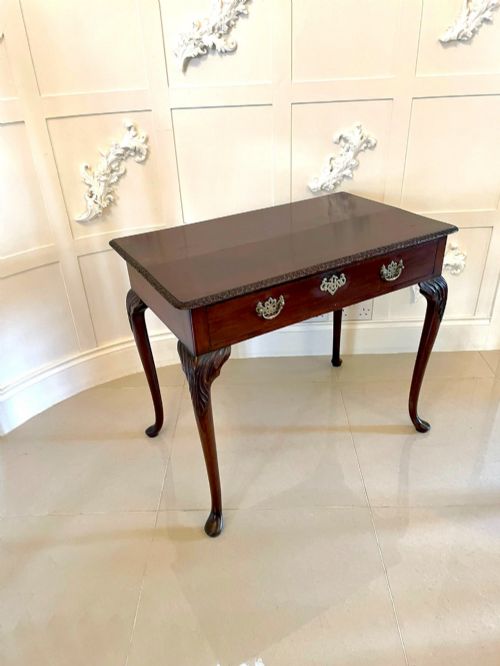
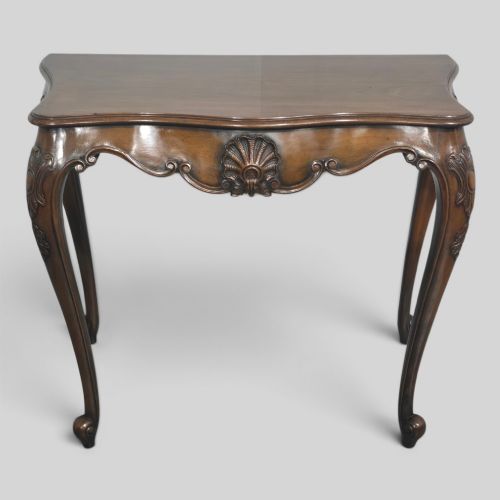
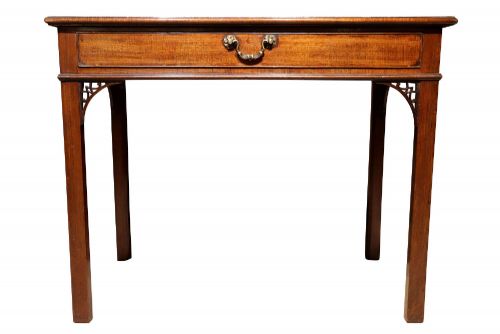


Chippendale Server Table
These mahogany pieces are a chippendale server table, built for grand dining rooms and built to display silver.
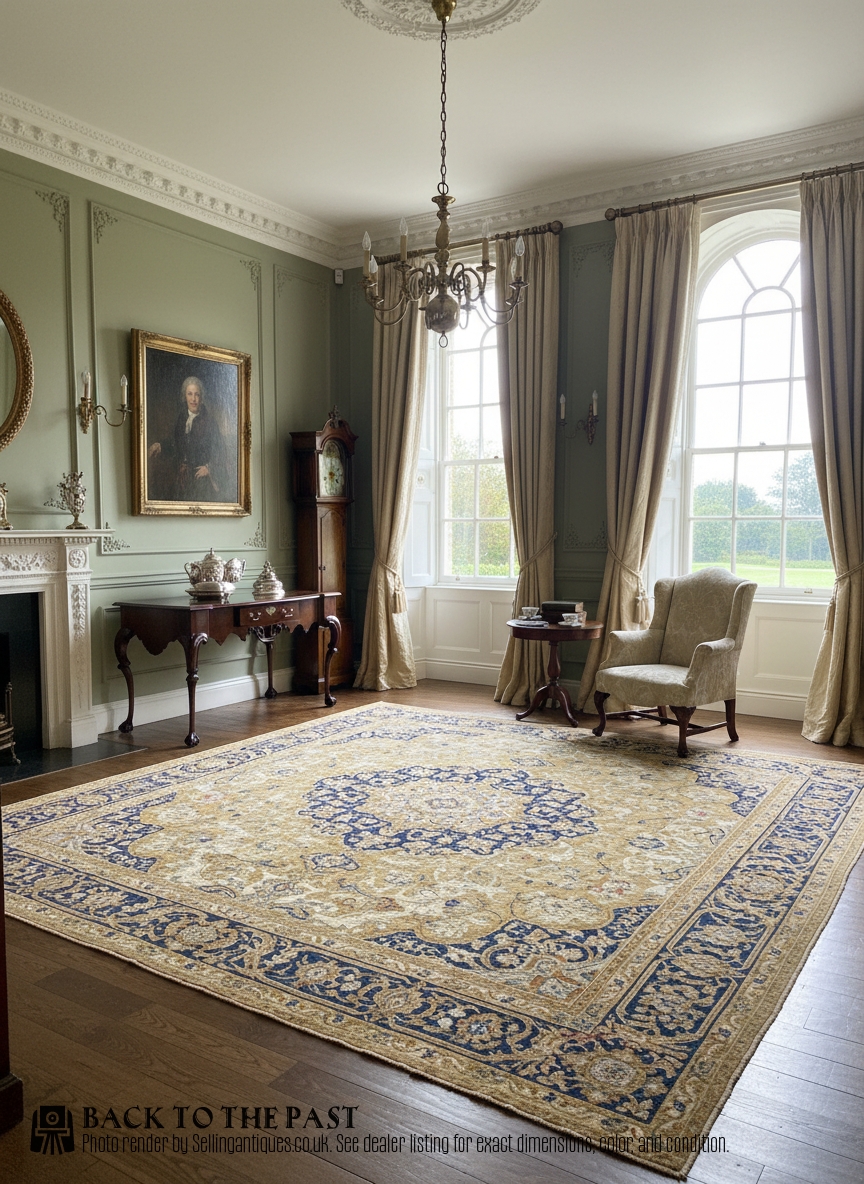
Chippendale Server Table
When you search for a chippendale server table, you enter a field defined by formal dining furniture from the eighteenth century onwards. These tables appear under various names including side tables, console tables, and serving tables, designed to stand against dining room walls.
The versions you meet most frequently on this page span from Georgian originals to later revival periods in the nineteenth and twentieth centuries. Mahogany forms the backbone of these pieces, often enriched with carved details.
Makers and workshops across different eras adapted these serving forms, producing everything from George III sideboard servers to later console variations in the Chinese Chippendale manner.
Materials and construction
Solid mahogany and flame mahogany veneer provide the primary structural and visual impact across these items. Carving takes centre stage, executed by hand to render gothic pierced brackets and intricate mouldings.
Brass hardware occasionally supplements the timber construction, particularly on drawer fittings and associated pieces. Oak frequently appears as a secondary timber for drawer linings and internal framing.
Mahogany dominates the listings here, supported by occasional examples in oak and burr walnut.
Measures of quality
The distinction between a standard piece and a superior example rests on the crispness of the hand carving and the selection of figured timber. Finely grained mahogany and deep, articulate carving separate the finest serving tables from simpler utilitarian pieces.
Proportion and period integrity drive value, where genuine eighteenth-century construction methods align with authentic stylistic vocabulary. Later revivals vary according to the fidelity of their interpretation and the depth of the cabinetmaker's skill.
Elkington and Co·Butler
The Chippendale Server Table Glossary
- Lowboy
- A low serving table or dressing table usually fitted with drawers, standing on relatively short legs. These pieces typically date from the Georgian era and functioned as compact servers.
- Pier table
- A decorative table designed to stand against a wall between windows, often positioned beneath a pier glass mirror. These serve a primarily display-oriented role in formal rooms.
- Giltwood
- Timber that has been coated with a thin layer of gold leaf or gold paint. This finish highlights carved architectural details on high-status tables.
- Serpentine front
- A furniture front characterised by a concave central section flanked by convex ends, or vice versa. This undulating profile requires advanced woodworking skill.
Chippendale Server Table: Frequently Asked Questions
What is the difference between a server table and a side table?
Server tables traditionally stood in dining rooms to hold platters and silver during meals, often possessing longer proportions suited to serving.
Side tables served a more general domestic purpose across hallways and reception rooms, though the terms often overlap in antique listings.
How do I spot a Georgian original from a revival piece?
Georgian originals exhibit period-specific construction techniques, timber shrinkage, and hand tool marks appropriate to the eighteenth century.
Revival pieces from the nineteenth and twentieth centuries often show standardised machine-cut elements and distinct secondary woods despite adopting historic styles.
Where should I place a console table at home?
These tables suit hallways, living rooms, and dining spaces where their shallow depth allows them to sit flush against a wall.
They work well beneath mirrors or artwork, providing a surface for lamps and decorative objects without blocking walkways.
What does the Chinese Chippendale style look like?
Chinese Chippendale incorporates Asian-inspired motifs such as lattice fretwork, pagoda-style silhouettes, and intricate geometric glazing or bracket designs.
Carvers applied these exotic elements to standard European furniture forms during recurring revival movements.