
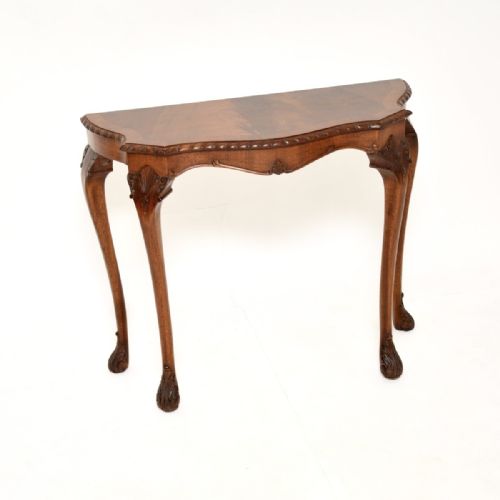


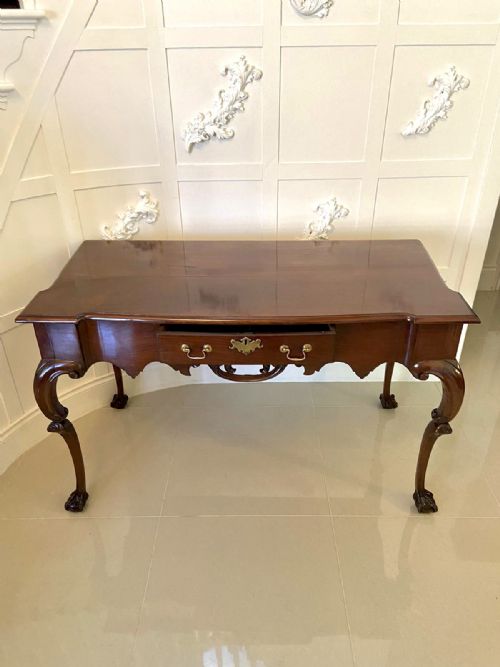
Chippendale Hallway Table
A chippendale hallway table brings architectural timber and carved detail straight to an entrance, offering surface space built from rich mahogany.
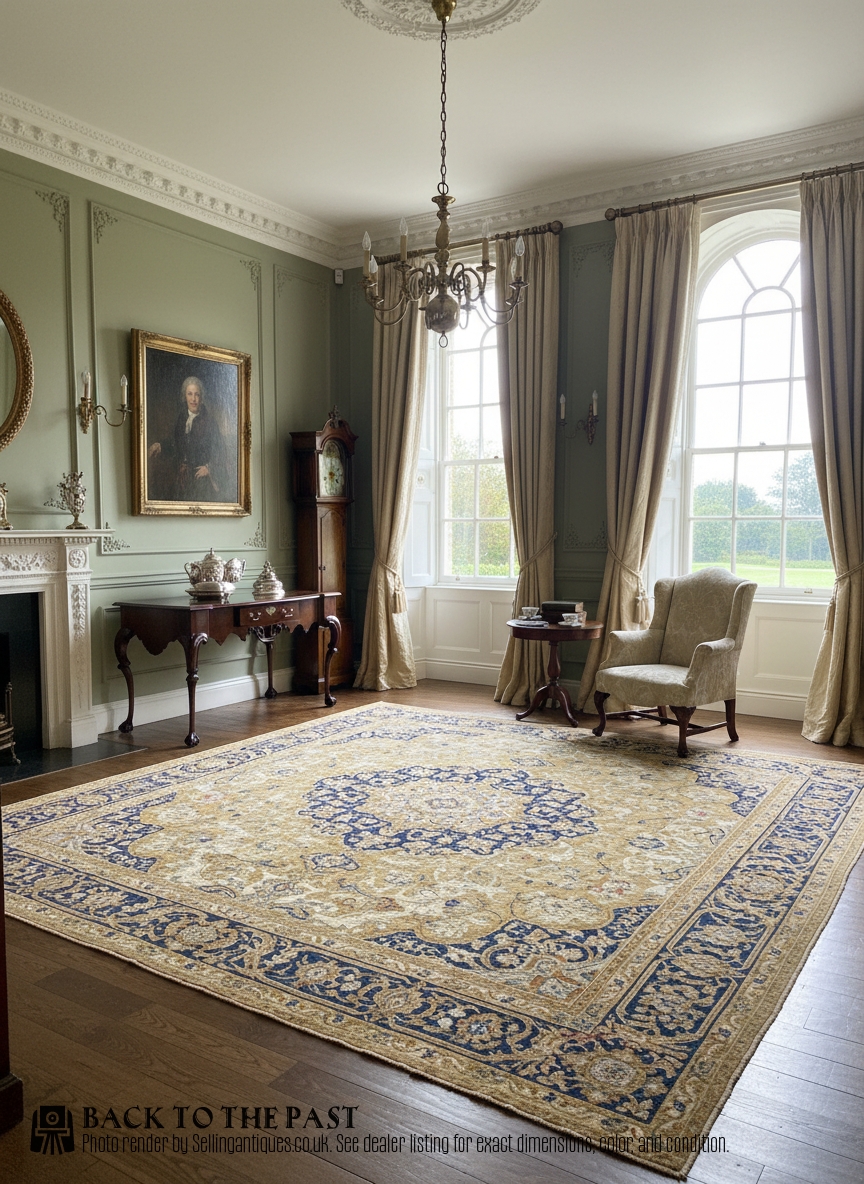
Chippendale Hallway Table
When you search for a chippendale hallway table, you encounter practical side tables, console tables, hall tables, and lowboys designed for placement in corridors and reception spaces. These pieces span centuries, including genuine 18th-century Georgian examples alongside later revival items from the Victorian, Edwardian, and 1930s periods.
Structural forms vary between slender lowboys with fitted drawers and substantial console or side tables featuring carved aprons. Each piece serves as a narrow furnishing intended to sit flat against a wall without blocking the flow of a hallway.
Materials and construction methods
Construction relies heavily on mahogany, often selected for figured grain patterns that catch the light along the top surface. Cabinetmakers shaped the timber by hand, joining structural elements with traditional joinery before applying carved decoration to the rails and legs.
Secondary details incorporate brass handles on drawers and occasional leather surface inserts, while specific revival or regional pieces utilise gold leaf to accentuate carved motifs. The combination of dense mahogany and hand-carved ornamentation allows these tables to endure heavy daily use while retaining crisp decorative lines.
Materials appearing across the inventory include solid mahogany, brass hardware, leather inserts, and touches of gold leaf.
Assessing quality in carved tables
Quality rests in the crispness of the hand-carving along the apron and legs, where deeper undercut details and fluid lines distinguish superior cabinet work from mechanical reproduction. The choice of timber also dictates the visual merit, with well-figured mahogany displaying lively grain patterns across the primary surface.
Proportion and structural integrity separate the finest examples from simpler utilitarian pieces. Tables that maintain balanced proportions between the top board and the supporting legs, alongside tight joints and uncompromised timber thickness, hold greater presence in a hallway setting.
Hicks of Dublin
The Chippendale Hallway Table Glossary
- Chippendale
- A style of English furniture design originating from the pattern books of Thomas Chippendale during the 18th century. It incorporates Gothic, Rococo, and Chinese influences.
- Lowboy
- A small dressing table or side table featuring one or more rows of drawers beneath the main surface. These compact items function well in narrow entrance spaces.
- Console table
- A table designed to stand against a wall, frequently supported by wall brackets or ornate legs. They provide surface space without protruding deeply into a room.
- Irish Chippendale
- A distinct regional variation known for heavier proportions and robust, deeply carved ball-and-claw feet. Irish makers often embraced dramatic relief work.
- Figured mahogany
- Timber showing varied, rippled grain patterns created by natural variations in tree growth. Cabinetmakers reserved these boards for prominent exterior surfaces.
Chippendale Hallway Table: Frequently Asked Questions
What is a chippendale hallway table used for?
These tables provide a narrow surface in an entrance hall for placing post, keys, or decorative objects. Their compact depth ensures they fit into corridors without obstructing movement.
Historically, they also served as serving tables or sideboards in dining spaces before finding a permanent role in hallway placement.
How do I spot an 18th century piece?
Original 18th-century examples show traditional hand-cut joinery, timber shrinkage appropriate to age, and wear patterns consistent with extensive use. The grain of the mahogany feels deep and warm under hand contact.
Revival pieces from the 19th or 20th century often display more uniform machining marks or timber preparation methods characteristic of later workshops.
Will a console table fit a narrow hallway?
Most console and side tables built in this style feature a shallow depth specifically designed to sit flat against a corridor wall. Measuring the clearance between the opposite wall and the intended placement spot ensures adequate walking space.
Lowboys offer a similarly compact footprint while providing useful drawer storage underneath the top surface.
How do I care for antique mahogany furniture?
Protect the timber surface by avoiding placement in direct sunlight or near sudden heat sources that cause wood to dry out. Regular dusting with a dry cloth maintains the finish without needing heavy chemical polishes.
Applying occasional natural wax helps nourish the mahogany and preserve the depth of the grain over decades of use.