

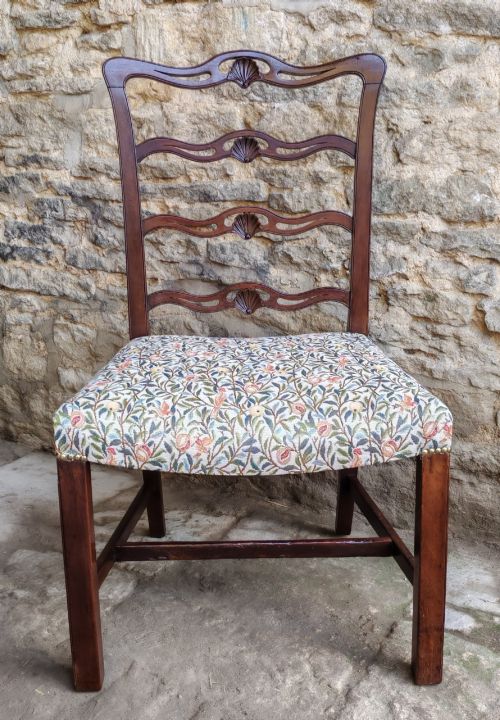
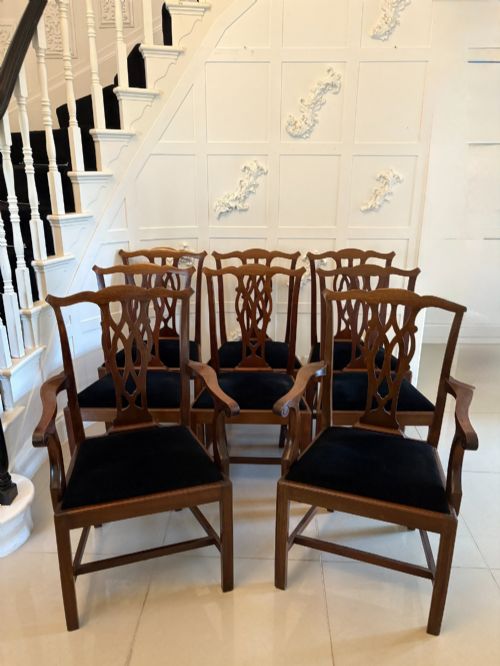
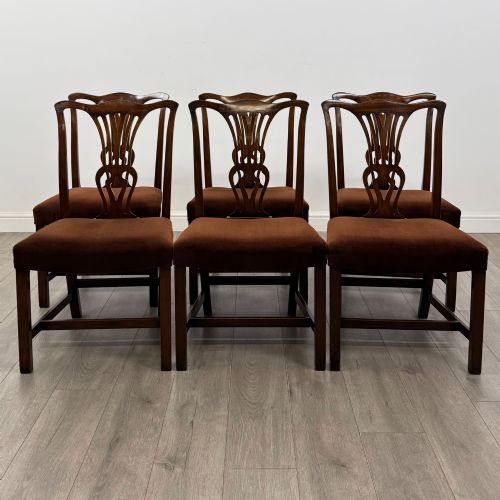
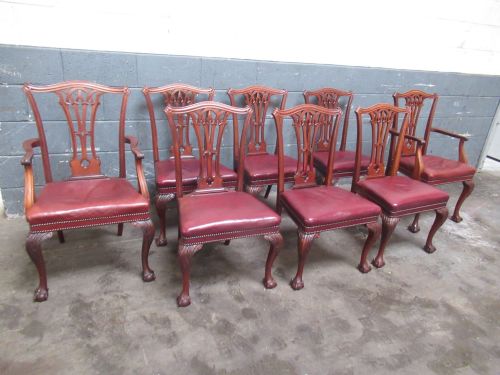
Chippendale Pierced Back Chair
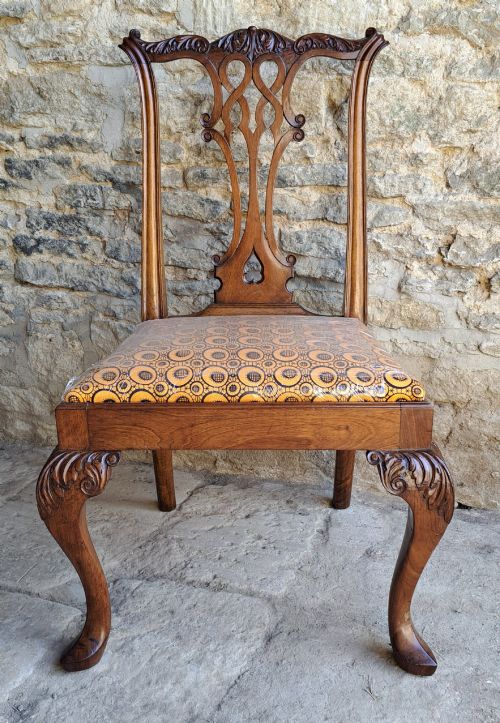
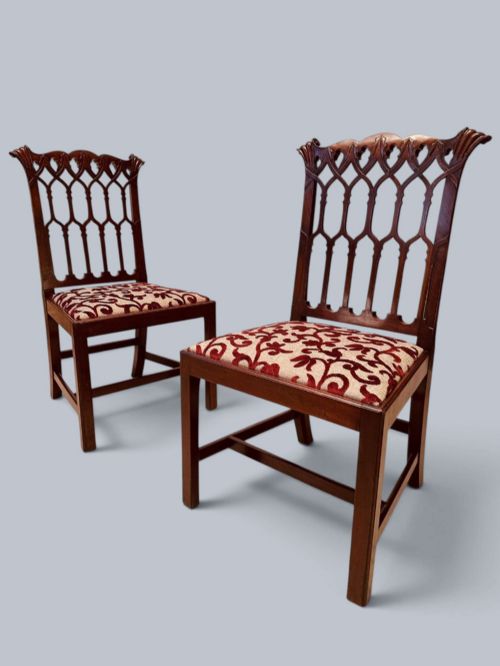
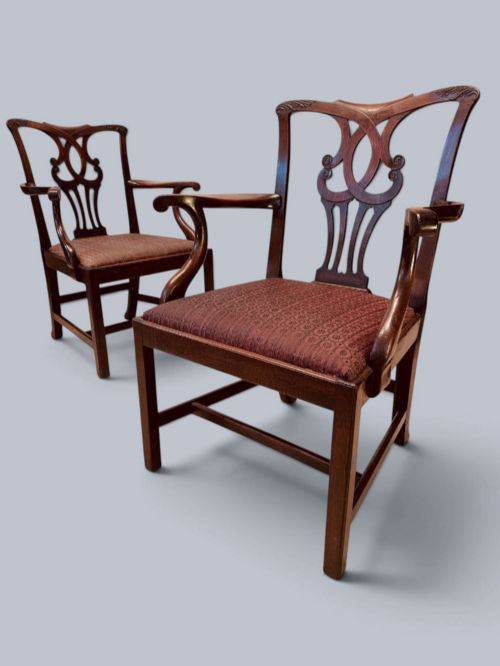
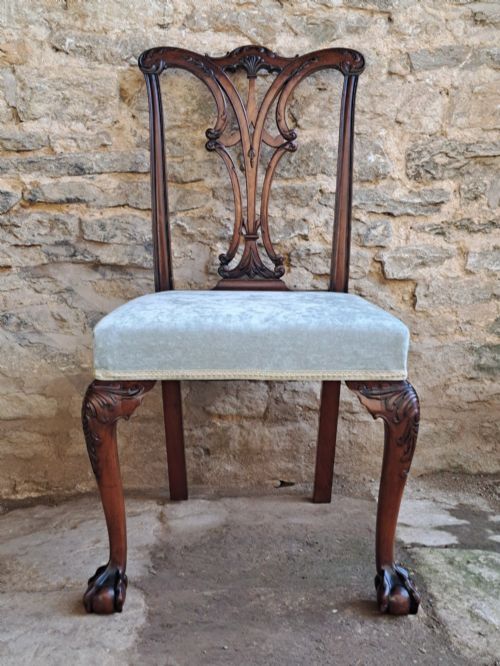
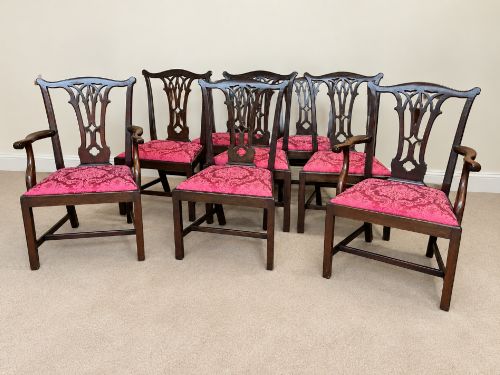
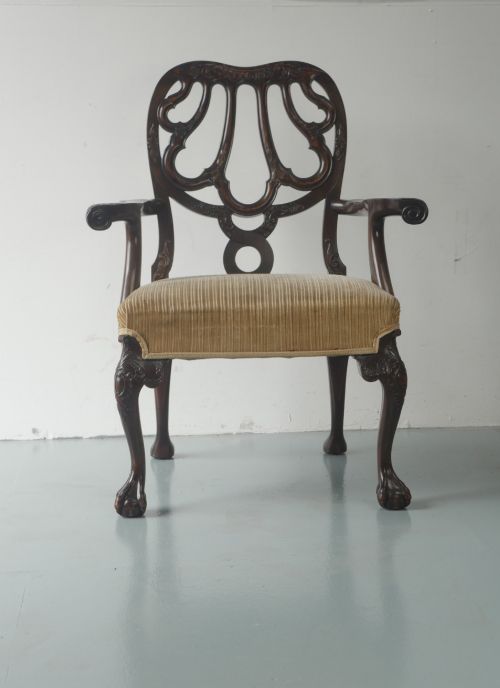
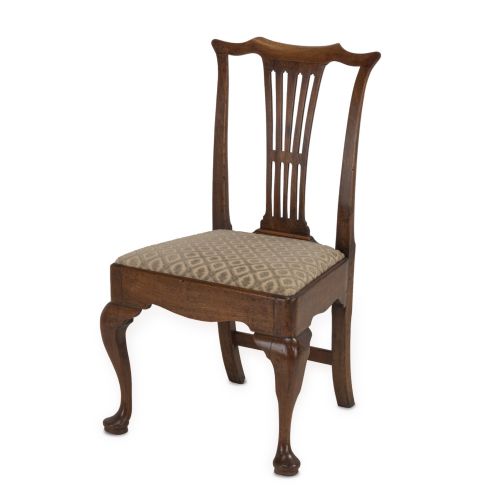
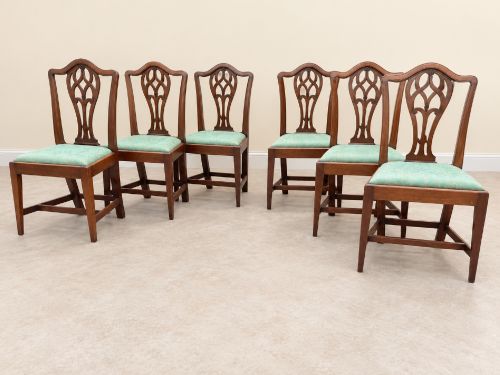
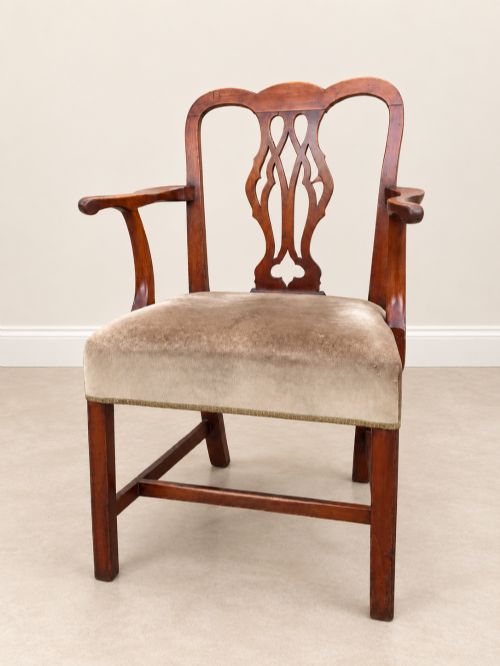
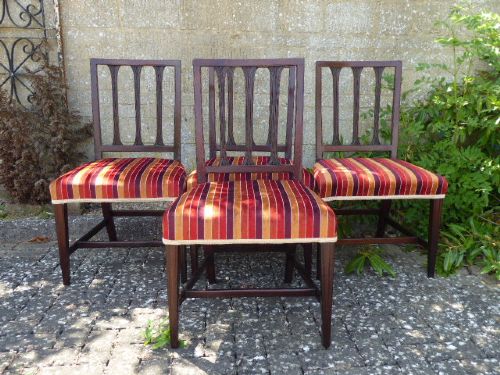
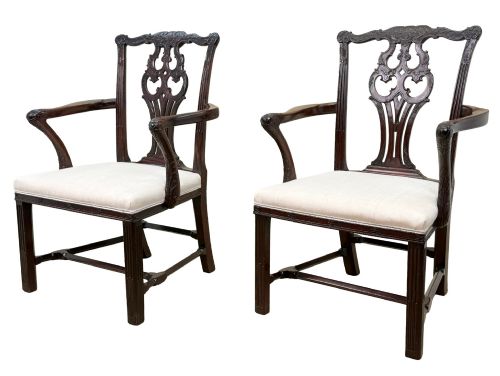
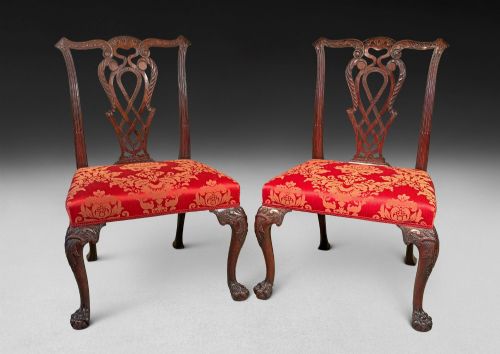
These chippendale pierced back chair examples combine sturdy timber with elaborate openwork splats, offering both formal dining utility and traditional seating character.
Chippendale Pierced Back Chair
A chippendale pierced back chair centres on a timber frame featuring an openwork splat, typically supporting an upholstered or drop-in seat. The form appears across dining chairs, armchairs, side chairs, and settees.
Period examples span the eighteenth century and the Georgian era alongside later revivals from the nineteenth and early twentieth centuries. Mahogany forms the predominant timber, though walnut, fruitwood, and oak also occur.
Buyers meet both individual seating pieces and matched sets, ranging from pairs to large dining sets numbering ten or more. Origin labels include English workshop production and regional variations like Irish dining chairs.
Materials and Construction Methods
Makers relied primarily on solid mahogany and walnut for structural stability and fine carving capability. Timber preparation involved careful seasoning to prevent warping in the intricate splats.
Joinery techniques united seat rails and legs using mortise and tenon joints, while back splats were shaped and pierced by hand. Upholstery materials like leather, fabric, velvet, and tapestry were secured over drop-in frames or webbing.
Chippendale Pierced Back Chair Retail Price Guide 2026
Typical asking prices for chippendale pierced back chair among the pieces listed under this phrase on Sellingantiques today, from the lower quarter to the upper quarter. They describe what is for sale here now, not the wider market.
Listings span mahogany, walnut, fruitwood, and oak, alongside upholstery in leather, velvet, tapestry, and fabric across Georgian and revival eras.
Judging Quality in Chippendale Seating
Quality rests on the crispness of the timber carving and the architectural balance of the pierced splat. Earlier eighteenth-century period pieces often show finer proportion and deeper relief than later revival examples.
The integrity of the timber frame, uniformity across a set, and the retention of original upholstery foundations distinguish superior examples from standard production.
The Chippendale Pierced Back Chair Glossary
- Pierced splat
- The central vertical wooden element of a chair back that is carved and pierced to create open patterns. This detail defines the silhouette.
- Drop-in seat
- A removable wooden frame upholstered separately and dropped into the seat rails. It allowed easy recovering of fabric or needlework.
- Elbow chair
- An armchair designed with enclosed or open arms for a gentleman or morning room use. These pieces often matched larger dining sets.
- Ladderback
- A chair back featuring horizontal wooden rails resembling a ladder. Some nineteenth and twentieth-century variants adopt this arrangement alongside pierced splats.
- Georgian
- The historical period spanning the reigns of the first four Georges, renowned for classical proportions and mahogany furniture design.
Chippendale Pierced Back Chair: Frequently Asked Questions
How do I date a Chippendale chair?
Dating relies on timber choice, construction marks, and tool traces visible on the underside of the frame. Eighteenth-century pieces show hand-cut joinery while later revivals often exhibit nineteenth or twentieth-century manufacturing signatures.
Style nuances also help separate period work from later revivals. Georgian makers kept proportions lighter and carving crisper, whereas Victorian and Edwardian revival pieces sometimes appear heavier.
Are these chairs suitable for daily dining?
Solid mahogany construction makes these chairs robust enough for regular seating around a dining table. Modern users often pair them with antique or contemporary tables.
Checking the stability of the frame and the condition of the internal webbing ensures safe everyday use. Period drop-in seats can be reinforced if necessary.
What is Chinese Chippendale?
Chinese Chippendale refers to a distinct sub-style incorporating fretwork, geometric lattice patterns, and pagoda motifs inspired by East Asian design. These chairs appeared during the eighteenth century and returned in later revival periods.
The aesthetic focuses on straight legs and intricate pierced woodwork rather than the curved cabriole legs common to standard Georgian seating.
Can I mix armchairs and side chairs?
Historically, matched dining sets frequently combined a pair of armchairs for the heads of the table with multiple side chairs. Mixing individual pieces requires attention to timber tone, height, and carved back design.
Matching the mahogany shade and splat silhouette keeps a unified appearance when combining separate side chairs and elbow chairs.