



Chippendale Mahogany Stool
A chippendale mahogany stool brings substantial timber and traditional carving into a room, offering both practical seating and decorative weight.
Chippendale Mahogany Stool
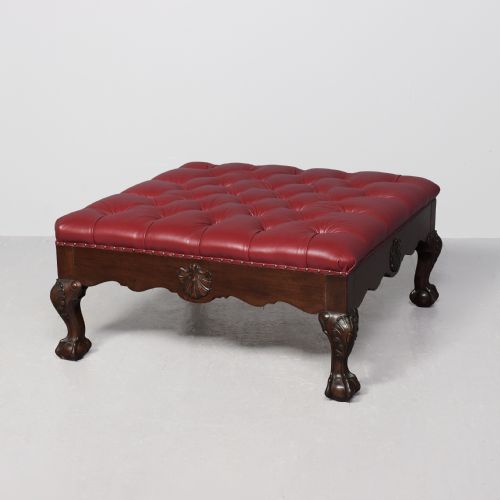
A chippendale mahogany stool spans formal 18th-century Georgian origins and later 19th- and 20th-century revival interpretations. Buyers encounter various formats, from compact dressing stools and piano benches to large centre stools and footstools.
Materials and construction
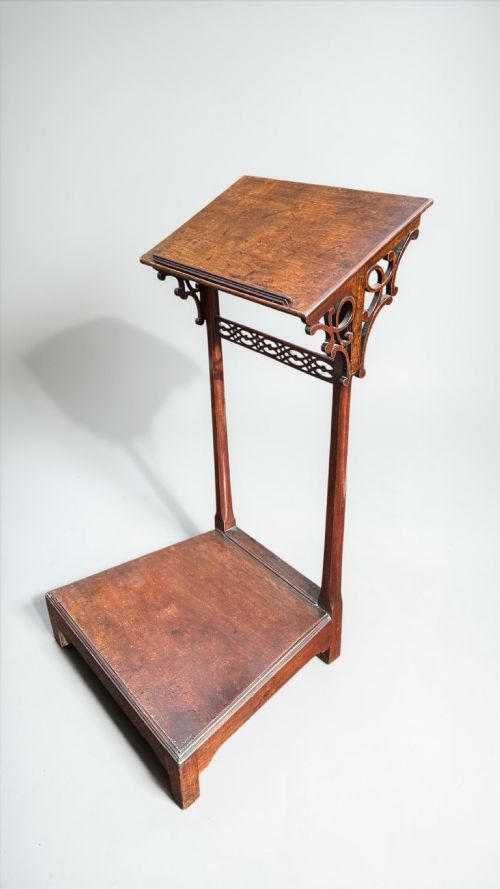
Construction relies primarily on solid mahogany frames, frequently enhanced by detailed hand-carved ornamentation on the legs and rails. Brass details occasionally appear on specific variants like library steps.
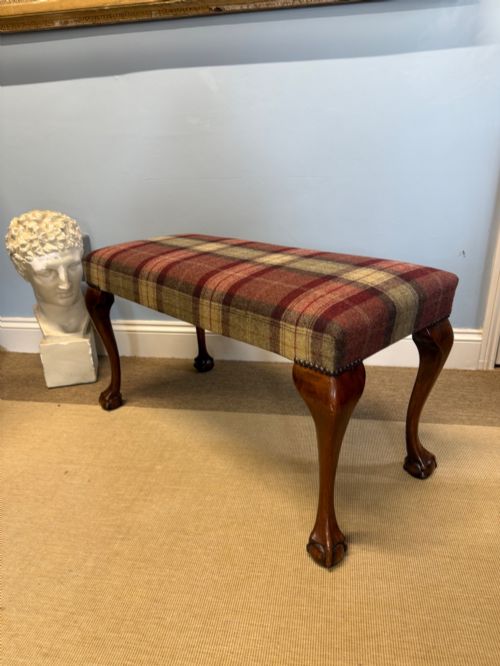
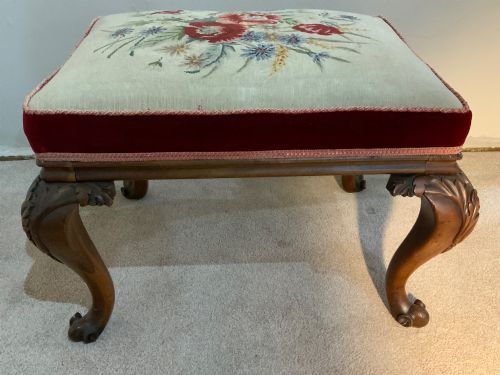
Upholstery materials cover a broad historical spectrum, including original or replacement leather, velvet, damask, tapestry, wool, and fabric.
Listings demonstrate that fabric, leather, and damask serve as the primary upholstery materials for these mahogany frames across all periods.
Judging the piece
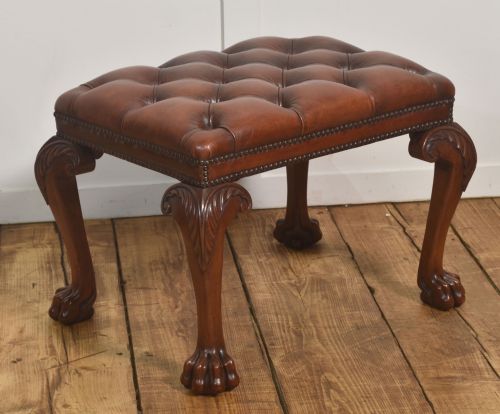
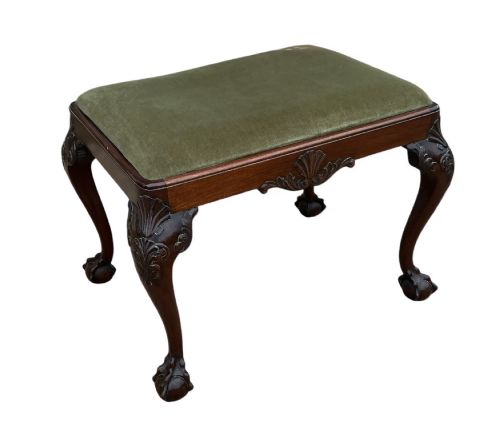
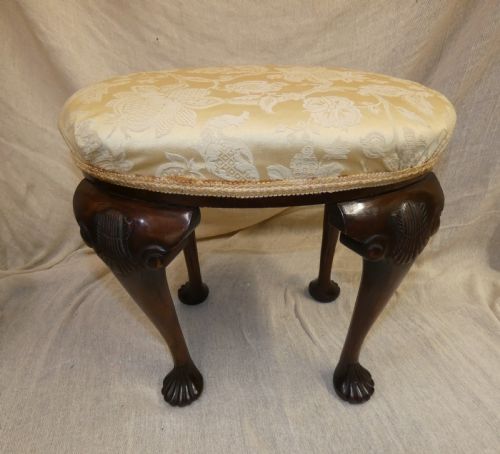
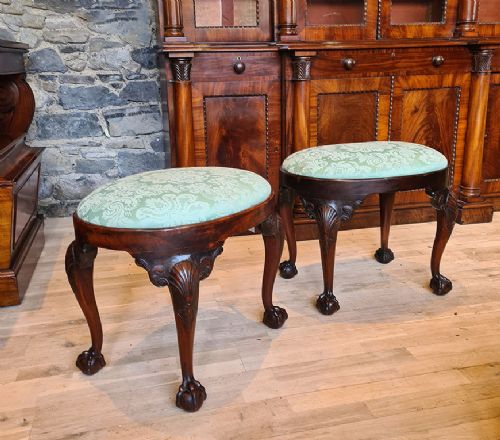
Quality rests in the crispness of the timber carving, particularly around the knees and feet where ball and claw motifs occur. Deeply sculpted woodwork separates standard commercial production from finer revival and period examples.
The integrity of the frame construction and the quality of the chosen upholstery materials also define the overall standard of the piece.
The Chippendale Mahogany Stool Glossary
- Chippendale Revival
- A late 19th- or early 20th-century style replicating the 18th-century designs associated with Thomas Chippendale. These pieces emulate the proportions and carving motifs of the earlier Georgian era.
- Serpentine
- A curved shape reminiscent of a snake, often seen along the frame rails or seats of formal stools. This undulating line adds visual movement to the timber structure.
- Ball and claw
- A furniture foot motif depicting a bird talon grasping a ball. It is frequently carved into the mahogany feet of Chippendale style seating.
Chippendale Mahogany Stool: Frequently Asked Questions
Are these stools comfortable for daily seating?
Most pieces feature padded upholstery covered in leather, velvet, or damask, making them suitable for occasional sitting at a dressing table or piano. Their firmness depends largely on the age and current state of the internal stuffing.
Larger centre stools and ottomans provide a wider surface, while smaller footstools are built primarily to support legs rather than to serve as primary chairs.
How can I tell an 18th-century piece from a revival piece?
Original 18th-century examples show the natural ageing of mahogany timber, hand-cut joinery, and wear patterns consistent with extended domestic use. Revival pieces from the Victorian or Edwardian eras utilise machine-assisted techniques alongside period-accurate styling.
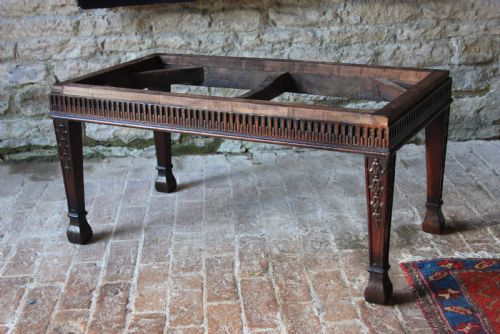
Examining the underside of the frame often reveals clues regarding construction methods and the age of the wood components.
What rooms suit a mahogany stool best?
These pieces fit naturally into studies, libraries, dressing rooms, and living spaces where traditional wooden furniture predominates. Their dark timber tones complement classic interior palettes and antique side tables.
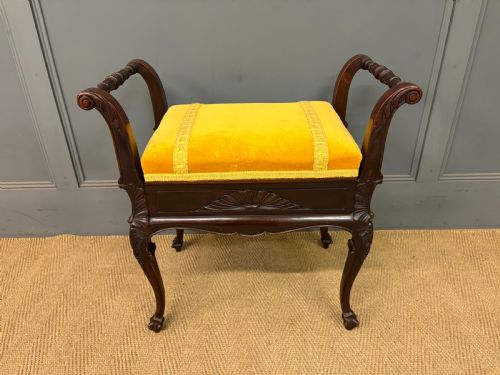
A piano stool or duet bench serves a functional purpose near instruments, while a larger window seat occupies a hallway or bedroom alcove.
How do I care for the leather and wood?
Mahogany frames benefit from occasional polishing with traditional wax to maintain the sheen of the timber. Direct sunlight should be avoided to prevent the wood from fading over time.
Leather upholstery requires specific conditioning balms to keep the hide supple, while fabric and damask surfaces need gentle dusting or specialist cleaning.