

Chippendale Leather Chairs
Chippendale leather chairs combine robust mahogany frames with supple leather upholstery, bringing enduring formal presence and practical comfort to any room.
Chippendale Leather Chairs
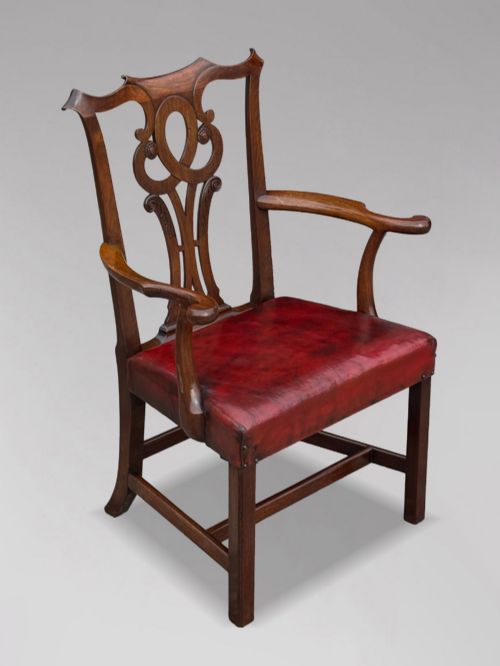
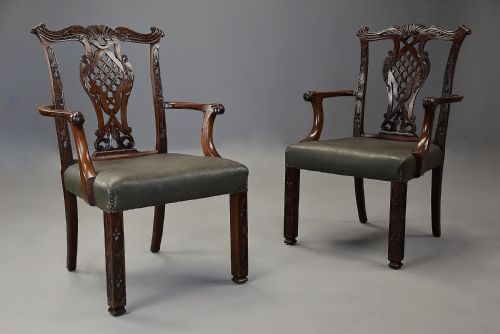
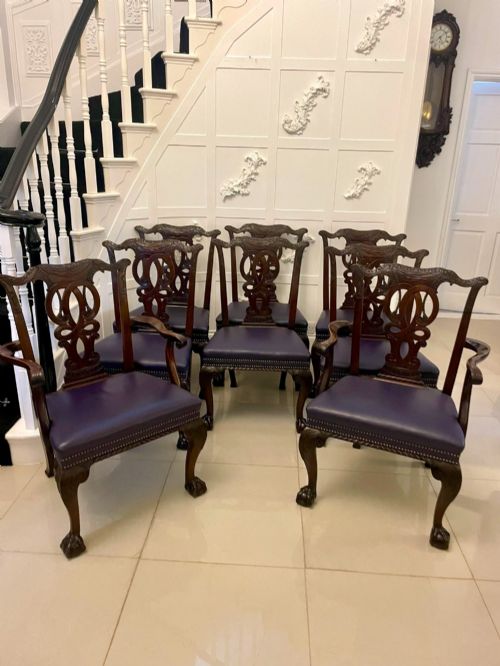
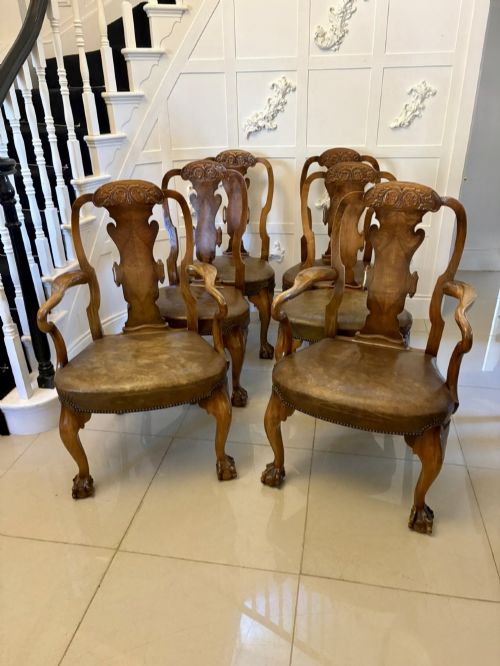
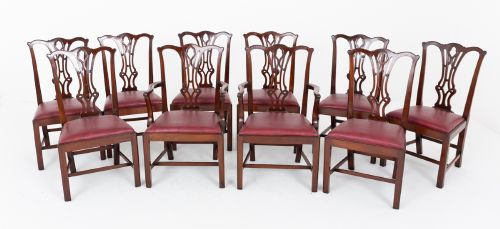
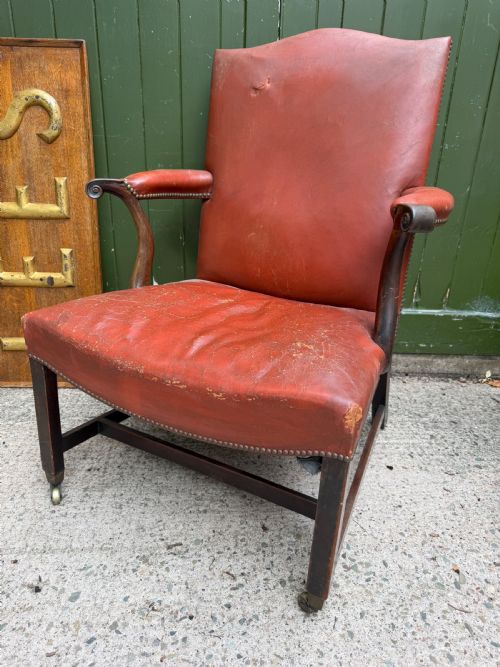
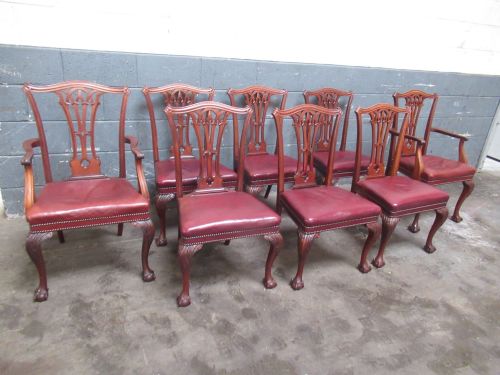
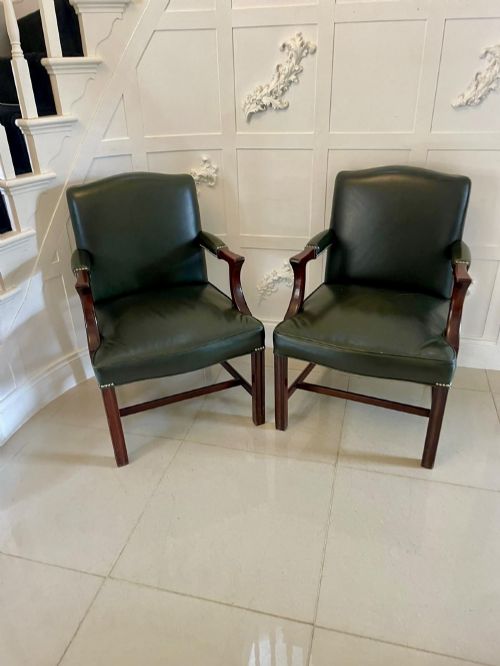
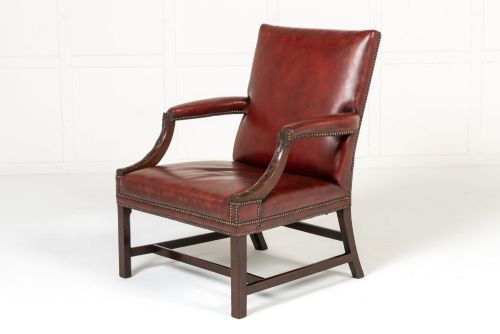
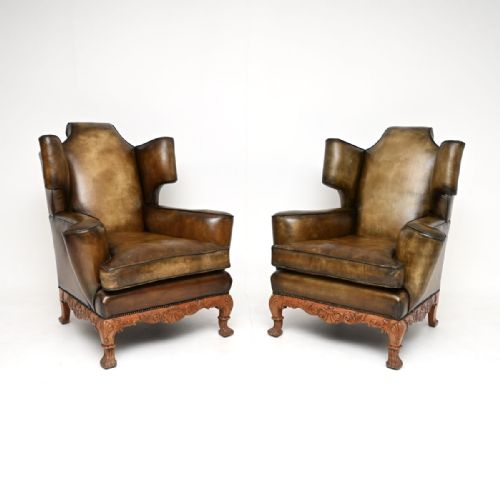
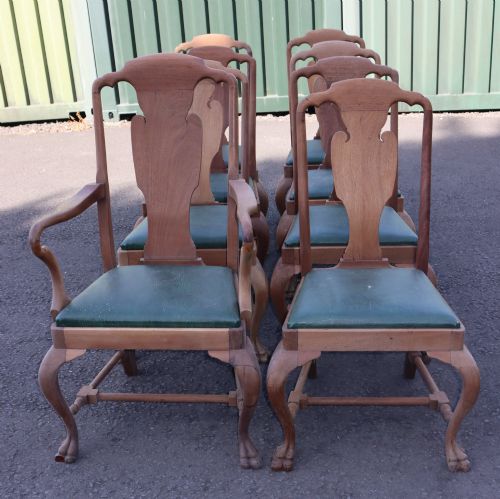
When you search for chippendale leather chairs, you are looking at seating that spans from authentic eighteenth-century Georgian examples to later revival pieces from the nineteenth and early twentieth centuries. The selection encompasses single library armchairs, pairs of Gainsborough chairs, and large dining sets designed with the characteristic proportions of the period.
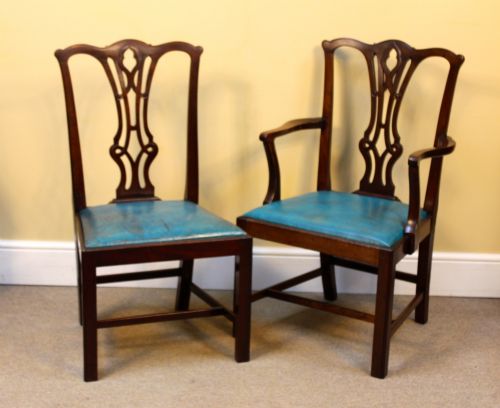
The most common items you will encounter on this page are Chippendale style and revival dining chairs, alongside leather-upholstered library and desk armchairs. These pieces draw on Georgian design vocabularies, often featuring carved mahogany frames paired with durable hide seating.
Materials and construction methods
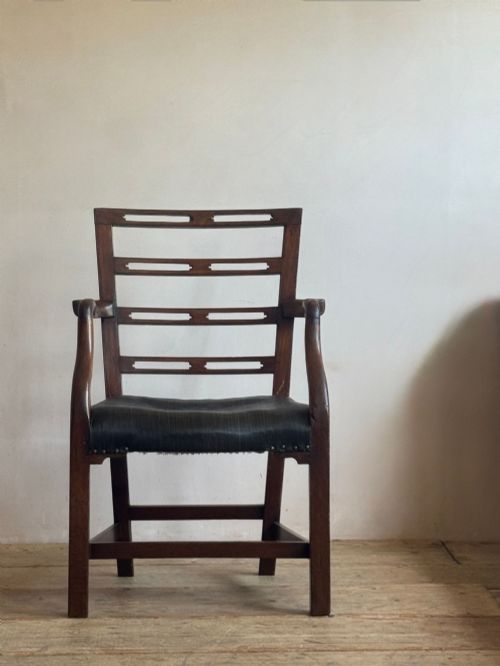
Makers relied primarily on dense hardwoods such as mahogany, walnut, oak, and elm to construct the structural frames, ensuring long-term stability for legs, backs, and arm supports. Mahogany predominates in formal dining and library chairs, frequently shaped with intricate blind carving or ladder-back configurations.
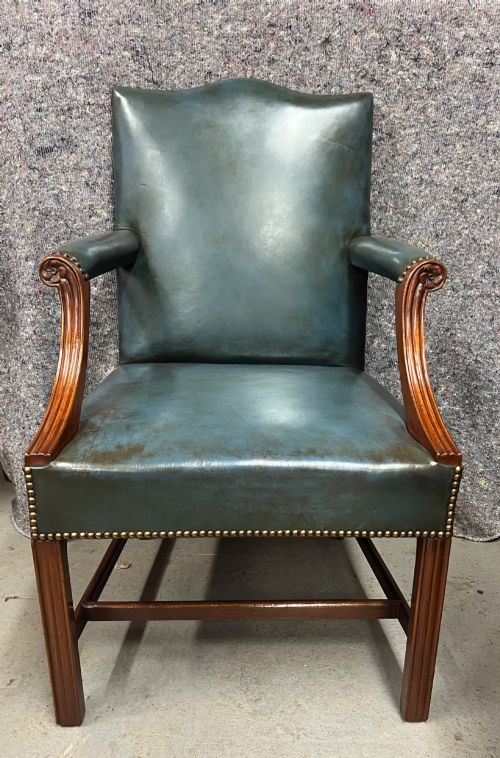
Upholstery centres on English hide leather, sometimes hand-dyed in red, green, or brown tones and secured with brass nail heads. Craftsmen combined these leather surfaces with sturdy wooden chassis built to withstand generations of daily use.
Chippendale Leather Chairs Retail Price Guide 2026
Typical asking prices for chippendale leather chairs among the pieces listed under this phrase on Sellingantiques today, from the lower quarter to the upper quarter. They describe what is for sale here now, not the wider market.
Listings span from the 18th century through the Georgian and Victorian eras up to the 1930s, utilising mahogany, walnut, oak, elm, and leather.
Distinctions in craftsmanship
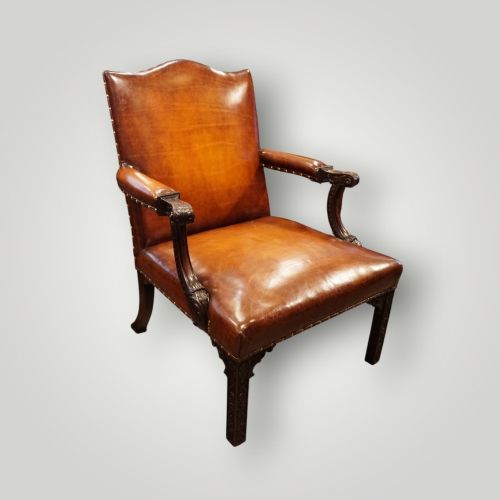
Quality reveals itself in the depth and crispness of the wood carving, particularly along the crest rails, splats, and ball-and-claw or bracket feet. Superior examples display fluent hand-carved details rather than shallow, mechanical shaping.
The choice and treatment of the leather upholstery further divide the range, with hand-dyed English hide and careful buttoning distinguishing the finer library and Gainsborough armchairs from standard utility seating.
William Walker And Sons
The Chippendale Leather Chairs Glossary
- Gainsborough chair
- A wide, upholstered armchair with an open wooden frame, low armrests, and padded seat and back, popular in the eighteenth century for libraries and desks.
- Cockpen chair
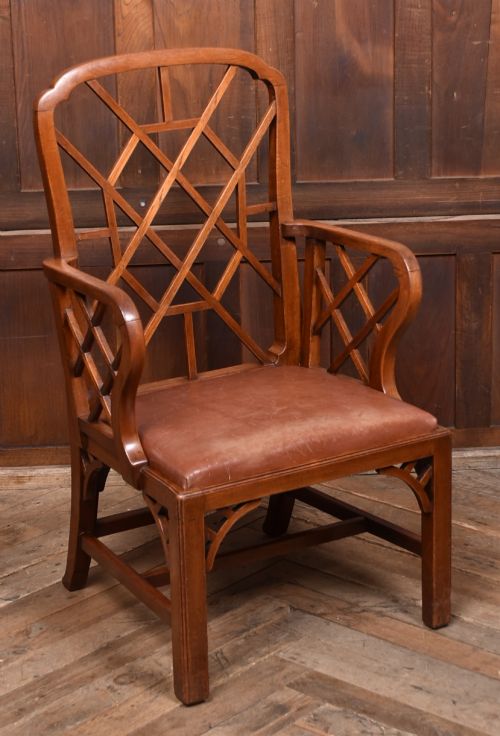
- A lattice-back chair style originating in the eighteenth century, featuring an open geometric pattern derived from Chinese Chippendale designs.
- Blind carving
- Low-relief ornamentation carved directly onto a flat wooden surface, often imitating Chinese fretwork without piercing the timber through.
- Chippendale revival
- A period of nineteenth and early twentieth-century furniture production that closely copied or reinterpreted the designs of Thomas Chippendale.
- Carver chair
- A term used for an armchair, typically one of a larger dining set intended for the head of the table.
Chippendale Leather Chairs: Frequently Asked Questions
What is a Gainsborough chair?
A Gainsborough chair is a wide, open-armed library or desk chair featuring upholstered leather back and seat panels. These chairs are supported by straight or carved wooden legs.
Originally designed in the eighteenth century, they provide comfortable seating suited for writing tables and reading spaces.
How do I identify a revival piece?
Revival chairs are typically produced during the nineteenth or early twentieth centuries, copying earlier Georgian forms. They show secondary wood use and manufacturing marks consistent with later workshop practices.
Examining the timber ageing and construction joints helps separate an original eighteenth-century piece from a later revival model.
Are these chairs suitable for daily use?
Most of these mahogany and leather chairs are built with robust hardwood frames designed for practical seating. Regular use is well supported by durable English hide leather and sturdy joinery.
Proper maintenance keeps the leather supple and the wooden frames stable in modern domestic settings.
What wood was used for these chairs?
Makers predominantly used mahogany for formal dining and library chairs, complemented by walnut, oak, and elm in various regional styles. These hardwoods provided the necessary strength for intricate carved details.
The choice of timber often indicates the formality and geographic origin of the piece.