
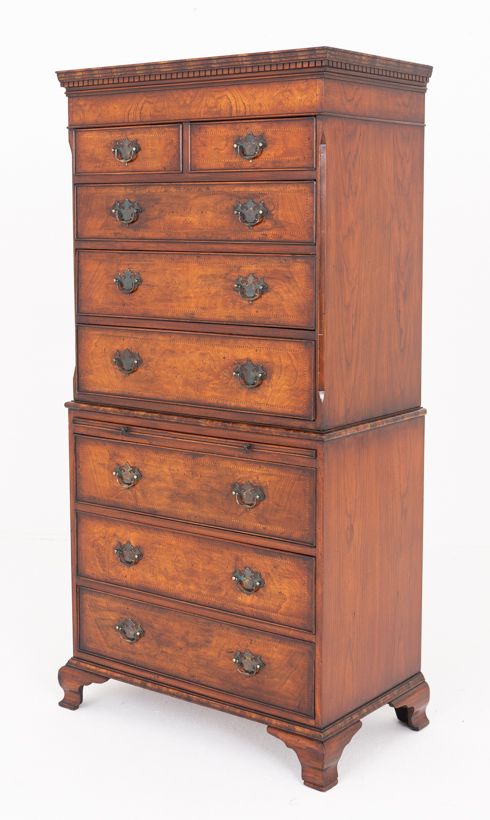
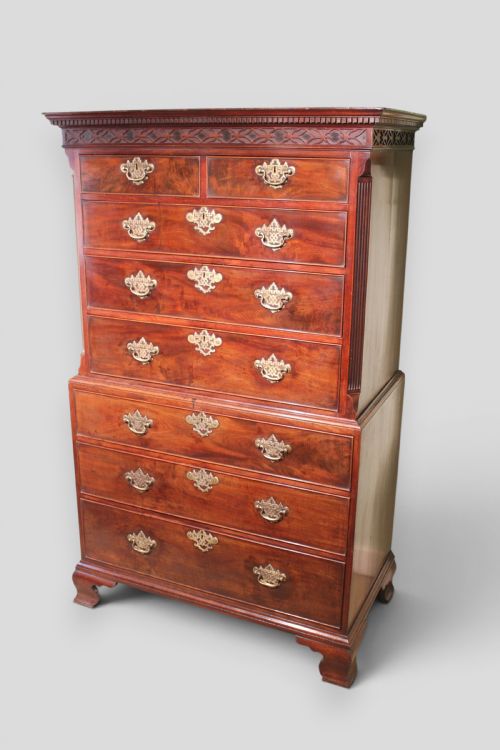

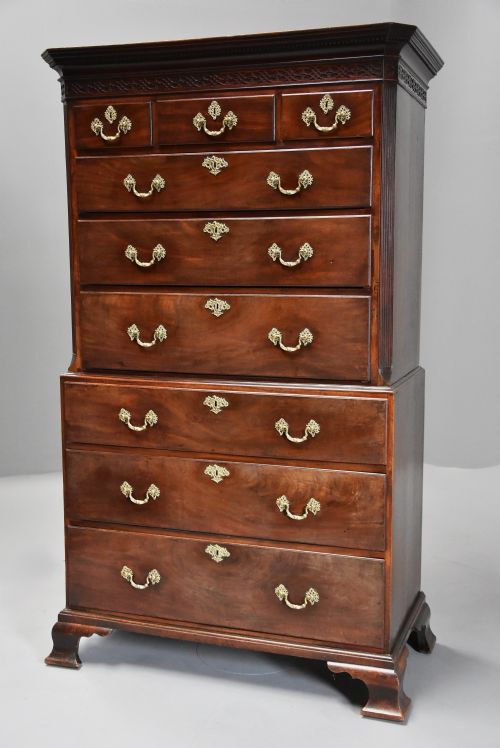


Chippendale Highboy Chest
A chippendale highboy chest brings grand vertical presence to a room, combining stacked drawer capacity with classical cabinet-making form.
Chippendale Highboy Chest
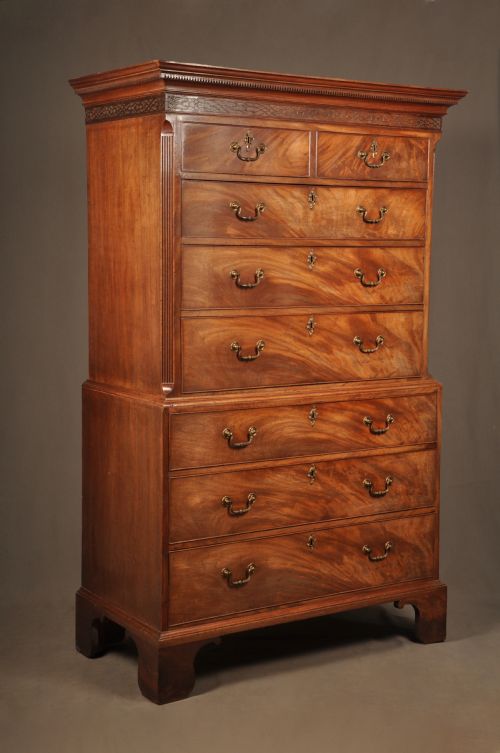
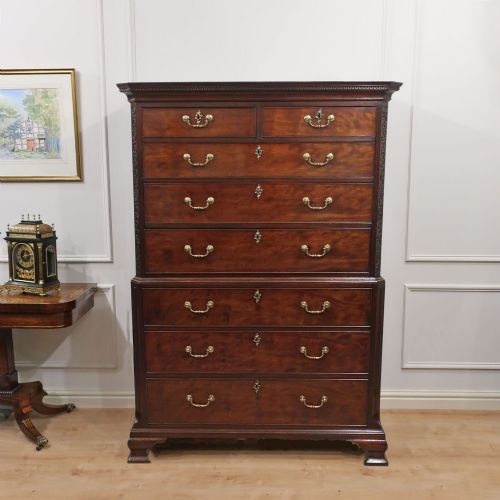
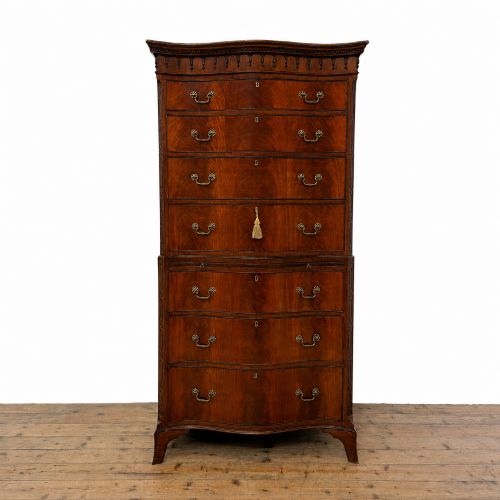
When you search for a chippendale highboy chest, you are looking at substantial case furniture designed to maximise storage without claiming excess floor space. The pieces seen here encompass tallboys, chest on chest forms, and chests on stands originating primarily from the eighteenth century, alongside later revival iterations.
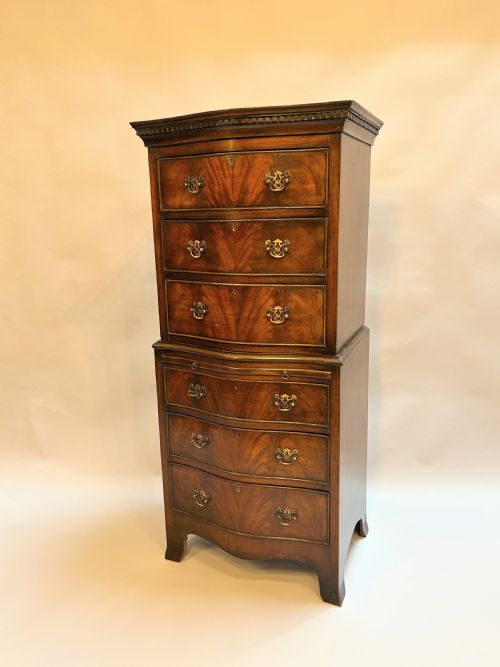
You are most likely to encounter eighteenth-century Georgian examples alongside twentieth-century revival pieces. These take the form of stacked drawers divided into distinct upper and lower sections, occasionally incorporating secretaire drawers or raised stands.
How they were made
The construction relies heavily on solid mahogany, oak, and elm timbers, frequently enhanced with flame mahogany veneer across drawer fronts. Carved detailing and line inlay punctuate the primary surfaces.
Cabinet makers utilised secondary woods such as pine for internal framing and drawer linings. Brass hardware, including swing handles and escutcheons, secures the operational fronts of each drawer.
Secret compartments hidden within internal desk fittings remind us that past owners enjoyed keeping private matters truly locked away.
What varies in quality
Quality rests in the handling of timber figure and the crispness of carved enrichment upon the cornice and frieze. Pieces featuring well-figured flame mahogany veneer and retained original surface patination stand apart from standard production.
Proportion and scale dictate the visual balance of the stacked sections. Neat dimensions combined with integrated bracket feet or carved stands separate the finer examples from heavier, less resolved items.
The Chippendale Highboy Chest Glossary
- Tallboy
- A tall chest of drawers, typically constructed as one section stacked upon another. This form provides significant vertical storage capacity.
- Chest on chest
- A case piece consisting of a larger lower chest supporting a slightly narrower upper chest. It forms the core structure of many tall pieces.
- Highboy
- A tall chest of drawers raised on a leg stand or frame. The terminology often overlaps with tallboys and chest on chest variants in regional descriptions.
- Flame mahogany veneer
- Thin slices of mahogany exhibiting a distinct flickering flame grain pattern applied to primary drawer fronts. This technique maximises visual impact using decorative timber.
- Secretaire
- A drawer fitted with a drop-front writing surface and internal pigeonholes or small drawers. It conceals a compact desk space within the upper chest.
Chippendale Highboy Chest: Frequently Asked Questions
What is a chippendale highboy chest?
A chippendale highboy chest is a tall case furniture piece featuring stacked drawers, often associated with eighteenth-century Georgian cabinet-making styles.
These pieces combine functional vertical storage with decorative elements such as carved cornices, brass hardware, and bracket feet.
How do tallboys differ from chest on chest forms?
Tallboys and chest on chest forms share a similar vertical profile achieved by stacking sections of drawers. The distinction often lies in whether the piece involves two distinct cabinet chests placed one upon the other or a single unified tall frame.
Both configurations provide multi-tiered storage while maintaining a compact floor footprint within domestic spaces.
How do I care for mahogany case furniture?
Mahogany case furniture requires stable environmental conditions away from direct heat sources and strong sunlight to protect the wood and veneer. Regular dusting with a soft, dry cloth preserves the polished surface.
Avoid applying silicone-based polishes, opting instead for traditional wax maintenance when the timber requires nourishment.
How do I identify a revival period piece?
Revival pieces from the early twentieth century replicate eighteenth-century proportions and decorative vocabulary using contemporary workshop methods. Examining internal construction timbers, secondary woods, and fixing methods helps differentiate period work from later interpretations.
Wear patterns and timber oxidation also offer reliable indicators of age when assessing case furniture.