
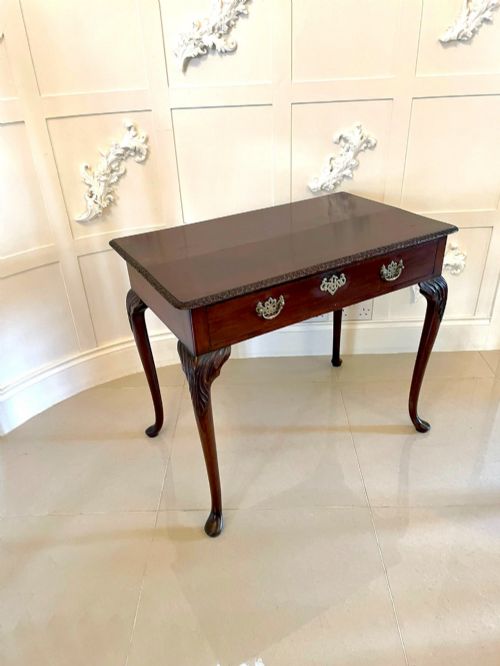
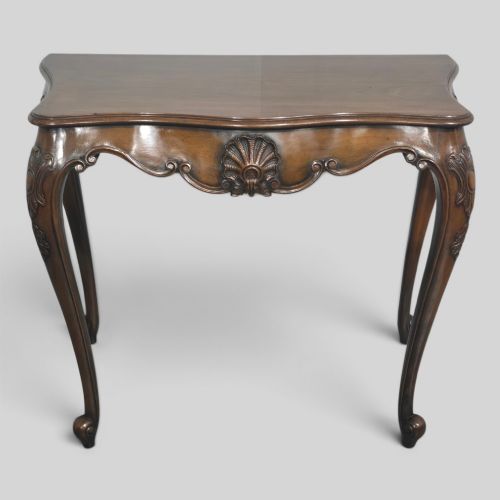


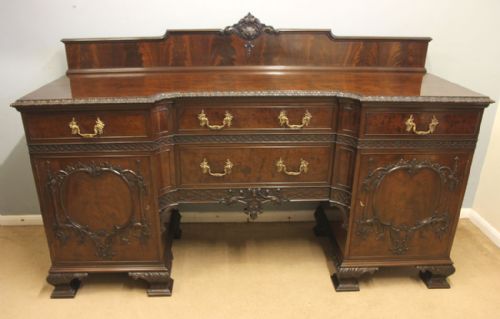


Chippendale Carved Server
A chippendale carved server brings undeniable presence to a dining room, uniting robust mahogany timber with intricate, hand-chiselled detail.
Chippendale Carved Server
A chippendale carved server encompasses a grand tradition of sideboards, serving tables, and console tables designed for formal dining rooms. You will frequently encounter revival iterations alongside pieces originating from the eighteenth century through to the early twentieth century.
These servers serve as practical statement furniture, historically intended for displaying silver and managing the service of meals. The selection spans straightforward mahogany side tables to elaborate serpentine front sideboards and Chinese Chippendale influenced designs.
Georgian examples represent the foundational origins of the style, while later Victorian and Edwardian revival pieces demonstrate the enduring popularity of the aesthetic. Oak, walnut, and burr walnut also appear occasionally alongside the predominant mahogany.
The form functions equally well in modern interiors as a hallway console or a dining room focal point. Each iteration displays characteristic attention to carved ornamentation, whether executed with restraint or in a more exuberant manner.
What varies in quality
The depth, crispness, and individual hand execution of the carving separate standard production from superior examples. Sharp relief work on cabriole legs and scrolled pediments indicates a maker of considerable skill.
Timber selection dictates much of the visual weight, with well-figured flame mahogany veneer or dense solid mahogany commanding greater presence than plain stock. The integration of secondary woods and the solidity of internal drawer framing further distinguish the tiers of craftsmanship.
Proportion and structural harmony govern the overall success of the piece, ensuring that ornate decorative elements do not overwhelm the functional utility of the server. Authentic period construction methods provide durability that lighter revival pieces sometimes lack.
Listings span the eighteenth century through to the nineteen-thirties, covering Georgian origins and subsequent Victorian and Edwardian revival periods.
Elkington & Co·Butler
The Chippendale Carved Server Glossary
- Chippendale
- A classic eighteenth-century English furniture style named after cabinetmaker Thomas Chippendale, characterised by carved cabriole legs, ball-and-claw feet, and pierced splats. The style experienced several revivals during the Victorian and Edwardian eras.
- Serpentine front
- A furniture front featuring a convex centre flanked by concave curves, creating a gentle undulating shape. This sophisticated profile requires advanced woodworking skill to execute properly.
- Lowboy
- A small low-standing table with drawers, typically used as a dressing table or side table during the Georgian period. They often share the same cabriole leg and carved details as larger serving tables.
- Dresser base
- A robust lower cabinet structure featuring drawers and cupboards, traditionally utilised in kitchens and dining areas for storage and serving. These pieces often showcase heavy timber construction in oak or mahogany.
- Console table
- A table designed to stand against a wall, sometimes secured to it rather than standing completely free. They frequently serve decorative purposes in hallways and formal reception rooms.
Chippendale Carved Server: Frequently Asked Questions
How do I date a Chippendale server?
Dating relies on examining the construction methods, timber choice, and tool marks visible on secondary woods within the drawers and frame. Eighteenth-century pieces display hand-cut joints and native timbers, whereas revival pieces from the nineteenth and twentieth centuries often exhibit machine-sawn components.
Stylistic shifts also offer clues, as Victorian and Edwardian interpretations tend to incorporate heavier proportions or eclectic revival motifs. Comparing the carving style against documented period examples helps confirm the era of manufacture.
What is Chinese Chippendale?
Chinese Chippendale represents an eighteenth-century design phase inspired by Chinese motifs, featuring fretwork railings, pagoda silhouettes, and lattice patterns. This aesthetic was later revived during the Victorian era with enthusiastic hand-carved ornamentation.
Servers in this manner often display distinctive square legs with blind fret carving and pierced stretcher bases. The style combines European cabinetmaking forms with distinct Asian-influenced decorative details.
How do I care for antique mahogany furniture?
Maintain the finish by dusting regularly with a soft, dry cloth and avoiding silicone-based polishes that build up over time. Applying a quality beeswax occasionally helps nourish the timber and preserve the lustre of the polish.
Keep the piece away from radiators and drastic humidity changes to prevent the mahogany and its veneers from splitting or warping. Placing protective felt pads under items displayed on the surface prevents scratches.