

Chippendale Carved Mahogany Chair
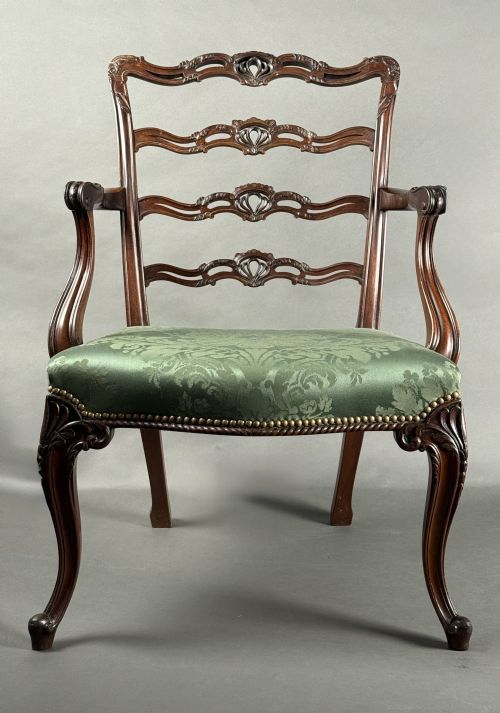
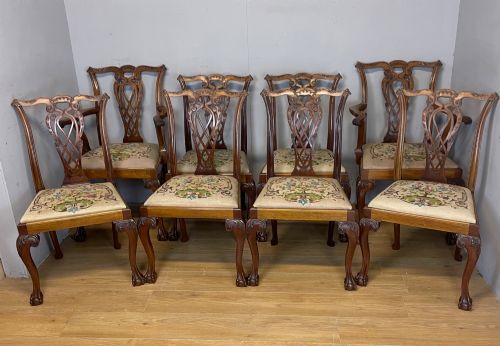
A chippendale carved mahogany chair brings solid eighteenth-century proportion and intricate pierced splats into a room, offering both sturdy dining seats and reading chairs.
Chippendale Carved Mahogany Chair
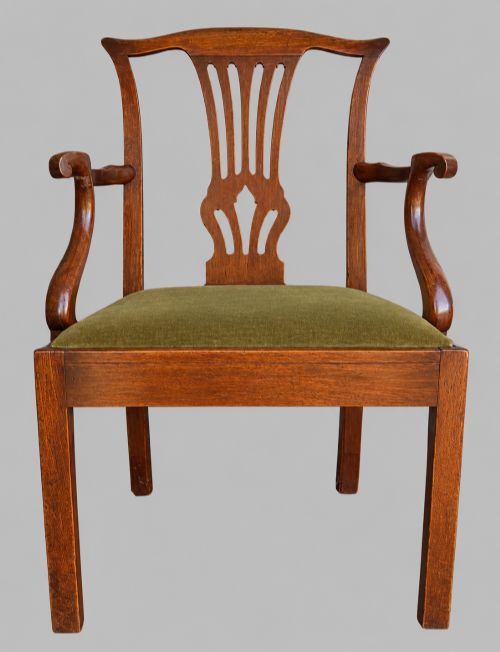
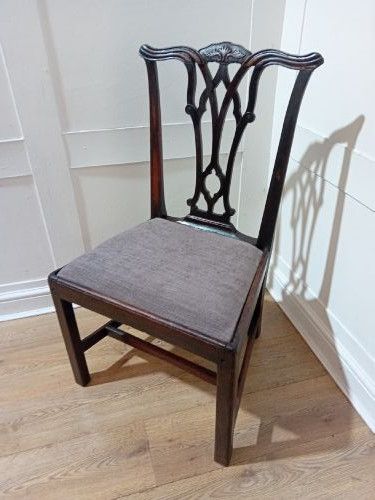
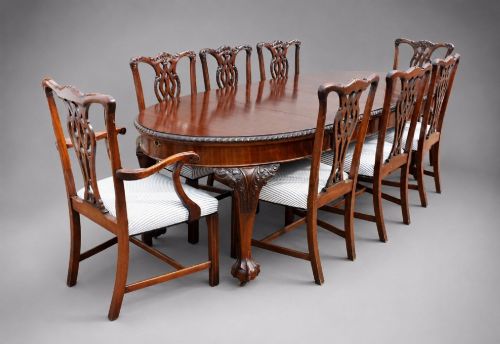
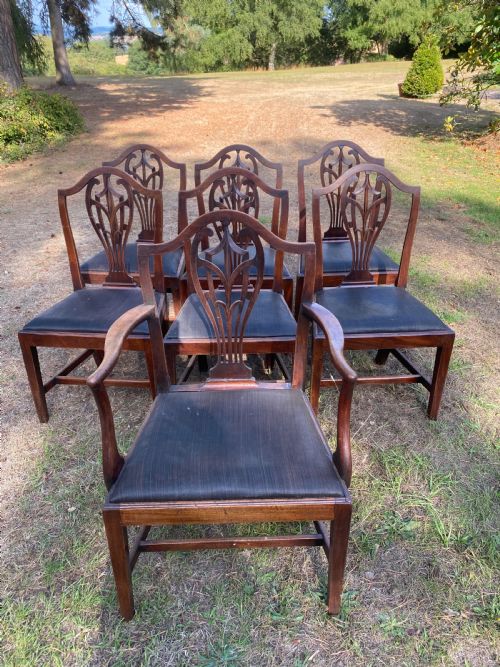
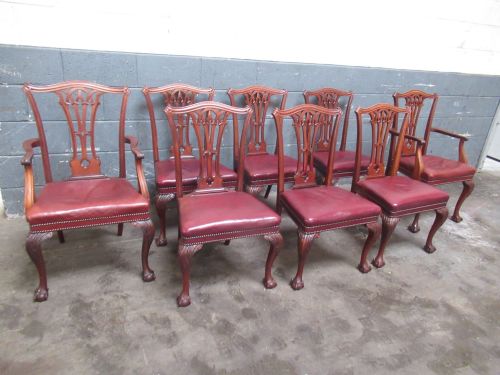
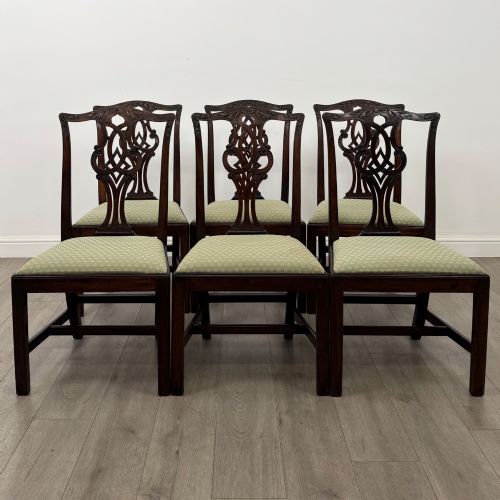
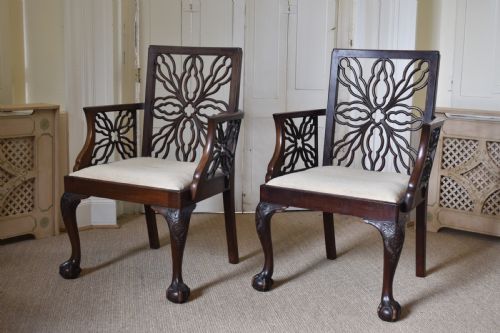
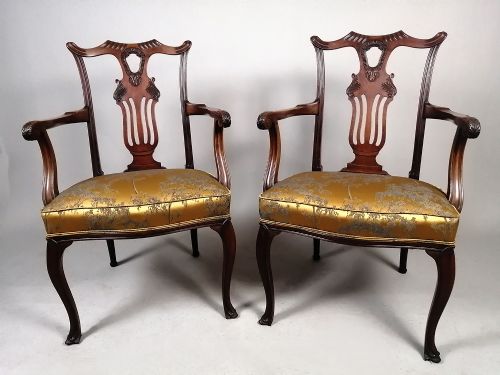
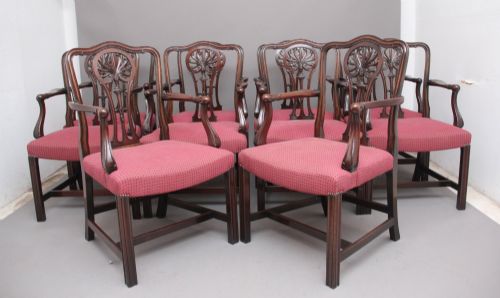
A search for a chippendale carved mahogany chair brings up heavy timber seating spanning mid eighteenth-century George III origins through to later revival periods like the Edwardian era and the late nineteenth century. The forms range from single dining chairs and elbow desks chairs to library armchairs and sets made for large dining tables.
Buyers will encounter original eighteenth-century pieces alongside revival interpretations from the Victorian period and the early twentieth century. These varieties appear as open armchairs, side chairs, and occasionally larger sets with upholstered or leather drop-in seats.
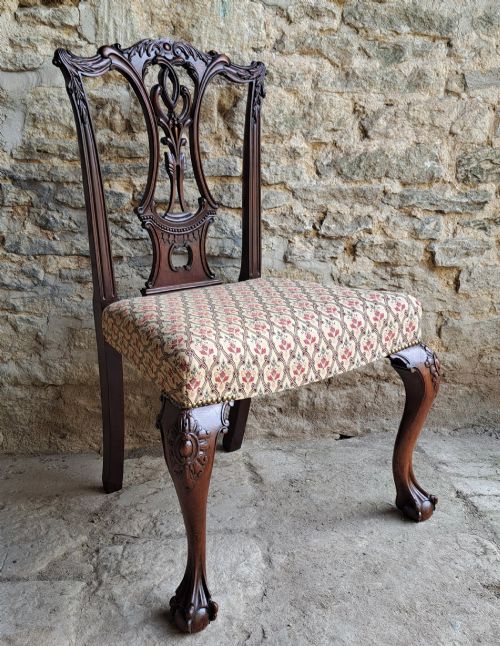
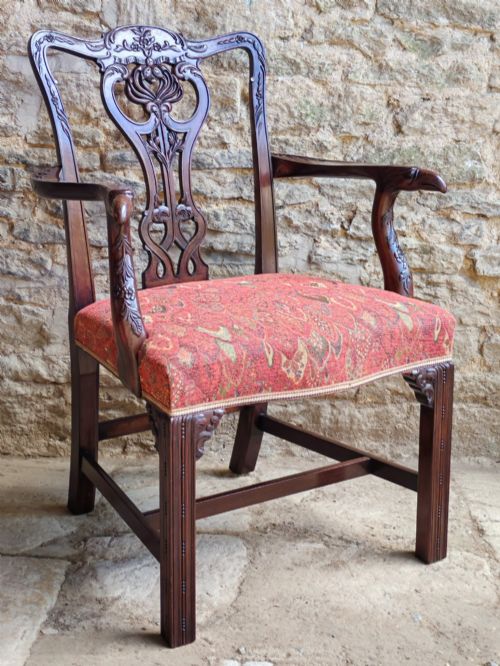
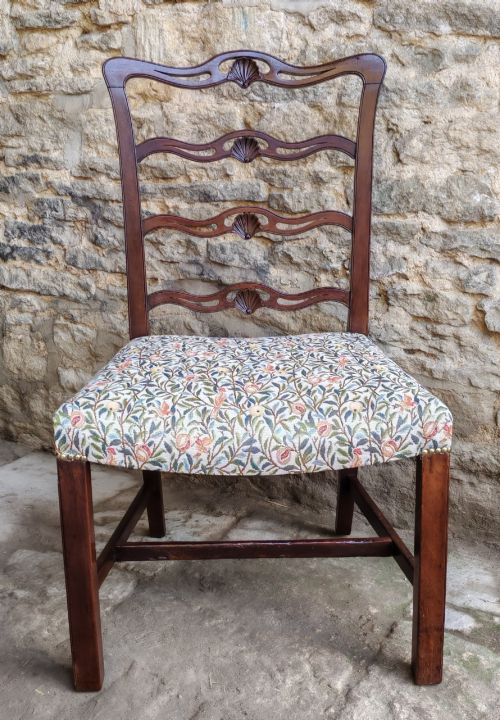
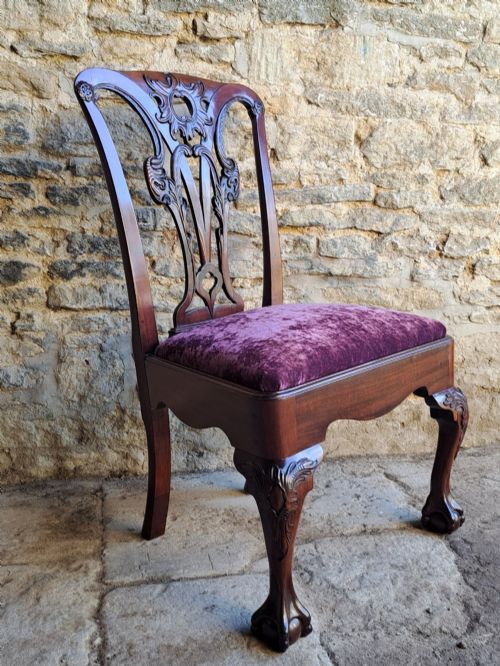
The style draws directly on classic proportions, defined primarily by carved top rails, interlaced splats, and sturdy legs ranging from Marlborough square styles to carved cabriole shapes with ball and claw feet.
How they were made
Makers shaped these items primarily from dense, durable mahogany, utilising its tight grain to execute deep relief carving on chair backs, knees, and arm terminals without splintering. Secondary framing timbers sometimes include native hardwoods for internal stretchers and seat rails.
Traditional joinery methods such as mortise and tenon joints secure the frames, while carved openwork splats are hand-shaped and pinned into the rear uprights. Upholstered variants incorporate drop-in wooden frames padded with horsehair or fabric, fixed over webbing or leather hides secured with brass tacks.
Listings feature items spanning the 18th century, Georgian era, Victorian period, and Edwardian revival years.
What varies in quality
The depth and crispness of the carved detail on the splats and knees separates standard workshop output from exceptional examples. Finer pieces display undercut foliage, smooth scrollwork, and meticulously pierced ribbon or ladder designs that show no tool chatter.
Timber selection and structural integrity dictate the grade of a chair, with straight-grained mahogany showing rich natural patina outlasting plainer stock. Original components, minimal timber replacement, and tight historical joints preserve the integrity of the piece far better than later heavy restoration.
Howard and Sons·Warings·Alfred Allen of Birmingham
The Chippendale Carved Mahogany Chair Glossary
- Splath
- The vertical central slat within a chair back, often pierced and carved into intricate ribbon or interlaced patterns in this tradition.
- Carver
- An armchair, frequently designed with open arms to sit at the head of a dining table or function as a desk chair.
- Gainsborough chair
- A wide, upholstered armchair with open padded arms, low sides, and short legs, typically dating from the Georgian period.
- Cabriole leg
- A furniture leg that curves outward at the knee and tapers inward toward the foot, frequently ending in a claw and ball.
- Cockpen chair
- A lattice-backed chair style influenced by Chinese fretwork designs, popular during the eighteenth century.
Chippendale Carved Mahogany Chair: Frequently Asked Questions
How do I spot a reproduction?
Examine the timber shrinkage, tool marks, and overall wear patterns on the frame underneath. Eighteenth-century pieces show hand-cut joinery and dry, oxidised mahogany rather than modern machine finishing.
Check whether the carving is sharp and deep or soft and cast. Revival pieces from the Victorian era or later often display heavier timber sections and standardised machine joints.
Are these chairs comfortable for daily use?
Most dining chairs and side chairs have upright wooden or leather-covered seats designed for formal sitting rather than lounging. Library armchairs and desk chairs offer more padding and space for extended reading.
Upholstered drop-in seats can be re-sprung or re-padded to suit modern comfort without altering the historic wooden frame.
How do I care for mahogany?
Keep the wood away from direct heat sources and strong sunlight to prevent the mahogany from drying out and splitting. Apply a neutral beeswax polish occasionally to nourish the grain and maintain the natural lustre.
Avoid liquid cleaning products that strip the historic finish and check the joints periodically for looseness.