

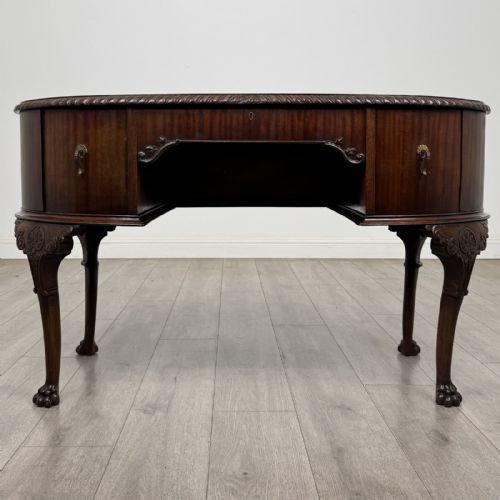
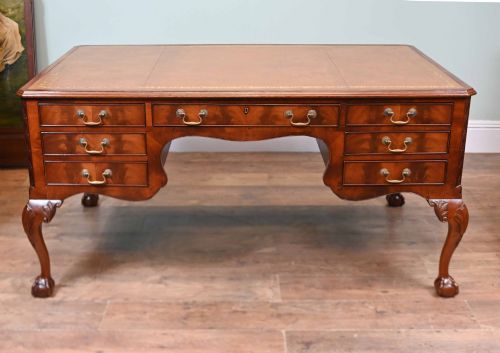
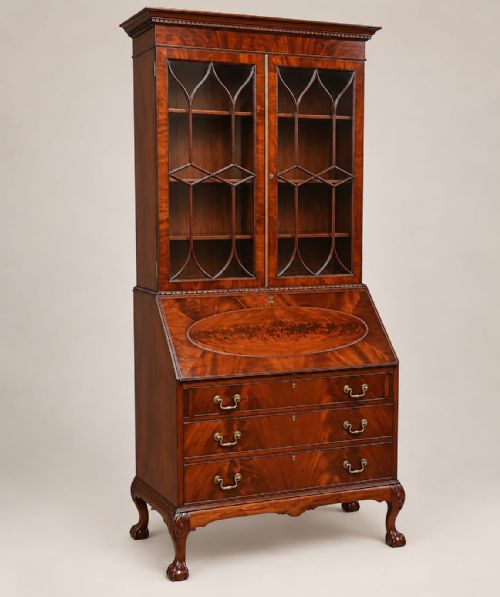
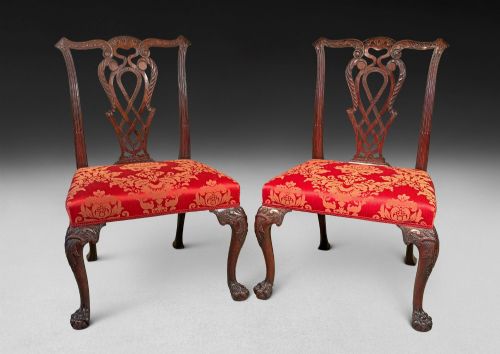

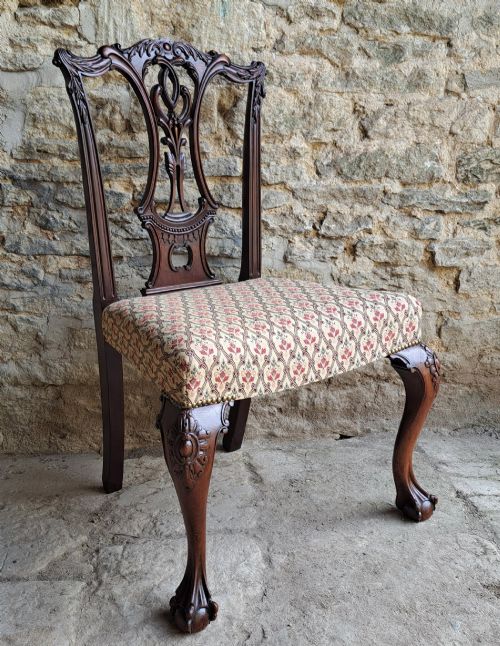
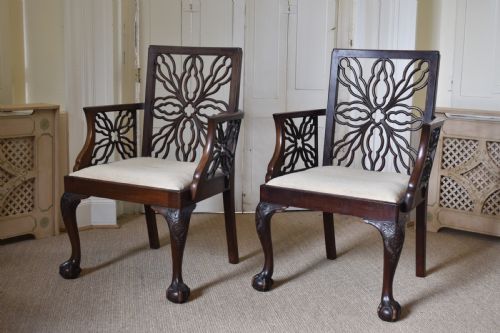
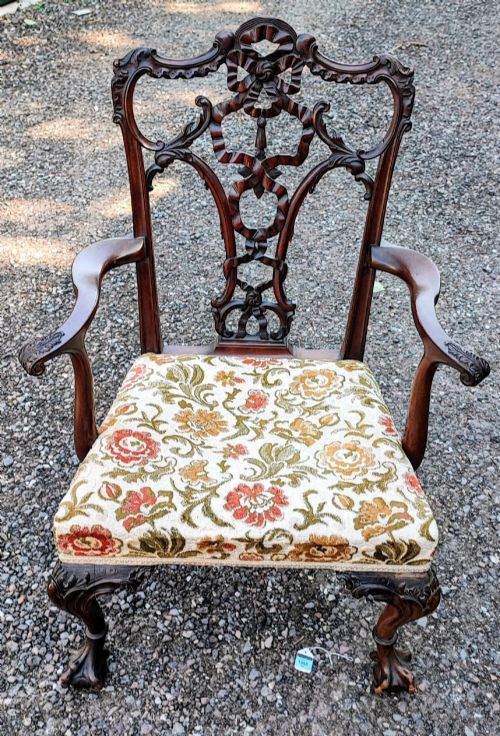
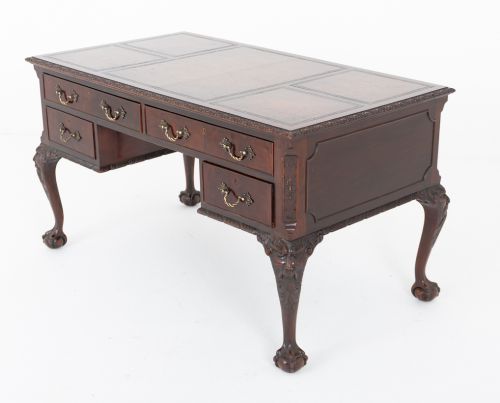
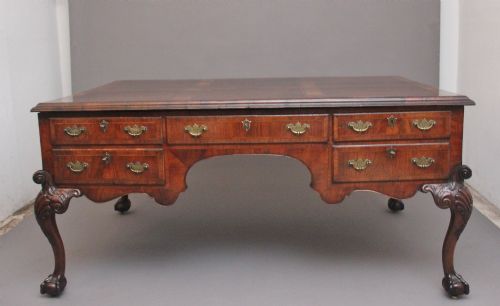
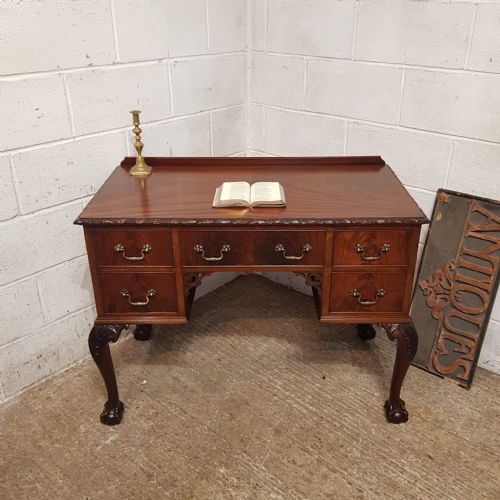
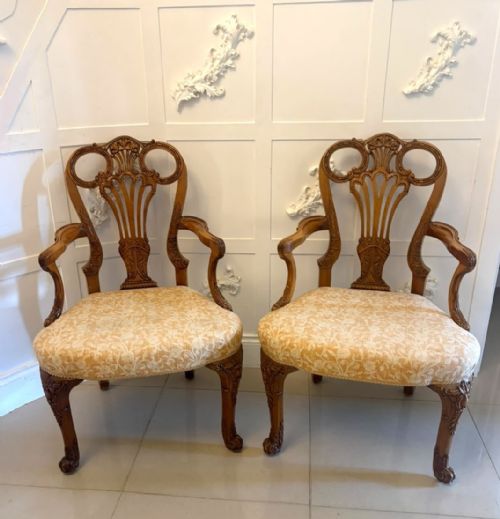

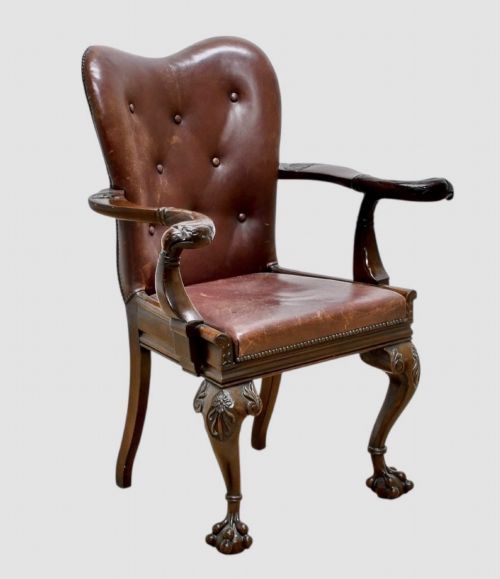
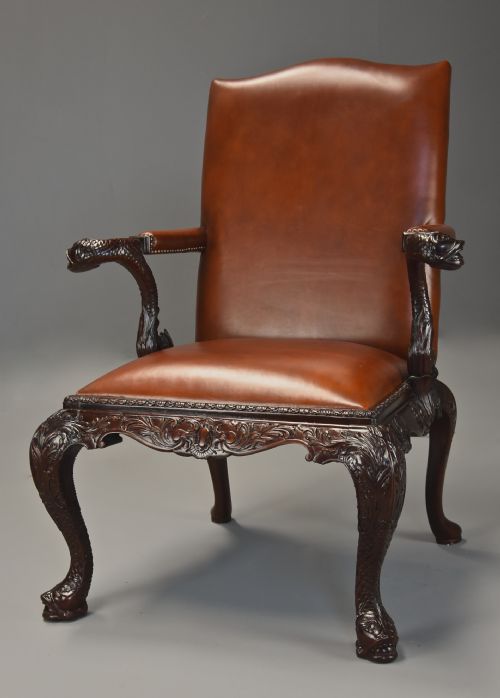
Chippendale Ball and Claw Desk
A chippendale ball and claw desk brings substantial presence to a room, uniting functional writing surfaces with the sculptural weight of carved talon feet.
Chippendale Ball and Claw Desk
When you search for a chippendale ball and claw desk, you encounter sturdy writing tables, pedestal desks and partners desks spanning the eighteenth century through the revival periods of the nineteenth and early twentieth centuries. These pieces combine practical workspace drawers with ornamental carving inspired by classical cabinet making.
The versions most commonly met on this page date from the nineteenth century and the Edwardian era, constructed in styles that emulate earlier Georgian craftsmanship. While the foundational archive contains an example specifically recorded on ball and claw feet, current listings present a broader spectrum of writing furniture executed in mahogany and walnut.
Materials and construction methods
Makers primarily utilised solid mahogany and figured mahogany veneers, occasionally turning to walnut and burr walnut for distinct grain patterns. Timber selection dictated the structural integrity of the desk and provided a smooth surface for hand carving.
Secondary materials such as brass for handles and leather or fabric for writing surfaces completed the functional design. Joinery relied on traditional methods to support heavy pedestal bases and intricate edge detailing.
Chippendale Ball and Claw Desk Retail Price Guide 2026
Typical asking prices for chippendale ball and claw desk among the pieces listed under this phrase on Sellingantiques today, from the lower quarter to the upper quarter. They describe what is for sale here now, not the wider market.
Current listings demonstrate that mahogany remains the most frequently encountered timber, appearing alongside walnut and brass hardware.
Determining quality in these desks
The distinction between standard production and superior craftsmanship rests in the crispness and depth of the hand carving on the woodwork. Finer examples display deliberate execution in the rendering of botanical motifs and claw feet, whereas simpler pieces show softer, shallower detailing.
Material selection and timber figuring also determine the standing of a desk. Dense, well-figured mahogany or walnut elevates an object, while secondary woods and uniform veneers indicate a more utilitarian manufacture.
Gillows
The Chippendale Ball and Claw Desk Glossary
- Chippendale style
- A design aesthetic drawing from eighteenth-century pattern books, characterised by substantial proportions, carved ornamentation and claw and ball feet.
- Partners desk
- A large double-sided writing table designed for two people to work opposite one another, featuring drawers on both faces.
- Pedestal desk
- A heavy writing table supported by two structural columns of drawers rather than four separate legs.
- Flame mahogany
- A veneer cut from the fork of the mahogany tree that yields a dramatic, flickering flame-like grain pattern.
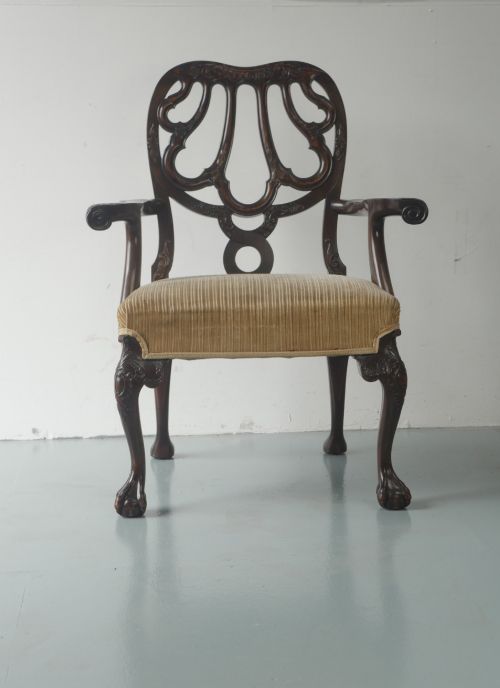
- Gainsborough chair
- A wide, upholstered armchair with an open wooden frame, designed originally for writing tables and libraries.
Chippendale Ball and Claw Desk: Frequently Asked Questions
What periods do these desks date from?
The pieces span from the original eighteenth-century Georgian period through to later Victorian, Edwardian and early twentieth-century revival eras. Cabinet makers continually reinterpreted these classical designs across successive generations.
Most items available originate from the nineteenth and early twentieth centuries, reflecting the enduring popularity of historic revival styles in domestic interiors.
How were these desks used originally?
These pieces served as functional writing tables and administrative hubs in studies, libraries and grand offices. Larger pedestal and partners formats allowed professionals to store documents and conduct correspondence from both sides.
Writing desks provided a dedicated surface for letter writing and bookkeeping before the advent of modern office furniture.
How do I care for a mahogany desk?
Maintain the timber by keeping the surface away from direct sunlight and strong heat sources that can dry out or fade the polish. Regular dusting with a dry cloth prevents dirt accumulation.
Protect leather inserts by avoiding harsh chemical cleaners, using mild soap solutions sparingly if cleaning becomes necessary.
How do I distinguish revival pieces from older work?
Examination of tool marks, timber shrinkage and secondary woods helps determine the age of a desk. Eighteenth-century pieces exhibit hand-cut joinery and signs of historical wear appropriate to their age.
Revival pieces from the Victorian and Edwardian eras often show more uniform machine assistance in secondary framing while retaining hand-carved decorative elements on the primary surfaces.