







Carved Mahogany Foldover Table
A carved mahogany foldover table brings versatile folding timber surfaces into a room, offering adaptable card and tea options for daily domestic use.
Carved Mahogany Foldover Table
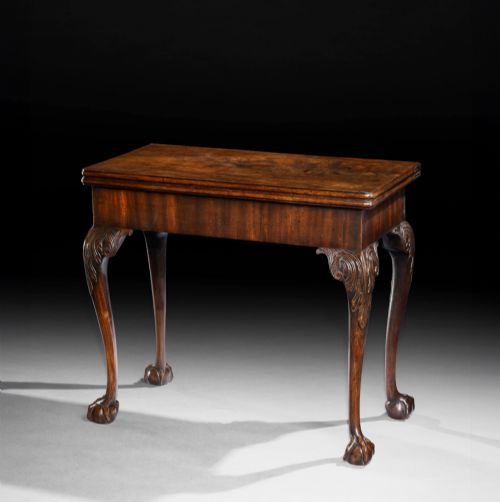
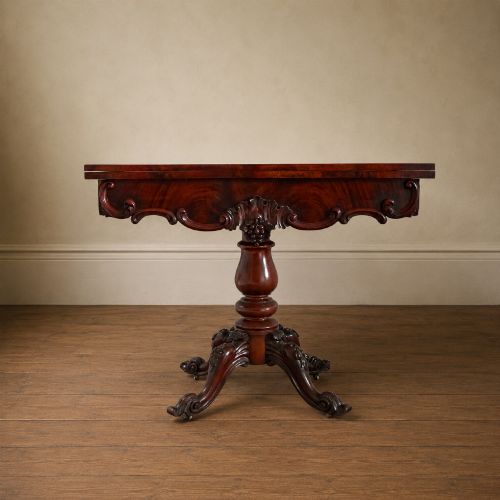
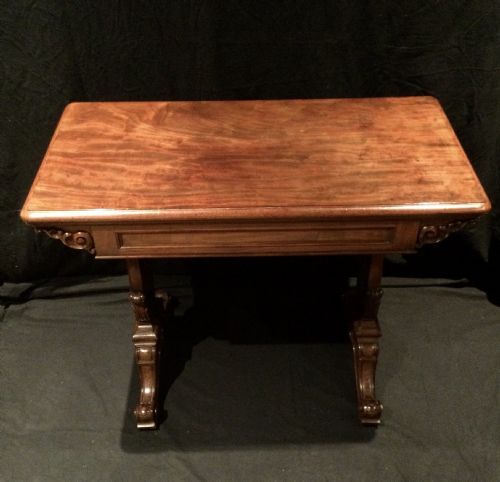
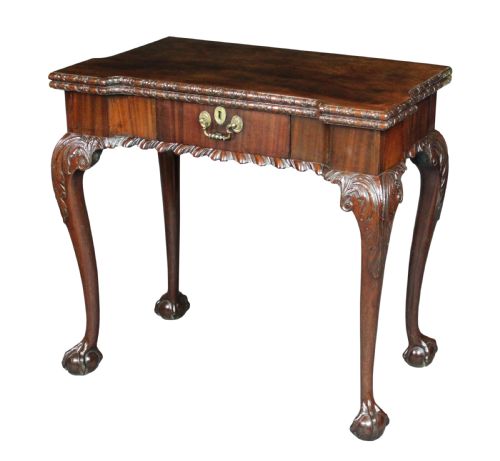
A carved mahogany foldover table serves as a dual-purpose surface, transitioning from a compact console or side piece into a full-sized card, tea, or games table. These pieces emerge from the eighteenth and nineteenth centuries, spanning Georgian, Regency, Victorian, and Edwardian periods.
How they were made
Cabinetmakers utilised solid mahogany and flame mahogany veneer, often incorporating boxwood inlay for decorative contrast. Structural stability relied on timber selection, while hinged leaves permitted the dual-surface functionality.
Supports varied by period, ranging from traditional carved cabriole legs to lyre support bases and pedestal columns. Brass components frequently appeared on castors or internal action mechanisms.
Carved Mahogany Foldover Table Retail Price Guide 2026
Typical asking prices for carved mahogany foldover table among the pieces listed under this phrase on Sellingantiques today, from the lower quarter to the upper quarter. They describe what is for sale here now, not the wider market.
Concertina action tables stretch out on four legs like an accordion when opened, keeping guests from bumping into central pivot posts during card games.
What varies in quality
The distinction between tiers rests upon timber selection and the execution of carved details. Superior examples exhibit finely figured flame mahogany veneer and crisp, hand-carved ornamentation rather than moulded repetition.
Internal mechanisms also define grade, with complex concertina actions representing superior engineering compared to simple pivoting leaves. The alignment of the folding surfaces when open demonstrates the precision of the original construction.
Giles Grendey
The Carved Mahogany Foldover Table Glossary
- Foldover table
- A dual-purpose piece with a hinged top that opens to double the surface area. This mechanism allowed furniture to sit compactly against a wall when not in use.
- Concertina action
- An expanding frame mechanism used on card tables that pulls outward on all four legs when the top opens. It provides robust support for the unfolded leaf without relying on a swinging rear leg.
- Flame mahogany veneer
- A thin slice of wood cut from the fork of a mahogany tree where the grain pattern creates a fiery, rippled effect. Cabinetmakers applied this to primary surfaces for visual impact.
- Boxwood inlay
- Contrasting pale wood inserted into recesses within the darker mahogany surface. This technique created geometric or linear borders along table edges and friezes.
Carved Mahogany Foldover Table: Frequently Asked Questions
What is a carved mahogany foldover table used for?
These pieces functioned primarily as space-saving furniture in period homes, serving as narrow side or console tables against a wall during the day. When guests arrived, the hinged top unfolded to create a stable surface for card games, social gatherings, or tea service.
Today, they adapt easily to modern interiors as hallway consoles, occasional desks, or dining surfaces in smaller rooms. Their dual nature makes them practical for everyday living without sacrificing period character.
How do I tell a card table from a tea table?
Card tables often feature internal compartments for storing playing cards and counters beneath the folding top, alongside green baize or felt lined playing surfaces. Tea tables typically lack these specialised gaming wells and feature plain or polished wooden interiors designed for porcelain.
Examining the underside and the interior compartments clarifies the original intended function of the piece. Both forms share the same exterior appearance when closed.
How should I care for a mahogany surface?
Maintain the timber by avoiding direct sunlight and excessive heat sources that can dry out the mahogany and split the veneer. Regular dusting with a soft, dry cloth preserves the polish without building up chemical residues.
Apply quality beeswax sparingly when the wood appears dry, buffing gently to maintain the natural sheen. Protecting the folding top from moisture prevents water rings on the antique finish.