



Chinoiserie Porcelain Desk Lamps
Chinoiserie porcelain desk lamps bring decorative ceramic vessels into practical service, offering distinctive painted schemes and rich historical character to a room.
Chinoiserie Porcelain Desk Lamps
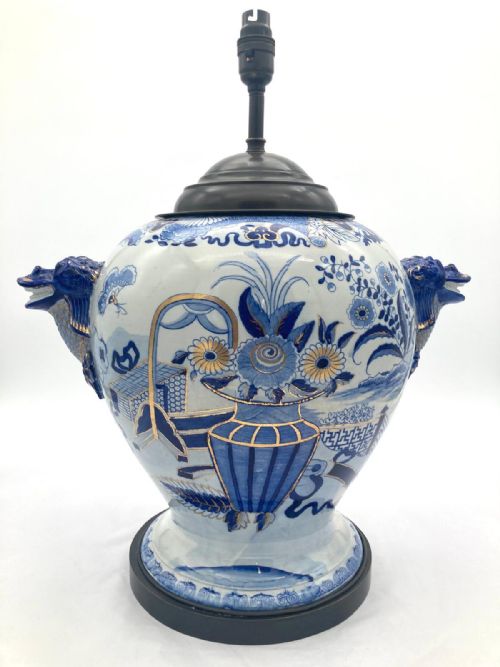
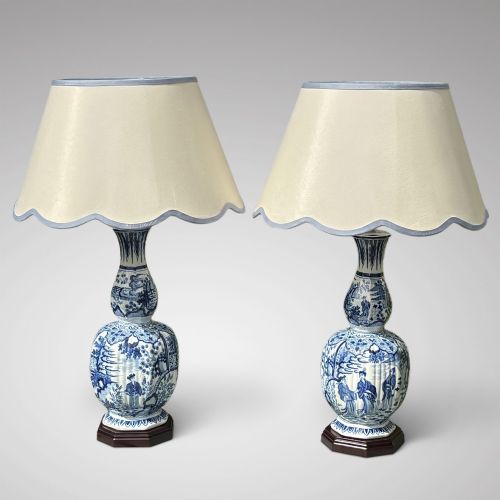
Chinoiserie porcelain desk lamps take traditional ceramic bodies and convert them into functional table lighting for domestic interiors. When exploring chinoiserie porcelain desk lamps, buyers encounter diverse forms ranging from baluster vases and ginger jars to ironstone vessels and figural sculptures.
The selections visible here originate across several eras, including the 18th century, Victorian period, Regency style, and early 20th century. Chinese Qing Dynasty, Japanese Meiji, and European revival traditions shape the visual language of these pieces.
Materials and Construction Techniques
The primary bodies utilise porcelain, ceramic, and earthenware, shaped into jars, baluster vases, and decorative containers. Artisans applied intricate painted glazes including blue and white, turquoise, powder blue, and polychrome enamel schemes.
Metalwork components integrate cast brass, gilt bronze, and ormolu mounts to secure the ceramic forms and provide structural stability. Silk and fabric elements complete the construction, forming handmade shades that sit atop the illuminated bases.
The inventory records table lamps transformed from ginger jars, baluster vases, and ironstone vessels originating in China, Japan, and Europe.
Factors Defining Quality and Distinction
Quality separates through the crispness of the hand-painted ceramic decoration and the depth of the porcelain glaze. Finer examples display meticulous brushwork in palettes like Famille Verte or Imari, alongside well-preserved crackle ware textures.
The integration of metal mounts further distinguishes the tier of a piece. Superior mountings utilise finely chased ormolu or gilt bronze that complements the contours of the ceramic body without disrupting its historical integrity.
Hicks and Meigh·Samson
The Chinoiserie Porcelain Desk Lamps Glossary
- Famille Rose
- A palette of Chinese porcelain enamels dominated by opaque pink or rose colours, introduced during the Qing Dynasty. This decorative style appears frequently across nineteenth-century vase and jar conversions.
- Ormolu
- Finely ground metallic mercury and gold applied to a bronze base, creating a rich golden finish. This technique often secures the base and collar of converted porcelain lamps.
- Imari
- A style of Japanese export porcelain featuring underglaze blue and overglaze red, gold, and green. Pieces from Arita utilising this aesthetic frequently appear in period lighting selections.
- Baluster
- A moulded architectural form with a swelling lower portion tapering toward the top. Many ceramic lamp bodies take this classic vase silhouette.
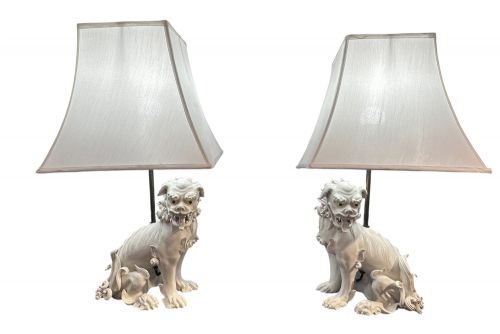
- Shi Lion
- A traditional guardian animal motif, also known as a Foo Dog, modelled in porcelain. These sculptural forms occasionally serve as the sculptural base for lighting fixtures.
Chinoiserie Porcelain Desk Lamps: Frequently Asked Questions
What periods do these lamps come from?
The pieces span multiple eras, encompassing eighteenth-century Japanese and Chinese pieces, Regency examples, nineteenth-century productions, and early twentieth-century designs.
European factories also produced revival pieces during the nineteenth century, mimicking earlier aesthetic traditions.
How were these lamps originally constructed?
Many items began as decorative ceramic vessels, such as ginger jars or baluster vases, before undergoing later conversion into functional table lamps.
Artisans added electrical fittings, gilt bronze mounts, and custom fabric or silk shades to adapt the antique ceramics for modern use.
What ceramic styles are most common?
Blue and white designs, Famille Verte, Famille Rose, and Imari palettes appear frequently across the available inventory.
Craftsmen also utilised turquoise glazes, powder blue surfaces, and Dutch Delftware traditions to achieve distinct decorative effects.
How do I identify different regional styles?
Chinese pieces often feature Qing Dynasty motifs, baluster forms, and crackle ware glazes, while Japanese items frequently display Arita Imari patterns from the Edo and Meiji periods.
European interpretations, such as French Rococo Revival or Samson productions, imitate these Asian aesthetics using local porcelain and ormolu mounts.