
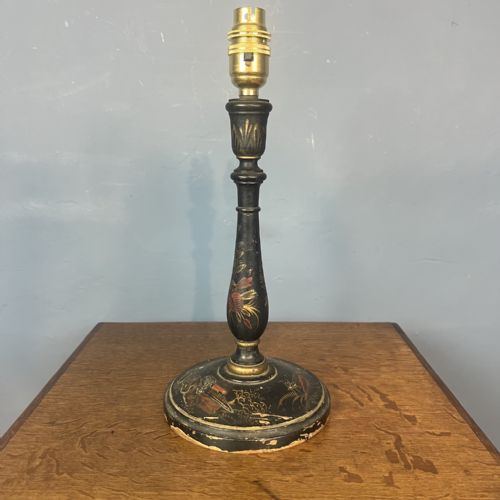
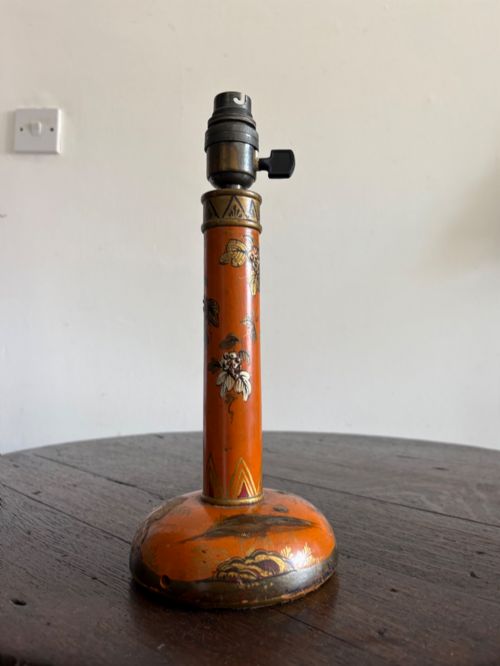
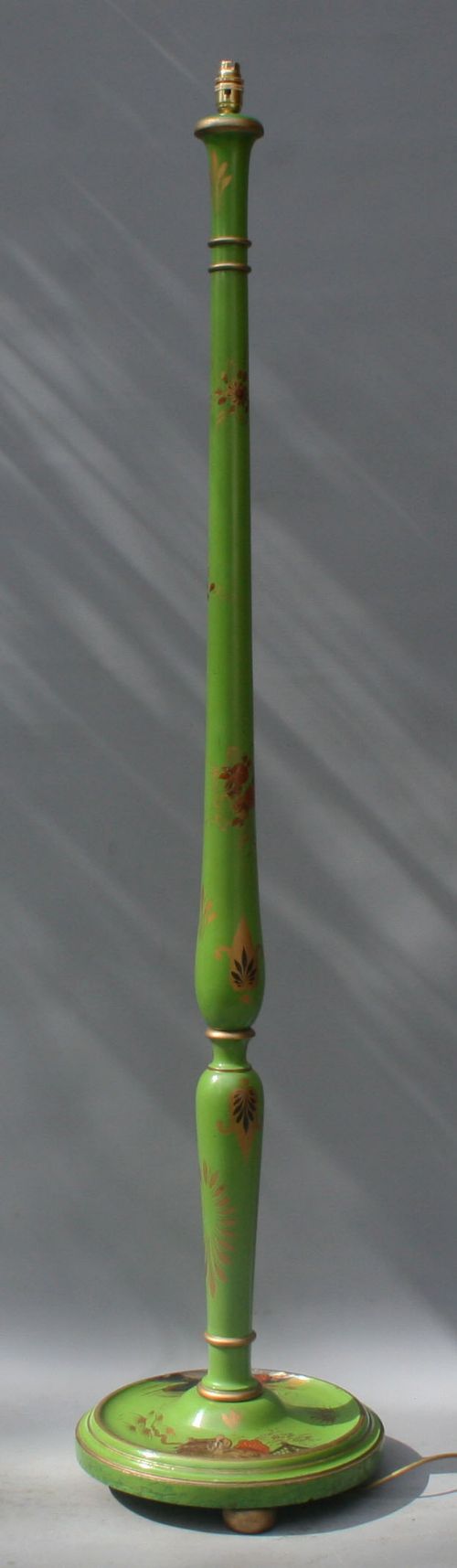


Chinoiserie Painted Lamp Base
A chinoiserie painted lamp base brings a rich layer of hand-painted oriental narrative and vibrant lacquer into a room.
Chinoiserie Painted Lamp Base
A chinoiserie painted lamp base takes the form of table lamps, floor lamps, and standard lamps shaped from porcelain vases, ginger jars, and lacquered wood. These pieces emerge from periods spanning the eighteenth, nineteenth, and early twentieth centuries, including Edwardian iterations and the 1920s and 1930s.
The most common examples encountered here are porcelain vessels adapted into table lamps, often featuring blue and white decoration, famille rose, or famille verte palettes alongside lacquered wooden standards.
Materials and Construction
Makers utilised porcelain, brass, wood, and lacquered wood as foundational materials, frequently incorporating hand-painted pigments and gilt highlights directly onto the surface. Vases and jars were drilled and fitted with brass mounts to accommodate electrical wiring.
Lacquered pieces received multiple layers of paint and varnish to build up deep surfaces, while porcelain bodies employed traditional Chinese and European export glazing techniques.
Quality and Execution
The fineness of the hand-painted detail separates superior examples from simpler ones, with complex figurative scenes and rich floral motifs demanding greater skill than repetitive patterns. The depth and integrity of the lacquer finish or porcelain glaze also dictate the standard of the piece.
The integration of brass mounts and the survival of the original painted surface without excessive retouching mark the distinction between finer decorative objects and standard adaptations.
The Chinoiserie Painted Lamp Base Glossary
- Chinoiserie
- European artistic interpretation of Chinese and East Asian stylistic motifs, prevalent in decorative arts and furniture. It relies on imagined landscapes, figures, and pavilions.
- Famille Rose
- A major palette of Chinese porcelain enamels introduced in the eighteenth century, distinguished by opaque pink or rose colours. This palette allowed for subtle gradations of tone in painted floral and human subjects.
- Baluster
- A vertical architectural form with a swelling lower portion, frequently seen in the silhouette of ceramic vase lamp bases. The shape provides stability and visual weight.
- Ginger Jar
- A broad-shouldered ceramic container originally used for storing spices, later adapted widely as a lamp base. Its rounded body offers an ideal canvas for painted decoration.
Chinoiserie Painted Lamp Base: Frequently Asked Questions
How do I clean a lacquer lamp base?
Dust gently with a dry, soft microfibre cloth to protect the delicate painted surface from abrasion.
Avoid using liquid cleaners, solvents, or polishes, as these can soften or strip historical lacquer layers.
How do I date a porcelain vase lamp?
Examine the characteristics of the glaze, the quality of the painted pigments, and the construction of any base mounts.
Comparing the style against documented eighteenth, nineteenth, and early twentieth-century examples helps narrow the period.
Where should I place a standard lamp?
Floor-standing standard lamps suit corners of reception rooms or beside reading chairs where height is required to distribute light.
Ensure the heavy lacquered or wooden base rests firmly on an even floor surface.