



Decorative Lacquer Table Lamp
A decorative lacquer table lamp brings rich hand-painted detail and colour to a room, drawing the eye with traditional eastern motifs.
Decorative Lacquer Table Lamp
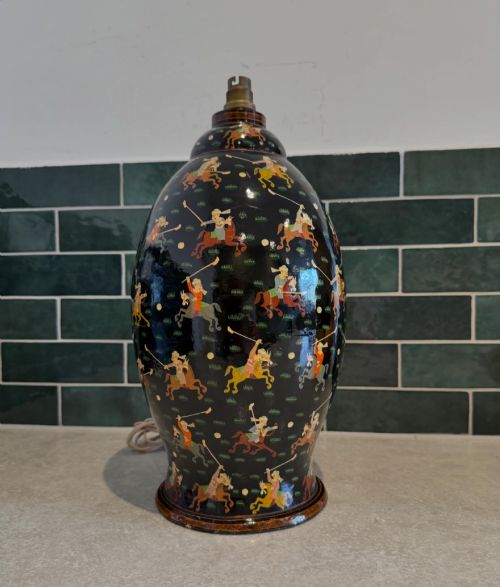
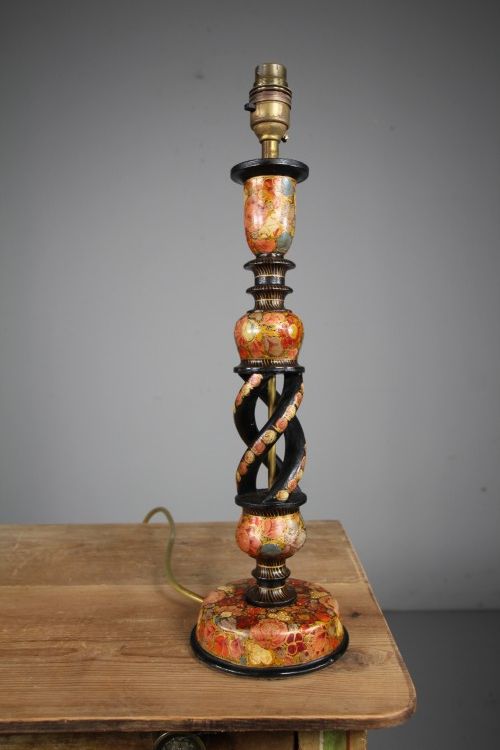
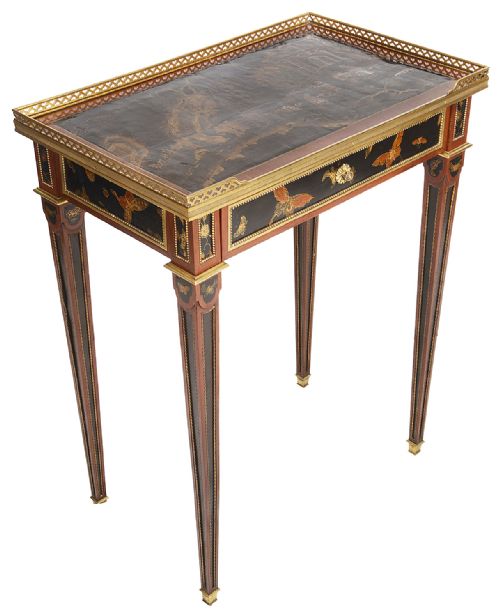
A decorative lacquer table lamp stands as a striking way to bring pattern and texture into an interior. The pieces gathered under this heading include table lamps from Kashmiri folk art traditions alongside 19th-century chinoiserie designs.
Most examples hail from the Victorian era and the early twentieth century, spanning periods such as 1800, 1920, and 1930. Alongside lamps, the selection incorporates occasional items like side tables and tea canisters repurposed for lighting.
Buyers will most frequently encounter Kashmiri papier-mache lamps and painted wooden forms finished with intricate gold leaf highlights. These items reflect distinct regional styles including Anglo-Indian and Kashmiri folk art.
How they were made
Construction relies heavily on traditional materials such as wood, papier-mache, and brass. Artisans applied layers of lacquer over a prepared base before executing detailed hand-painted designs.
Many surfaces incorporate gold leaf and rich paintwork to build up floral and figurative motifs. Bases and structural elements often combine turned wood or brass components to support the lacquer body.
Even a tea canister from the 19th century found a second life as a table lamp.
What varies in quality
The refinement of the hand-painted ornament dictates the standard of each piece. Finer examples display meticulous brushwork and delicate gold leaf application that remain crisp across the lacquer surface.
The integrity of the underlying material, whether papier-mache or turned wood, shapes the durability and weight of the lamp. Superior items retain their original decorative scheme with minimal disruption from later touch-ups.
The Decorative Lacquer Table Lamp Glossary
- Lacquer
- A durable resin finish applied in multiple coats and polished to a smooth sheen. It provides a protective surface for intricate painted decoration.
- Papier-mache
- A composite material formed from paper pulp or layers of paper bound with glue, then moulded and dried. It offers a lightweight yet sturdy base for detailed Kashmiri painting.
- Chinoiserie
- A European artistic style reflecting Chinese motifs and techniques, popular in the 19th century. It frequently appears on furniture and lamps adapted from tea canisters and tables.
- Gold leaf
- Extremely thin gold beaten into sheets and applied to surfaces for ornamentation. It catches the light and contrasts with dark lacquer backgrounds.
- Anglo-Indian
- A stylistic term describing decorative arts produced in India under British influence. These pieces merge local craftsmanship with European domestic forms.
Decorative Lacquer Table Lamp: Frequently Asked Questions
What periods do these lamps come from?
The pieces span the nineteenth century up to the 1930s. Victorian examples and items from the 1920s and 1930s appear frequently.
Earliest items date back towards 1800, often showing traditional hand-painted motifs.
How do I identify Kashmiri lamps?
Kashmiri lamps typically utilise papier-mache or painted wood as a primary material. They feature distinct folk art patterns and delicate floral details.
Many of these pieces date from the early twentieth century, around 1920 to 1930.
What materials make up the bodies?
Common materials include wood, papier-mache, and brass. Surfaces receive coats of lacquer, paint, and gold leaf.
Fabric elements may be present in accompanying shades or fittings.
How should I place them in a room?
A decorative lacquer table lamp works well on side tables or desks where its painted surface can be appreciated. The rich colours complement traditional and eclectic interiors alike.
Keep them away from direct sunlight to protect the lacquer finish.