


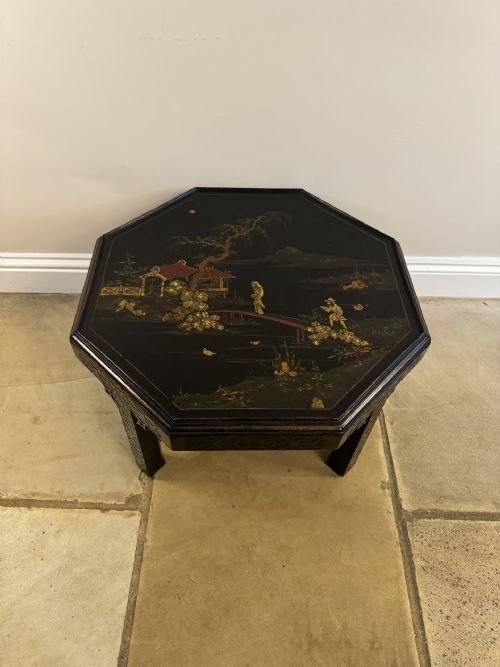


Chinoiserie Low Table
A chinoiserie low table brings decorative lacquer, gilt scenes and low proportions to a sitting room.
Chinoiserie Low Table
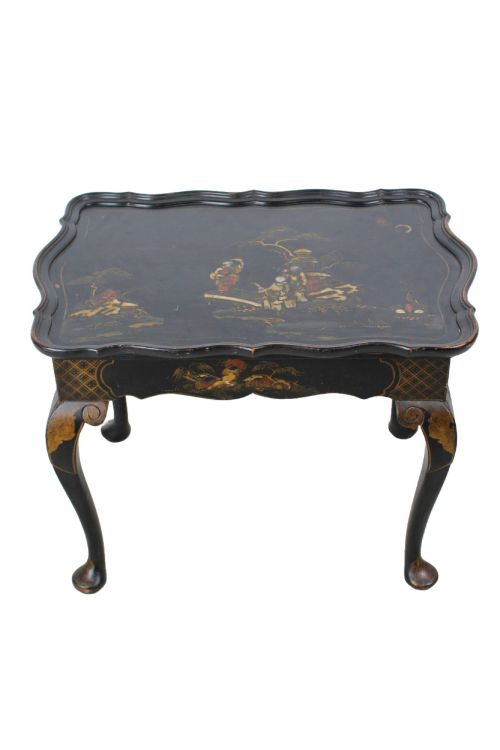
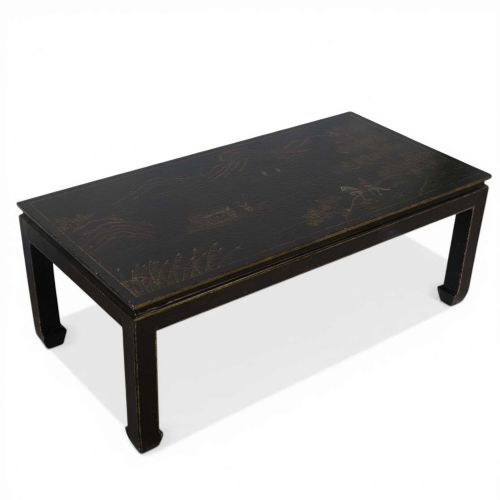
A chinoiserie low table takes several forms across the nineteenth and twentieth centuries, functioning as a coffee table, occasional table, or low reception piece. Buyers seeking this search phrase encounter low rectangular and circular tables, alongside tray tables set upon folding or fixed stands.
Many examples emerge from the Edwardian period and the interwar decades up to the mid-century. Makers also adapted older lacquered panels and chests into low tables during the early twentieth century.
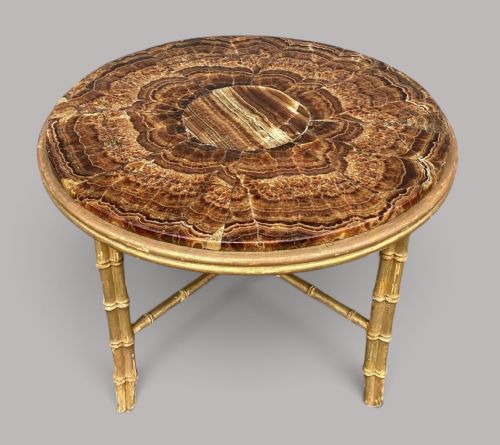
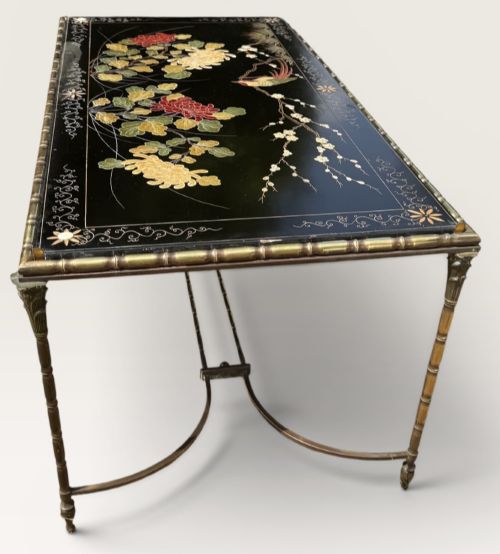
The aesthetic draws on traditional Chinese motifs, expressed through black and gilt lacquer, painted scenes, and raised relief detail. Occasional variants utilise faux bamboo, padouk, ebonised wood, or marble paired with giltwood.
Materials and Construction
Construction relies upon timber frameworks finished with layers of lacquer, paint, or gilt. Artisans applied black, yellow, or ebonised grounds, then built up decorative scenes using gilt paint and raised relief techniques.
Tray tables integrate removable wooden trays resting on matching stands, while other forms utilise solid hardwoods like padouk, marble tops, or papier-mache. Brass hardware occasionally appears on pieces adapted from chests and trunks.
Several tables started life as tea trays before finding a second career near the sofa.
Assessing Craftsmanship
Quality rests upon the depth and intricacy of the painted or lacquered decoration. Finer pieces display crisp, detailed raised relief work and carefully hand-painted figurative or landscape scenes across the surface.
The integrity of the underlying woodwork and the stability of the stand or legs dictate overall durability. Tables incorporating period lacquered panels or substantial hardwoods command greater regard than simpler later adaptations.
Maison Bagues·Waring & Gillow
The Chinoiserie Low Table Glossary
- Chinoiserie
- European interpretation and imitation of Chinese and East Asian artistic traditions. This style became particularly prominent in furniture decoration during the eighteenth, nineteenth, and early twentieth centuries.
- Japanning
- European form of decorative lacquerwork that mimics East Asian lacquer. Craftsmen applied multiple coats of varnish and heat-cured the finish before adding painted and gilt designs.
- Tray Table
- A table consisting of a removable serving tray placed upon a supporting stand. These surfaces often feature raised edges and decorative painted scenes.
- Padouk
- A durable tropical hardwood with a dense grain used in quality furniture making. It provides a sturdy structural base for low tables and stands.
- Relief
- Sculptural projection from a flat background surface. In these pieces, decorative motifs are built up in relief before gilding and painting.
Chinoiserie Low Table: Frequently Asked Questions
What is a chinoiserie low table used for?
These pieces serve primarily as coffee tables or low occasional surfaces in sitting rooms and reception spaces. They provide a stable surface for everyday items while introducing decorative painted detail to an interior.
Their low proportions suit placement before sofas and armchairs. Tray top versions also allow the upper surface to be lifted off when needed.
How do I date a chinoiserie low table?
Dating relies on examining the construction timber, the style of the lacquerwork, and the form of the legs or stand. Pieces span from the nineteenth century through the Edwardian era and the mid-twentieth century.
Earlier examples often feature hand-applied japanning on solid timber frames, while later twentieth-century pieces reflect mid-century interpretations of Chinese designs or incorporate older panels.
Are these tables made in China?
Most pieces listed under this style are European interpretations made during the nineteenth and twentieth centuries. British, French, and other Western makers produced furniture inspired by traditional Chinese aesthetics.
Some examples do incorporate genuine Chinese hardwood or antique lacquer panels into locally built low table frames, blending Eastern materials with Western furniture forms.
How do I care for a lacquered table surface?
Lacquered and painted surfaces require gentle cleaning with a soft, dry cloth to remove dust. Avoid using abrasive cleaners, strong chemicals, or excess moisture that could damage the finish.
Using coasters and placemats protects the gilt and painted scenes from heat and liquid rings. Keeping the table out of direct sunlight prevents the lacquer colours from fading.