





Chinese Wood Stand
These Chinese wood stand pieces range from low jardiniere supports to carved display tables, offering solid foundations for vases, plants, and decorative objects.
Chinese Wood Stand
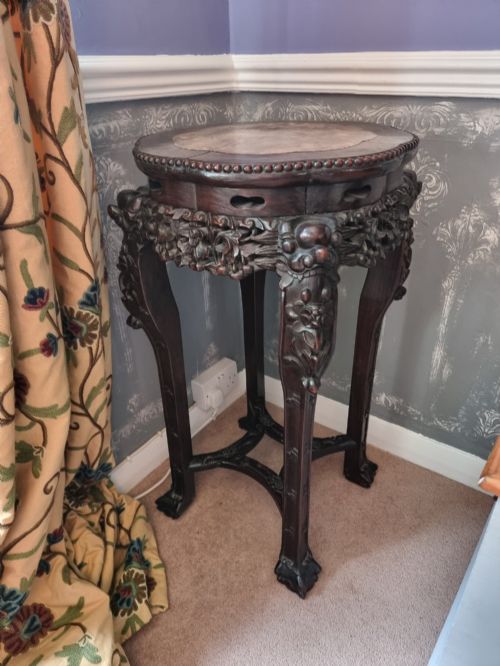
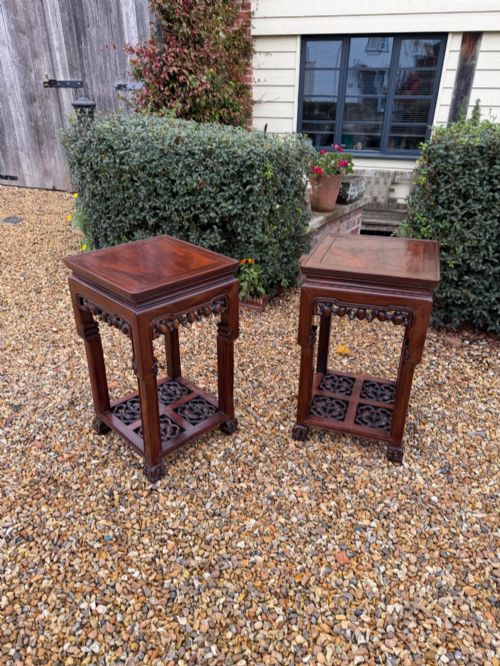
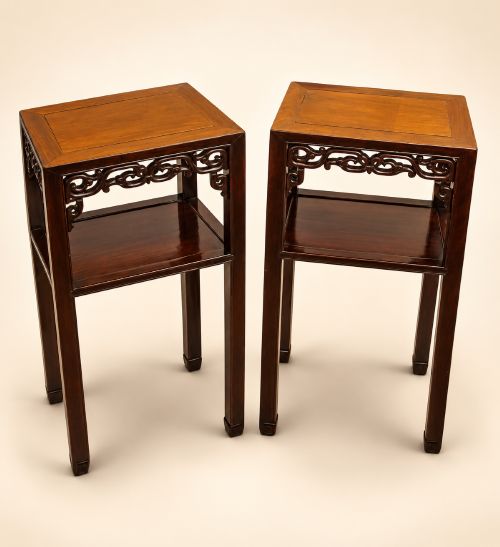
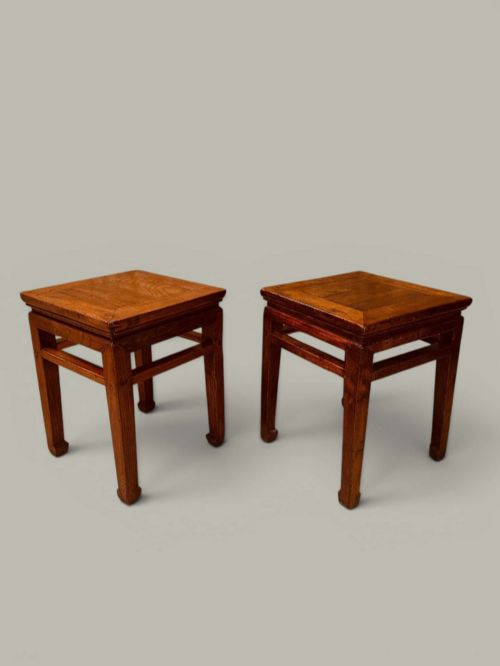
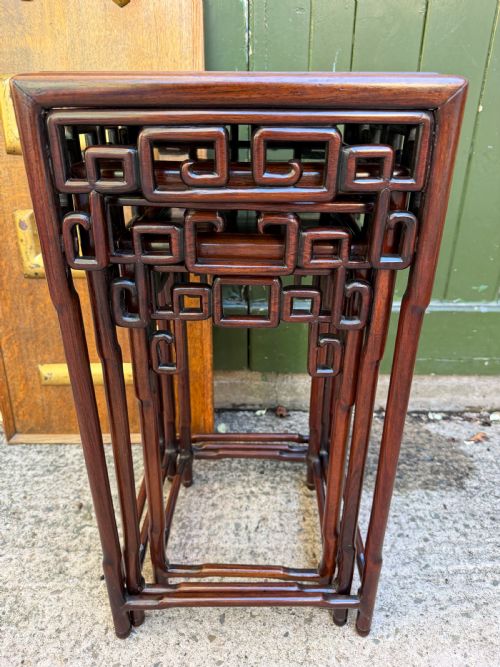
A chinese wood stand serves primarily to elevate decorative objects, jardinieres, and vases within an interior space, functioning as both a functional support and a focal point. Pieces associated with this phrase appear across various forms, including low tables, pot stands, and pedestal bases designed for display.
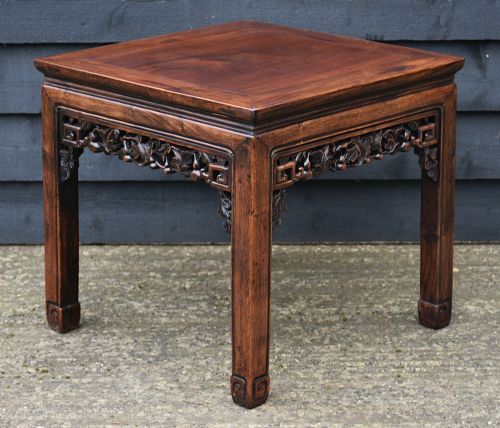
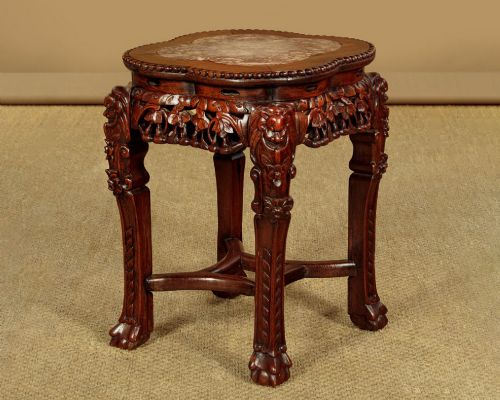
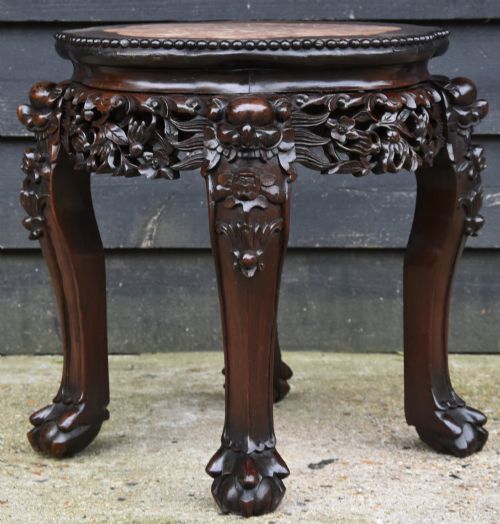
The selections span multiple periods, with many originating in the nineteenth century under Qing Dynasty aesthetics alongside later Chinoiserie interpretations from the Victorian and Edwardian eras. Buyers frequently encounter low square tables and inset marble-top designs intended for holding heavy ceramic vessels.
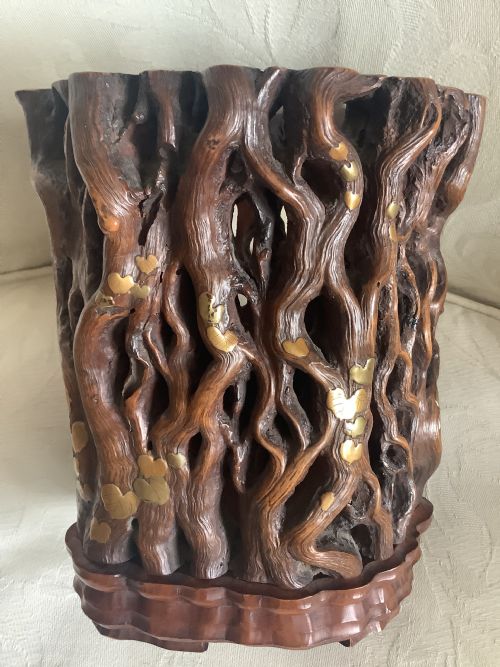
Forms extend beyond simple square tables to include round occasional tables, rectangular pot stands, and rootwood configurations utilising deep quartz inserts. These items bridge utilitarian support furniture and ornamental carving.
Materials and construction
Construction relies heavily on dense timbers such as rosewood, padouk, zitan, and general hardwood, chosen for their ability to support substantial weight without warping. Artisans frequently integrated inset panels of variegated rouge marble or quartz directly into the timber framework.
Surface treatments range from natural polished hardwood finishes to red lacquer and Chinoiserie paintwork, showcasing detailed carving executed by hand. Joinery techniques prioritize stability, accommodating heavy stone tops and bronze vessels securely.
Chinese Wood Stand Retail Price Guide 2026
Typical asking prices for chinese wood stand among the pieces listed under this phrase on Sellingantiques today, from the lower quarter to the upper quarter. They describe what is for sale here now, not the wider market.
Some nineteenth-century makers applied the same meticulous carving skills to miniature hardwood elephants that they used for full-sized furniture.
Separating the grades
Quality rests upon the depth and precision of the carved decoration and the integrity of the timber selection. Dense hardwoods like rosewood and padouk hold crisp relief work better than softer elm or generic wood alternatives.
The integration of inset marble or stone tops distinguishes superior examples, where the fit between stone and timber remains flush and secure. Original surface preservation, whether polished timber or intact lacquer, dictates the structural and visual coherence of the piece.
The Chinese Wood Stand Glossary
- Hardwood
- Dense timber such as rosewood or padouk used for structural stability and fine carving. These materials resist wear and support heavy decorative objects.
- Jardiniere stand
- A tall or low table specifically designed to hold a plant pot or ceramic jardiniere. They often feature inset marble tops to protect against moisture.
- Rouge marble
- A red-toned decorative stone frequently utilised as an inset top within nineteenth-century hardwood stands. It provides a contrasting, durable surface.
- Chinoiserie
- European decorative style reflecting Chinese artistic influences, seen in lacquered cabinets and painted tables. This aesthetic became popular during the Victorian and Edwardian periods.
- Padouk
- A heavy, durable tropical timber prized for its reddish hue and strength. Makers utilised it for high-end carved stands and occasional tables.
Chinese Wood Stand: Frequently Asked Questions
What were these stands used for originally?
These supports held heavy porcelain vases, bronze vessels, and potted plants inside traditional interiors. Elevating objects protected them from floor drafts and dust.
They also served practical roles as small side tables for tea ceremonies or display surfaces for scholars' items.
How do I identify nineteenth-century pieces?
Nineteenth-century examples typically employ dense Asian hardwoods like rosewood or padouk with hand-carved relief detailing. Joinery methods and patination on the timber indicate age.
Many incorporate inset marble or quartz panels specifically fitted to the wooden frame without modern adhesives.
Can these stands support heavy items?
Solid hardwood construction and rigid joinery allow most of these stands to carry substantial weight, including large ceramic planters and stone sculptures. The inclusion of marble tops provides a resilient surface for heavy objects.
Checking the tightness of the frame ensures stability under continuous loads.
What is the difference between a pot stand and a side table?
Pot stands generally feature smaller surface areas with taller, narrower proportions or low recessed tops designed to contain bases of planters. Side tables offer broader surfaces intended for general placement.
Both categories frequently share similar carved hardwood construction and marble inserts.