


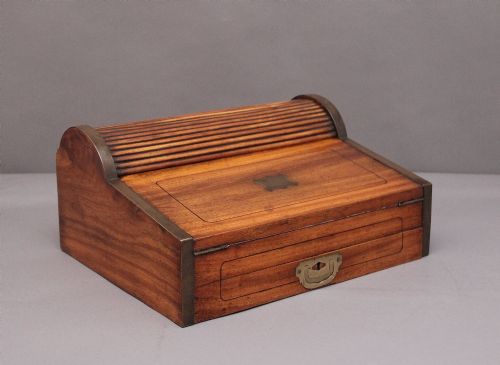


Chinese Wood Box
A Chinese wood box is a utilitarian vessel built for travel or storage, bringing aromatic camphor, rich lacquer, and brass mounts into domestic interiors.
Chinese Wood Box
A Chinese wood box encompasses a broad spectrum of containers, from large camphor trunks and leather-bound travel chests to small tea caddies, writing slopes, and wedding baskets. These vessels emerge primarily from the nineteenth and early twentieth centuries, spanning the Qing Dynasty through to the art deco period.
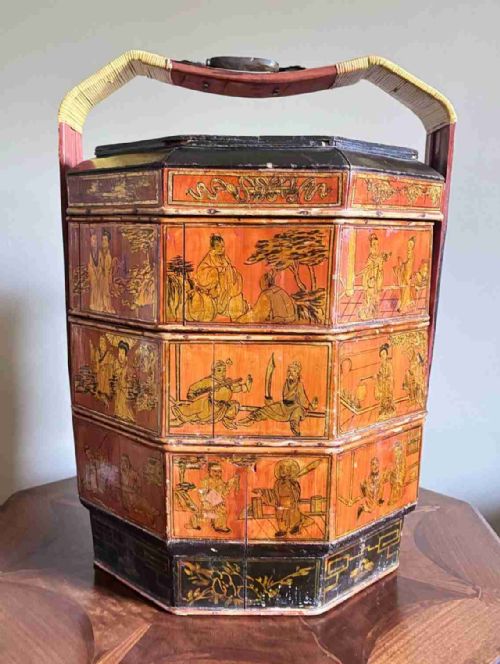
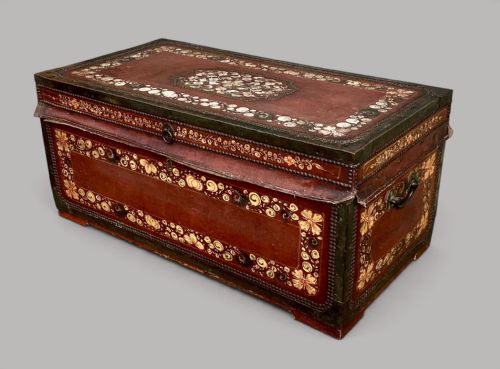
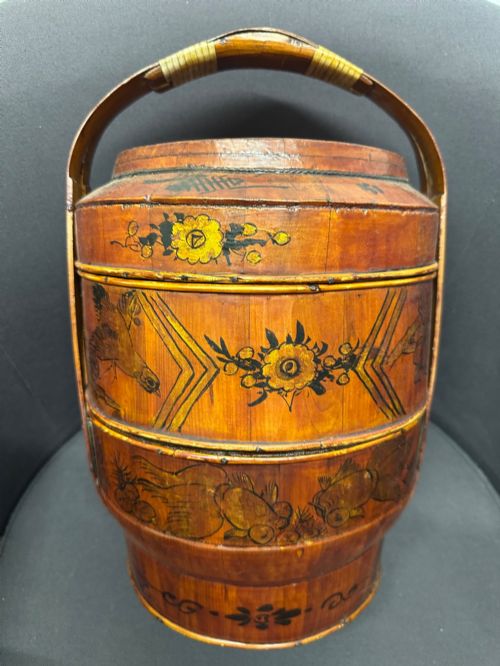
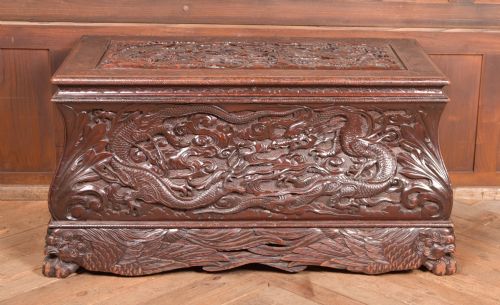
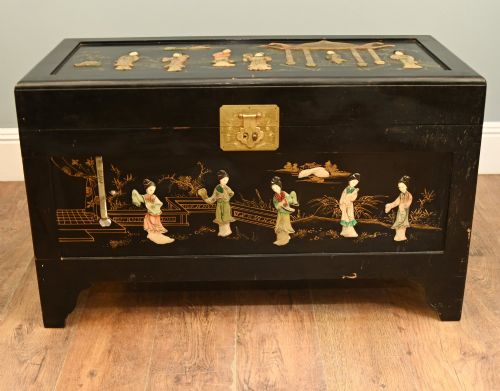
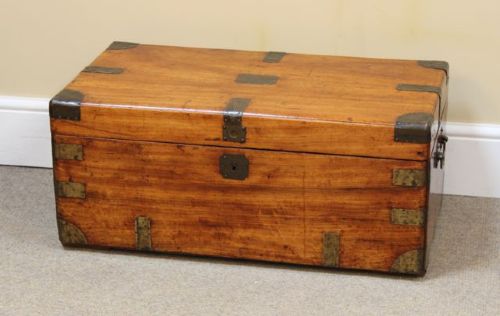
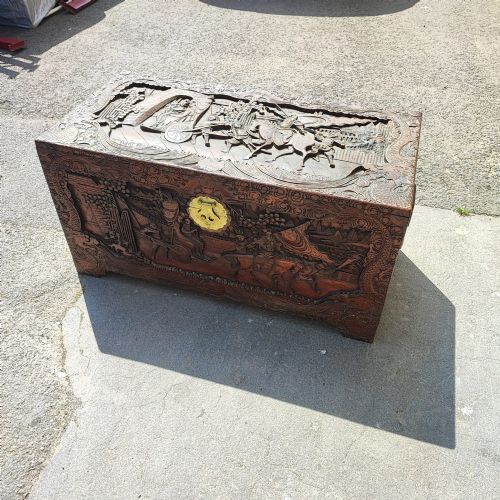
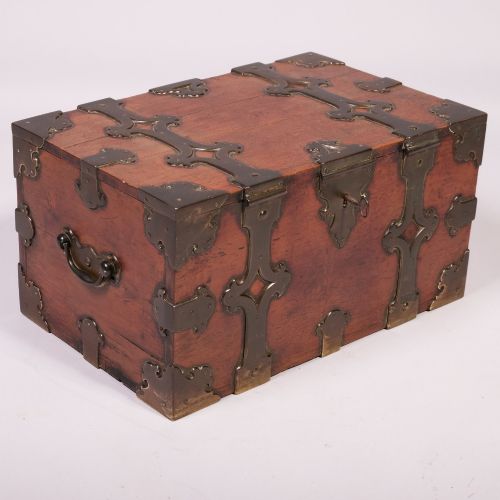
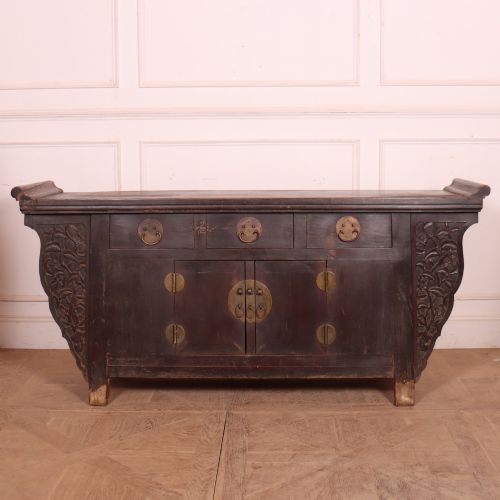
The most common examples encountered on this page are substantial camphor wood storage trunks and blanket boxes, often framed by brass mounts or detailed carvings. Alongside these heavy chests appear domestic accessories including lacquered wedding coffers, dowry baskets, and fitted tabletop cabinets.
Originating through trade, export networks, and regional workshops, these pieces bridge traditional Chinese joinery with Western utility. Buyers find both large-scale furniture pieces intended for luggage and smaller decorative caskets designed for keepsakes and tea.
Materials and Technique
Makers utilised aromatic camphor wood for its natural insect-repellent properties, alongside dense hardwoods like elm, rosewood, and huanghuali. Trunks frequently incorporate sturdy exterior applications of brass strapping, leather, and iron locks to withstand long maritime journeys.
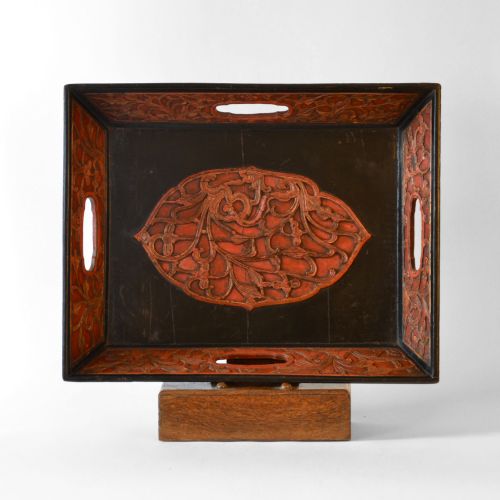
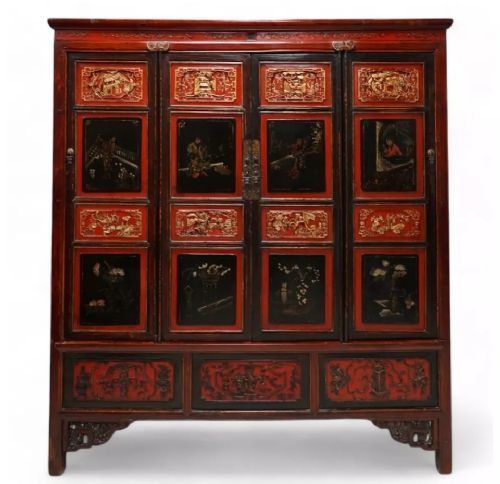
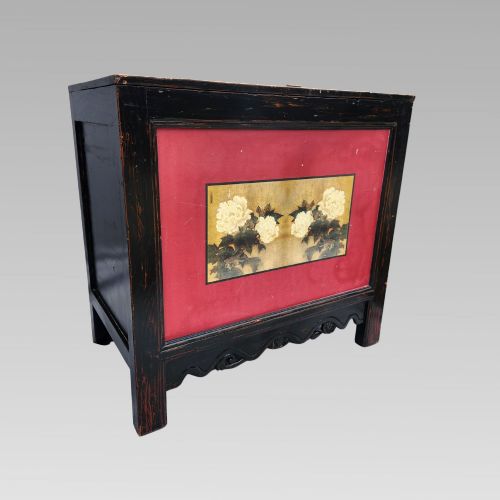
Surface finishes rely heavily on applied red or black lacquer, polychrome painting, and intricate surface carving depicting floral motifs or dragons. Smaller decorative items integrate delicate mother of pearl inlay and bamboo weaving to achieve varied surface textures.
Chinese Wood Box Retail Price Guide 2026
Typical asking prices for chinese wood box among the pieces listed under this phrase on Sellingantiques today, from the lower quarter to the upper quarter. They describe what is for sale here now, not the wider market.
Several trunks retain their original nineteenth-century locks, though the keys have long since retired from active service.
Material Depth and Execution
The distinction between tiers rests upon the depth of the carving, the selection of timber, and the integrity of the original hardware. Superior examples display crisp relief work and well-preserved lacquer, whereas simpler iterations rely on plain timber panels.
Hardware execution also separates pieces, with heavy hand-beaten brass mounts and functional lock plates indicating higher workshop standards. The survival of original painted surfaces and fitted internal compartments further elevates the standing of an individual box.
The Chinese Wood Box Glossary
- Camphor Wood
- A fragrant timber native to Asia, utilised for storage chests due to its natural ability to repel moths and dampness. Its distinct aroma persists for generations.
- Coffre Fort
- A heavily reinforced strongbox or coffer designed for secure transport of valuables during trade. These early pieces typically feature extensive metal strapping.
- Tea Caddy
- A small lidded container built to store dry tea leaves safely away from moisture and light. Many antique examples include internal compartments or lead linings.
- Writing Slope
- A portable desk featuring a sloping lid that opens to reveal a slanted writing surface and stationery compartments. These were essential for travellers during the nineteenth century.
Chinese Wood Box: Frequently Asked Questions
What were camphor wood trunks used for?
These large chests served primarily for storing garments, blankets, and textiles during maritime transport and domestic life. The natural scent of the wood protected fabrics from insects.
Over time, they evolved into general household storage and blanket boxes placed at the foot of beds or within living spaces.
How do I identify a Chinese export box?
Export pieces often combine traditional Chinese timber construction with hardware or forms tailored to Western tastes, such as brass bound corners and side carrying handles.
They frequently date from the nineteenth century when trade between China and Europe flourished through treaty ports.
Are lacquer boxes waterproof?
Natural tree sap lacquer creates a durable, sealed surface that resists moisture and daily wear when applied in multiple cured layers. While resilient, these surfaces benefit from stable humidity.
They were traditionally used for wedding ceremonies, dowry storage, and food transport, such as multi-tiered picnic baskets.
How should I clean a carved wooden chest?
Maintenance requires gentle dusting with a dry, soft cloth to prevent particulate build-up within deep surface carvings and recesses. Avoid modern chemical polishes and excess water.
Applying a neutral wax occasionally helps preserve dry hardwood and maintains the natural lustre of older finishes.