










Chinese Vase Stand
When searching for a chinese vase stand, one encounters low carved supports and pedestal tables designed to elevate oriental porcelain and cloisonne vessels.
Chinese Vase Stand
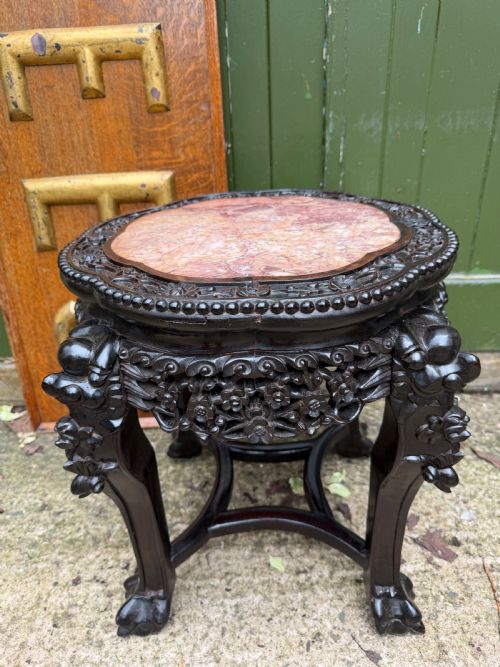
A chinese vase stand is primarily encountered as a low circular or square table, often produced during the nineteenth century or the late Qing dynasty. These items serve to elevate jardiniere pots, porcelain vessels, and plant containers within interior settings.
Makers utilised dense timbers and stone inserts to bear heavy ceramic loads while presenting decorative surfaces for display. Surviving examples range from simple low tables to monumental carved pedestals.
Materials and construction methods
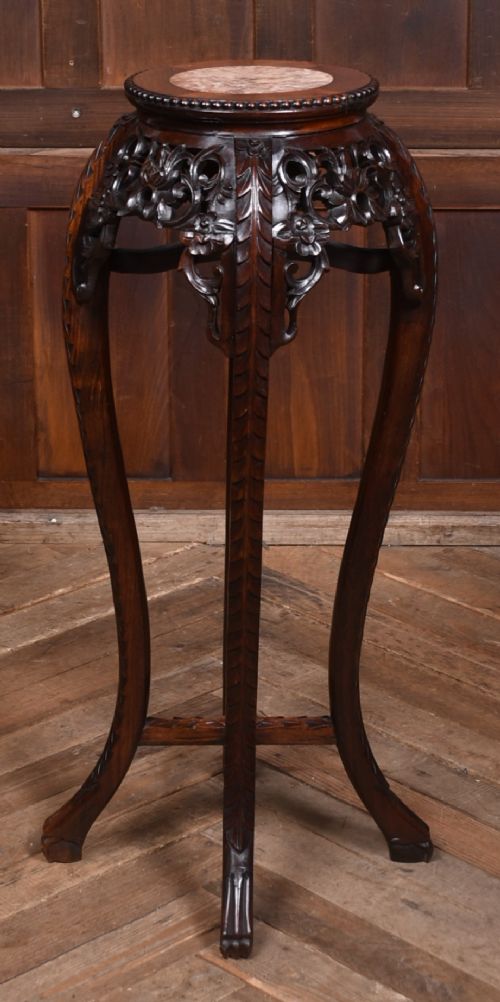
Construction relies heavily on dense exotic timbers such as rosewood, hongmu, huali, and padouk, which provide the structural rigidity necessary for heavy stone and ceramic vessels. Artisans carved these hardwoods with intricate floral and traditional motifs.
Many surfaces incorporate inset panels of variegated rouge or white marble, fitted precisely into the wooden frame to create a cool, flat display area. Lacquer finishes and gilt detailing also feature on select export pieces.
Joinery techniques allow carved wooden frames to support substantial weight without warping, while metal components appear on brass and champleve enamel variants.
Chinese Vase Stand Retail Price Guide 2026
Typical asking prices for chinese vase stand among the pieces listed under this phrase on Sellingantiques today, from the lower quarter to the upper quarter. They describe what is for sale here now, not the wider market.
Listings feature items from the 1880s, 1890s, and the Victorian era, executed in hardwood, marble, and porcelain.
Evaluating craftsmanship and materials
The distinction between ordinary utility items and superior examples lies in the depth and crispness of the wood carving, alongside the selection of timber. Dense hardwoods like hongmu and well-figured rosewood command greater attention than generic softwoods.
The quality of the inset marble panel, specifically its colour variation and the tightness of its fit within the wooden rebate, signals higher workshop standards. Integrated components and original matching vessels further elevate a piece above standard domestic variants.
The Chinese Vase Stand Glossary
- Hongmu
- A dense, dark traditional Chinese hardwood used for fine furniture and decorative stands. It translates literally to red wood.
- Jardiniere
- A large ceramic or metal pot designed to hold growing plants or flower arrangements. These vessels frequently require sturdy matching stands.
- Cloisonne
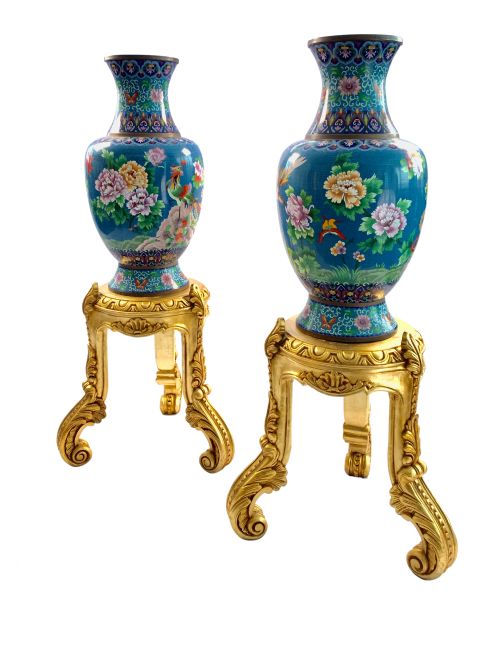
- An enamelling technique where metal wire forms raised barriers on a vessel body before coloured paste is applied. Pieces utilising this method often sit upon dedicated wooden supports.
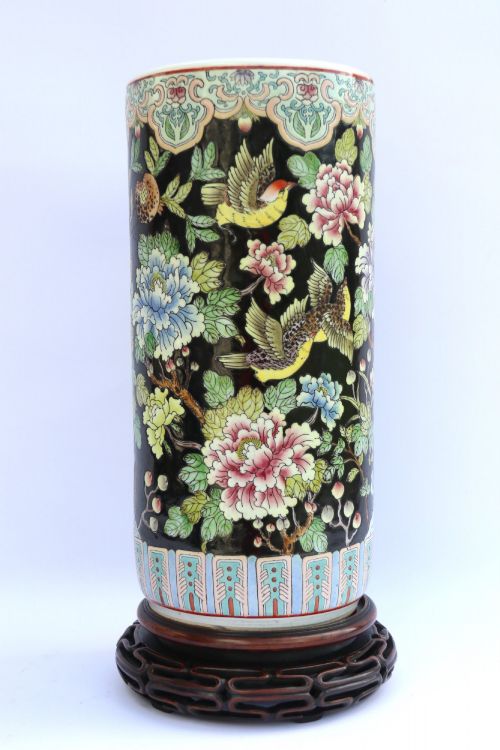
- Rose Medallion
- A distinct style of nineteenth-century Cantonese porcelain decoration featuring panels of figures and birds surrounded by green and pink floral borders. Such vases are frequently paired with carved hardwood bases.
- Champleve
- An enamelling technique where troughs are gouged into a metal base to hold vitreous enamel. Items decorated this way appear across various export periods.
Chinese Vase Stand: Frequently Asked Questions
What is a chinese vase stand used for?
These pieces elevate heavy ceramic vessels, urns, and plant pots above floor level to protect delicate flooring and improve room composition.
They also serve independently as small occasional tables or lamp stands within period interiors.
How do I identify a Qing dynasty stand?
Nineteenth-century Qing dynasty examples typically display dense carved hardwoods like rosewood or hongmu combined with mortise and tenon joinery.
They often feature traditional motifs such as prunus, dragons, or key fret patterns carved in high relief around the apron.
Why do many stands have marble tops?
Inset marble panels provide a cool, flat, and moisture-resistant surface that prevents heavy ceramic or bronze vessels from marking the wood.
Variegated rouge and white marble inserts also introduce contrasting textures to the dark timber frame.
Can these stands support modern items?
The dense hardwoods utilised in their construction provide immense structural strength capable of bearing substantial weight safely.
Many collectors repurpose these low tables to display lamps, bronze sculptures, or modern art objects.