








Chinese Pedestal Stand
A Chinese pedestal stand brings elevated form and carved timber to interior displays.
Chinese Pedestal Stand
A chinese pedestal stand functions primarily to elevate decorative vessels, plants, and sculptures within a room. Buyers search for these pieces to introduce architectural height and traditional craftsmanship into domestic spaces.
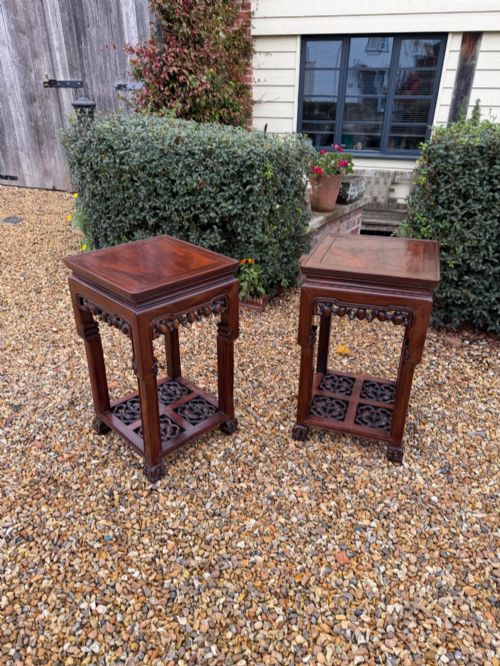
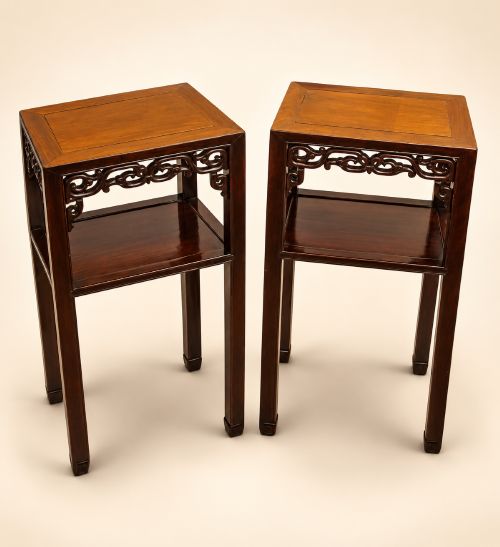
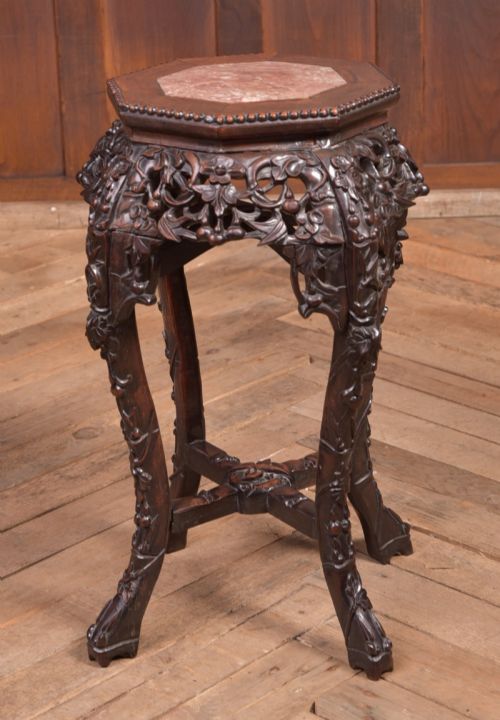
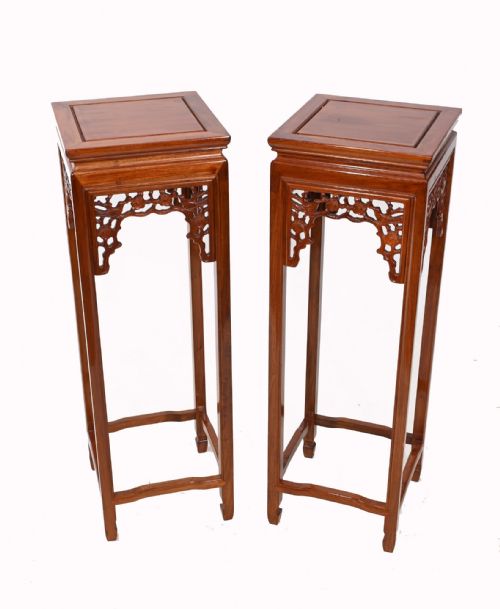
The selection here draws principally from nineteenth-century production, spanning Victorian imports and Qing Dynasty creations. Most examples take the form of plant stands, jardiniere tables, or vase supports shaped from dense timbers.
Forms range from tall torchère stands to low rectangular tables and stools. Individual pieces often serve multiple domestic roles, functioning equally as lamp tables or side surfaces.
How They Were Made
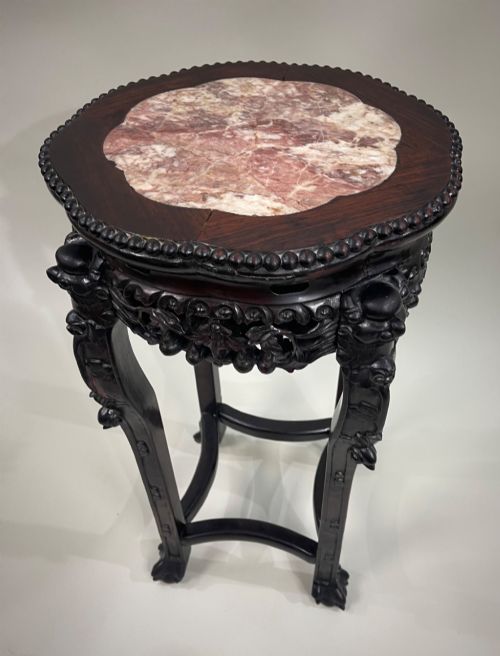
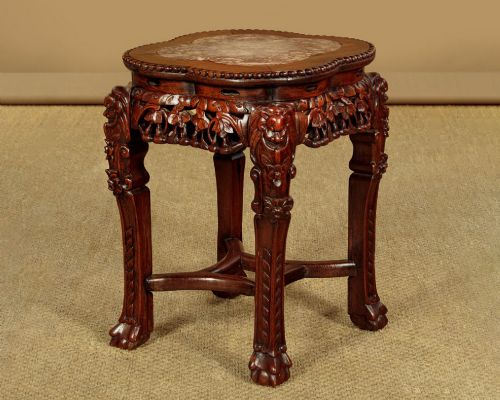
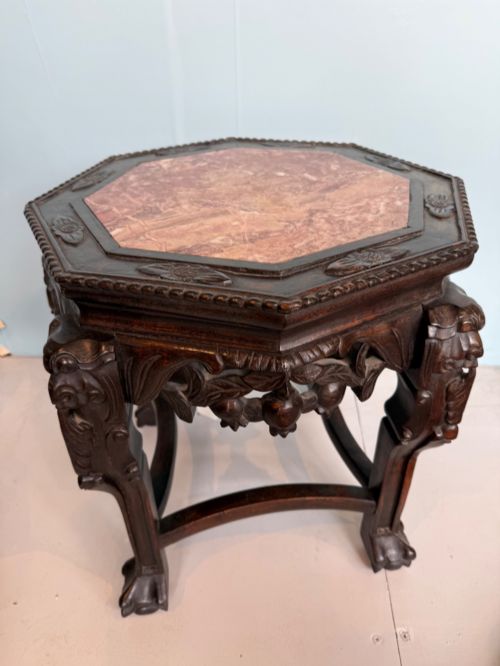
Construction relies upon heavy tropical hardwoods selected for their strength and fine grain. Workshops utilised rosewood, padouk, huali wood, and hongmu, often paired with inset marble or rouge marble tops to support heavy ceramic vessels.
Carpenters employed intricate joinery alongside deep relief carving depicting foliage and dragons. Selected surfaces feature mother of pearl inlay, lacquer, or polychrome painted finishes applied to carved wood.
Chinese Pedestal Stand Retail Price Guide 2026
Typical asking prices for chinese pedestal stand among the pieces listed under this phrase on Sellingantiques today, from the lower quarter to the upper quarter. They describe what is for sale here now, not the wider market.
Materials recorded across the inventory include rosewood, padouk, huali wood, lacquer, and inset marble.
What Varies in Quality
Quality rests upon the depth and crispness of the hand carving and the selection of timber. Dense, well-figured rosewood or padouk with sharply defined botanical motifs sits at the upper end of production.
The integration of inset stone surfaces dictates overall refinement. A tightly fitted marble or quartz top flush with the surrounding timber demonstrates superior cabinetmaking compared to loose or poorly seated inserts.
The Chinese Pedestal Stand Glossary
- Hardwood
- Dense timber derived from broad-leaved trees, providing the primary structural material for traditional stands. Species such as rosewood and padouk resist warping and permit fine carving.
- Jardiniere
- A large ornamental pot or container for plants, designed to sit atop a dedicated pedestal or stand. These vessels required sturdy, weight-bearing furniture to support damp earth and heavy ceramics.
- Torchère
- A tall standing support or pedestal originally designed to hold a candle or lamp. In Asian furniture, the term describes slender elevated plant or vase stands.
- Padouk
- A heavy, durable tropical timber known for its reddish hue and rich grain. It appears frequently in nineteenth-century Chinese export furniture.
- Marble
- Metamorphic rock cut into smooth slabs for tabletops. In Chinese stands, inset marble or rouge marble provides a cool, moisture-resistant surface for plants and vases.
Chinese Pedestal Stand: Frequently Asked Questions
What is a Chinese pedestal stand used for?
These stands serve to elevate large ceramic vessels, jardiniere pots, and decorative sculptures above floor level. They place decorative objects at an accessible viewing height while introducing sculptural timberwork to a room.
Historically, they occupied prominent corners or hallway spaces to display prized collections of porcelain and flora. Modern interiors utilise them similarly as plant supports or independent side tables.
How do I identify a nineteenth-century stand?
Nineteenth-century examples display dense tropical hardwoods like rosewood and padouk joined with traditional mortise and tenon techniques. Hand-carved botanical motifs and heavy inset marble tops are characteristic of this period of production.
Examination of the underside and joint construction reveals tool marks and patination consistent with age. Machine-cut timber or modern adhesives indicate later manufacture.
Are these stands suitable for holding heavy plants?
Traditional Chinese stands were engineered specifically to bear the substantial weight of large ceramic jardiniere pots filled with soil and plants. The dense hardwoods and robust underframe construction provide exceptional stability.
Even slender forms distribute weight effectively through braced legs and reinforced aprons. Users can place substantial planters or heavy stone sculptures on them with confidence.
How should I care for the wood surface?
Routine maintenance requires only dusting with a soft, dry cloth to prevent the accumulation of grit within carved recesses. Avoid applying silicone-based polishes that can build up on traditional timber finishes.
Applying occasional natural wax helps nourish dense hardwoods like rosewood and padouk. Keeping pieces away from direct heat sources prevents timber shrinkage and protects inset marble panels.