


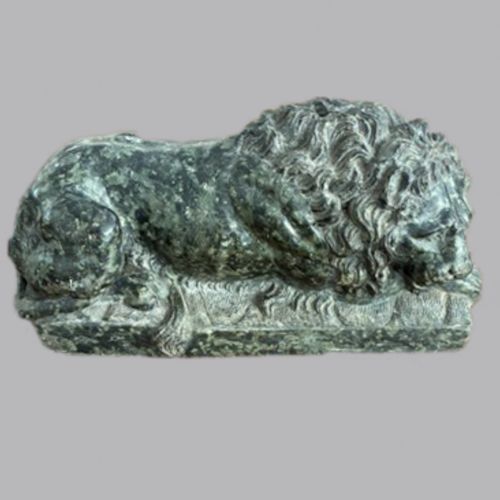
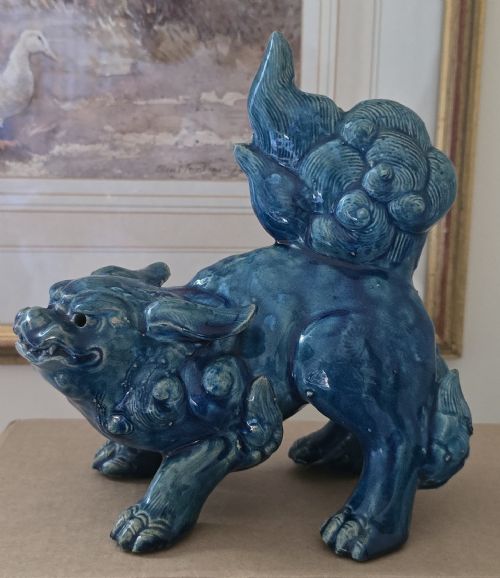
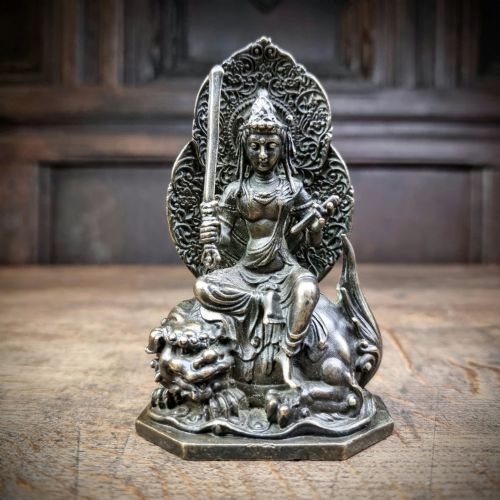
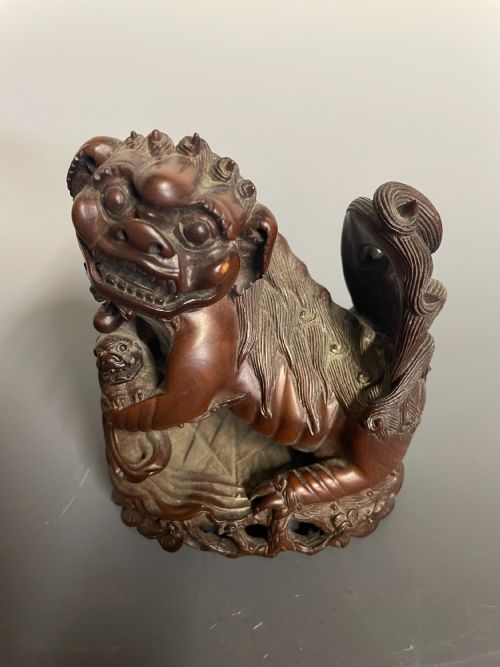


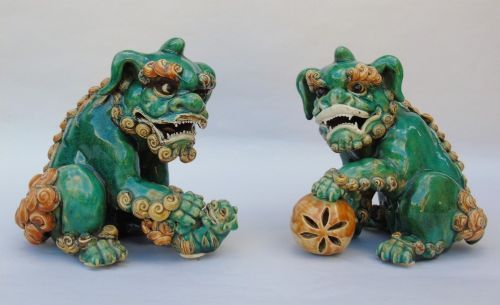
Chinese Lion Statue
These Chinese lion statue pieces, also known as Foo dogs or guardian lions, guard doorways and desks with centuries of sculptural presence.
Chinese Lion Statue
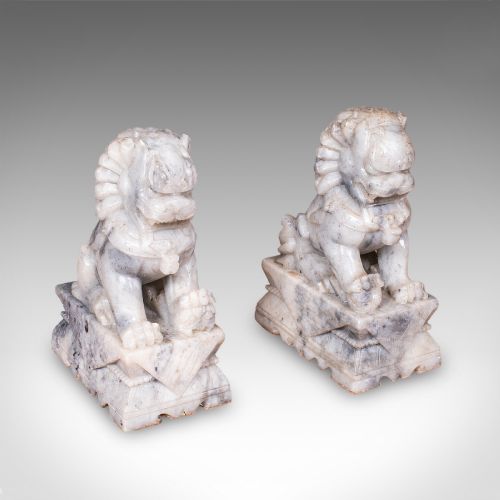
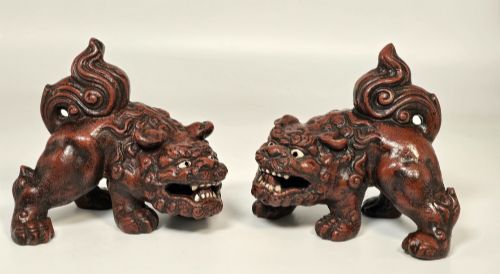
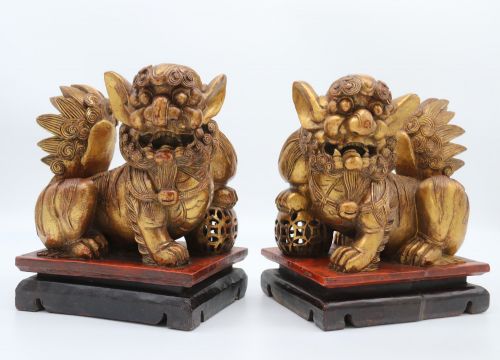
A Chinese lion statue represents traditional guardian figures often placed in pairs to protect domestic and sacred spaces. The listings here encompass ceramic sculptures, heavy temple bronzes, and carved wooden figures spanning the eighteenth, nineteenth, and early twentieth centuries.
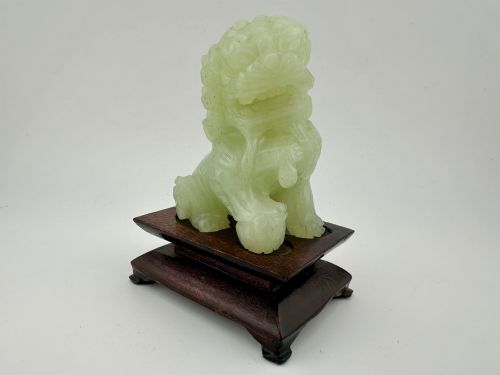
Buyers frequently encounter ceramic pottery pairs, carved boxwood carvings, and jade or marble bookends from the Victorian era and the Republic period. Styles range from traditional Qing dynasty forms to French Chinoiserie interpretations and Japanese Meiji period variants.
The objects function variously as substantial temple guards, decorative mantel figures, and practical desk bookends. Each form carries the distinct sculptural iconography associated with Buddhist lion dogs.
Materials and construction methods
Artisans carved these guardian figures from dense materials such as boxwood, root wood, soapstone, jade, hardstone, and green marble. Wood carvers utilised the natural grain of root wood and boxwood to create expressive texture on the lion coats.
Foundries cast metal examples in bronze and brass, sometimes applying surface gilding or patination to highlight ornamental detail. Potters shaped earthenware and porcelain bodies, finishing them with sancai, turquoise, or pale green glazes before firing.
Chinese Lion Statue Retail Price Guide 2026
Typical asking prices for chinese lion statue among the pieces listed under this phrase on Sellingantiques today, from the lower quarter to the upper quarter. They describe what is for sale here now, not the wider market.
Listings feature guardian lions rendered in wood, ceramic, stone, bronze, and brass across periods from the eighteenth century to the mid-twentieth century.
Assessing sculptural quality
Quality rests in the vigour of the carving and the fidelity of the casting, where spirited facial expressions and detailed musculature distinguish superior works from mechanical production. Fine pieces display crisp tool marks in wood and stone, or smooth, even application in glazed ceramics and bronze casting.
The integrity of the material dictates the tactile weight of the piece, whether through the density of a heavy temple bronze or the translucence of carved pale green jade and hardstone. Matching pairs demonstrate harmonious proportion and balanced stance, maintaining equal detail across both guardian figures.
The Chinese Lion Statue Glossary
- Sancai
- A traditional three-colour Chinese glaze technique utilising lead-based colours such as amber, green, and cream. Potters applied these glazes directly to earthenware bodies, frequently seen on figures from the nineteenth century.
- Chinoiserie
- A European artistic style reflecting Chinese aesthetic motifs, produced by Western makers during periods such as the nineteenth century. This style blends Asian subject matter with European manufacturing techniques like cast iron work.
- Shiwan
- A historic ceramic production centre in China known for expressive earthenware sculptures and distinct glazes. Pieces from this tradition often portray Buddhist lion dogs with heavy modelling.
- Republic Period
- A period in Chinese history spanning the early twentieth century, noted for continued refinement in jade and porcelain carving. Works from this era combine traditional iconography with updated workshop techniques.
Chinese Lion Statue: Frequently Asked Questions
What is a Chinese lion statue?
A Chinese lion statue is a sculptural representation of a mythical guardian lion, traditionally placed in pairs to protect thresholds and important spaces.
These figures appear in materials ranging from bronze and stone to ceramic and wood, reflecting various historical periods from the eighteenth century onward.
How were these statues used?
Historically, large pairs stood guard outside temples, palaces, and domestic residences to ward off harmful influences. Smaller domestic examples served as decorative mantel sculptures or functional bookends on library shelves.
Their placement in pairs typically follows traditional rules where one figure holds a ball and the other restures a cub.
How do I date a stone lion statue?
Dating relies on tool marks, the specific geological type of marble or soapstone, and stylistic conventions linked to periods like the Qing dynasty or the Victorian era.
Examining the weathering, surface patination, and proportional styling helps distinguish eighteenth-century carvings from later nineteenth-century or twentieth-century works.
Are these figures made of bronze or brass?
Metal guardian lions on this page are fashioned from either bronze or brass, sometimes accented with gilt surfaces or intricate casting details.
Heavier examples often originate from temple settings, while smaller decorative pieces frequently employ brass casting techniques common in the nineteenth and early twentieth centuries.
What is the difference between jade and soapstone?
Jade and hardstone offer a dense, cool-to-the-touch surface with high resistance to scratching, often carved into pale green decorative bookends and figures. Soapstone provides a softer, smoother material that allowed artisans to achieve delicate detail with a slightly soapy texture.
Both minerals appear in Victorian and twentieth-century interpretations of the guardian lion.