



Chinese Lidded Ginger Jars
Chinese lidded ginger jars bring weight and colour to a room, offering classic porcelain forms shaped by centuries of tradition.
Chinese Lidded Ginger Jars
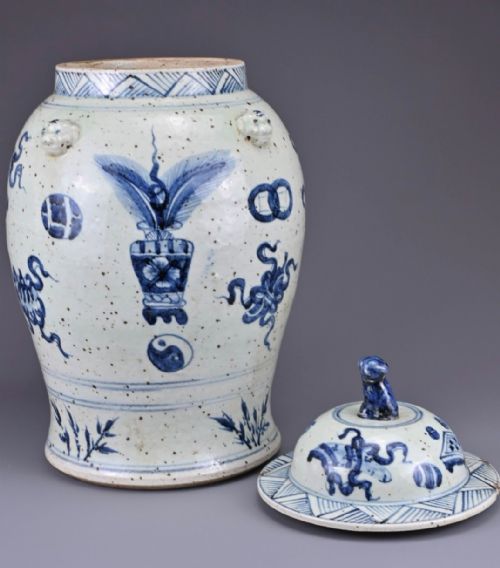
Chinese lidded ginger jars are classic ceramic vessels originally designed to store spices, featuring broad shoulders and fitted covers. When you search for Chinese lidded ginger jars, you encounter storage vessels that transitioned from utilitarian spice containers into decorative centrepieces during export trades.
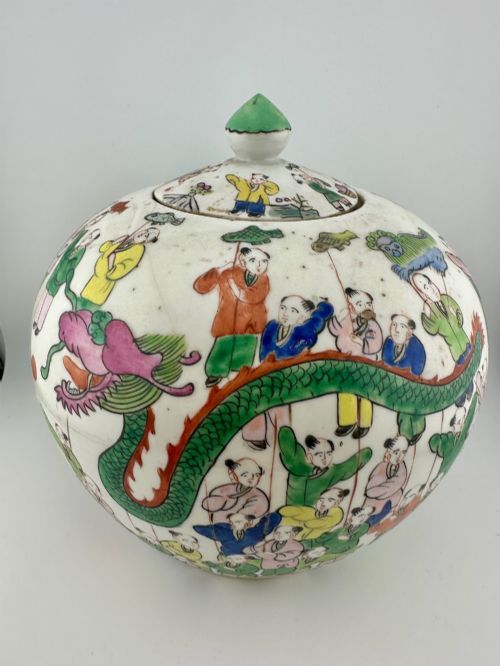
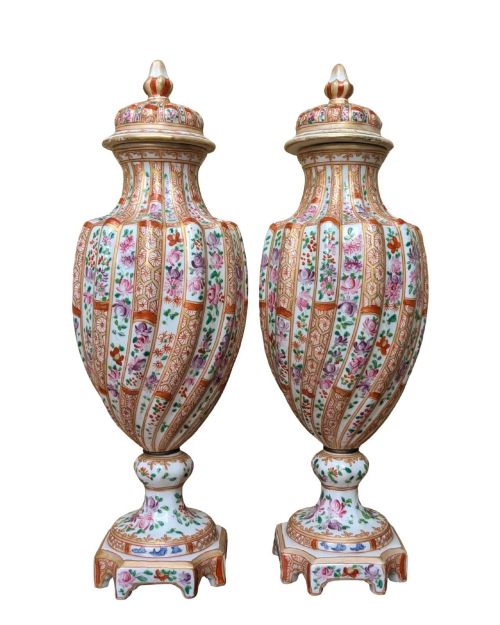
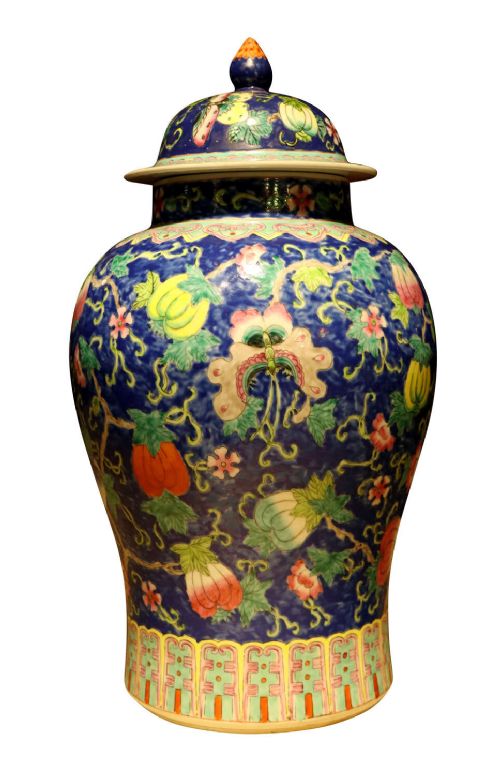
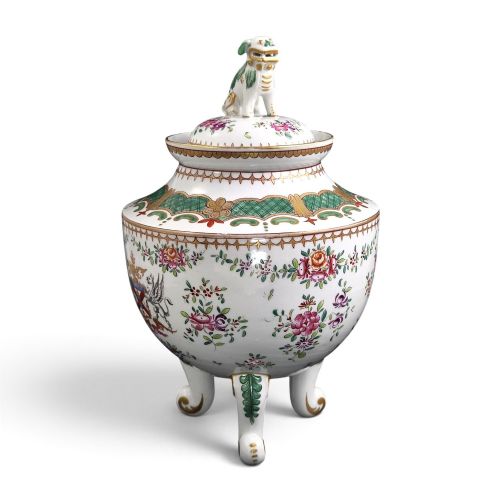
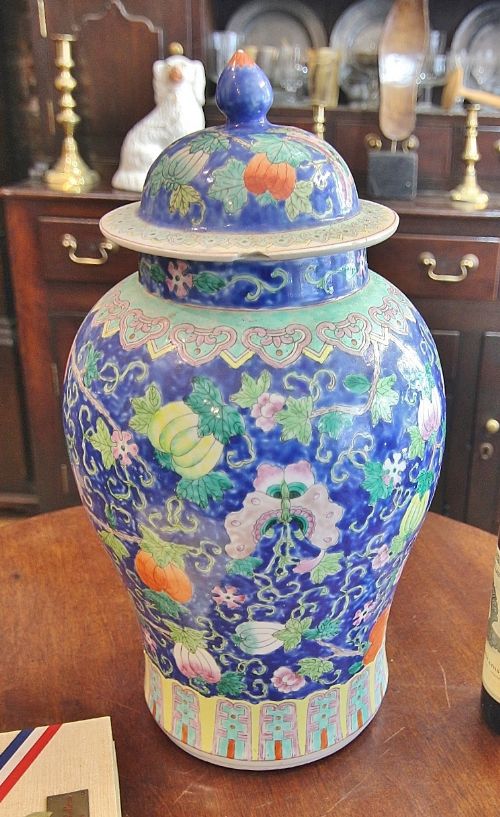
The examples found here span the nineteenth century through the mid twentieth century, encompassing traditional blue and white designs alongside vibrant enamel work. You will frequently find pairs of jars alongside substantial single pieces, reflecting both domestic display practices and nineteenth century European imitations.
Forms range from traditional ginger shapes to larger lidded urns and temple jars, often accompanied by wood tables. These pieces draw on Qing Dynasty aesthetics and later twentieth century interpretations, showing the enduring appeal of traditional Chinese forms.
How they were made
Makers utilised hard paste porcelain and standard ceramic bodies, shaping them on the wheel before applying detailed hand painted motifs or enamel work. Cobalt blue underglaze remains a dominant technique, fired at high temperatures to achieve deep tones beneath a clear glaze.
Other pieces employ cloisonné techniques, fusing enamel colours within thin metal wire partitions fixed to brass or copper foundations. Gilding with gold leaf occasionally highlights specific decorative elements, adding contrast to the ceramic or enamel surfaces.
Chinese Lidded Ginger Jars Retail Price Guide 2026
Typical asking prices for chinese lidded ginger jars among the pieces listed under this phrase on Sellingantiques today, from the lower quarter to the upper quarter. They describe what is for sale here now, not the wider market.
Listings feature hard paste porcelain, enamel, brass, copper, and stoneware across nineteenth and twentieth century periods.
What varies in quality
The refinement of the hand painted brushwork determines much of the visual success, distinguishing confident pictorial execution from rigid copying. Crispness in cobalt blue application and the precise alignment of lidded covers show the maker's discipline.
Material choice also dictates standard, moving from robust stoneware bodies to translucent hard paste porcelain or finely soldered cloisonné cells. European interpretations, such as nineteenth century Samson productions, demonstrate distinct manufacturing traditions that parallel the Chinese originals.
Edme Samson
The Chinese Lidded Ginger Jars Glossary
- Famille Rose
- A palette of opaque enamel colours dominated by pink or rose hues, introduced during the Qing Dynasty. This scheme allowed for nuanced shading on floral and figural subjects.
- Cloisonné
- An enamelling technique where metal wire creates cells on a base, which are then filled with paste and fired. The resulting surface is polished smooth to reveal intricate patterns.
- Doucai
- A technique combining underglaze blue outlines with overglaze enamel infill, often seen on imperial porcelain. The method requires multiple firings to achieve its layered effect.
- Kamcheng
- A type of covered container traditionally used for food storage or festive purposes in Southeast Asian trade. These pieces typically feature robust ceramic walls and colourful enamel decoration.
- Chinoiserie
- European stylistic interpretations of Chinese artistic traditions, popular across decorative arts from the seventeenth century onward. It reflects western fascination with eastern motifs.
Chinese Lidded Ginger Jars: Frequently Asked Questions
How are ginger jars used today?
These vessels serve primarily as decorative accents on mantels, sideboards, or tables, bringing pattern and form into domestic spaces. Their fitted covers allow them to stand alone as sculptural objects or pair with other ceramics.
They also function effectively as containers for dried botanicals or small items, though their main role remains visual display. Placing them in pairs creates symmetry on larger pieces of furniture.
Are these jars waterproof?
Many historical porcelain and stoneware jars hold water adequately, but older glazed interiors can develop fine micro-crazing over time. It is advisable to inspect the interior before using them for fresh floral arrangements.
For delicate cloisonné or enamel pieces, using a separate inner container protects the metal and enamel work from moisture damage. Protecting the base from standing water preserves the original material.
How do I date a ginger jar?
Dating relies on examining the characteristics of the paste, the composition of the blue pigment, and the style of the base mark. Nineteenth century pieces often display heavier potting and distinct crackle patterns in the glaze compared to later twentieth century examples.
European studio copies from makers like Samson often feature specific factory marks that distinguish them from Chinese export pieces of the same era. Comparing potting techniques helps separate Qing Dynasty traditions from Republic Period revivals.
What is the difference between a temple jar and a ginger jar?
Ginger jars typically feature a rounded, bulbous body with a relatively short neck and a flat or domed cover designed for dry goods. Temple jars generally possess a more elongated, tapering profile and often stand taller with distinctive finials.
In modern antique terminology, the two terms often overlap as descriptions for lidded decorative vessels. Both forms share roots in traditional Chinese ceramic production.