



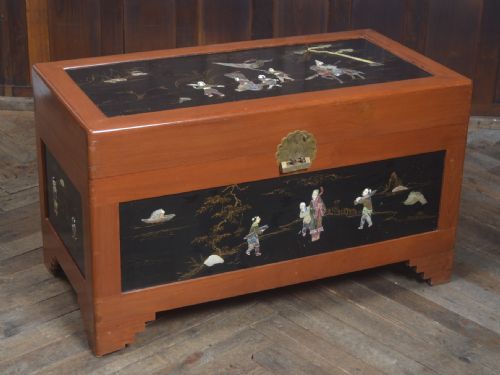


Chinese Lacquer Blanket Box
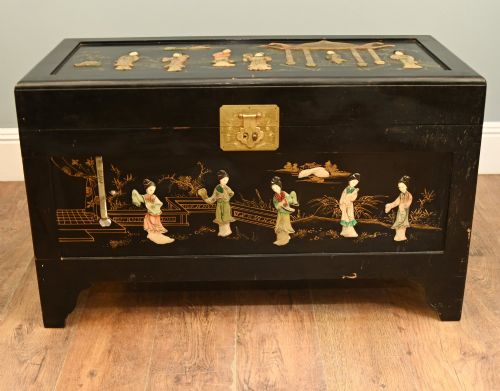
These Chinese lacquer blanket box pieces are traditional storage chests offering practical utility and striking oriental finish.
Chinese Lacquer Blanket Box
A Chinese lacquer blanket box is a capacious storage vessel designed for garments, textiles, and domestic valuables. When searching this phrase, buyers encounter substantial chests built for holding heavy linens and household effects.
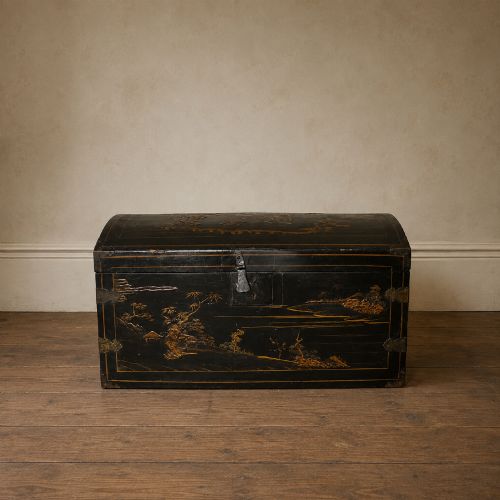
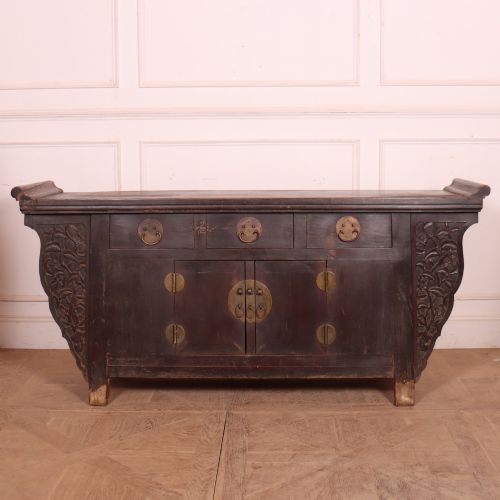
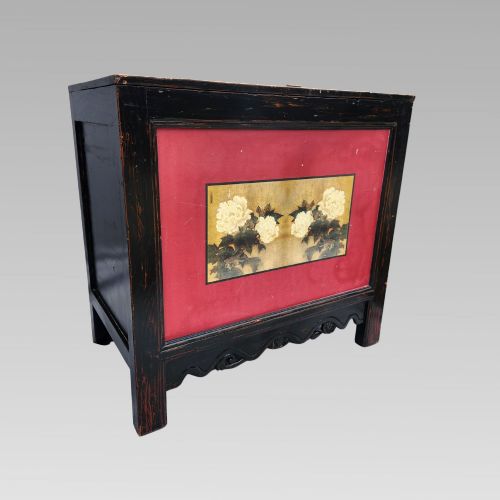
The selections on this page span several centuries, reaching from the eighteenth century through the nineteenth century and into the early twentieth century. Forms range from domed chests and shipping trunks to coffers and low centre chests with drawers.
Most examples originate from Chinese export workshops or regional production centres. These pieces combine utilitarian function with decorative surface art, serving as functional furniture and focal decorative elements.
How they were made
Construction relies upon timber foundations, with camphor wood frequently utilised for its aromatic insect-repellent properties. Iron and brass hardware, including corner brackets and substantial latches, reinforce the structural joints.
Surfaces receive multiple applications of lacquer and pigment, building up a hardwearing protective coating. Artisans often embellished the black or coloured lacquer grounds with detailed gilt decoration and floral chinoiserie motifs.
Chinese Lacquer Blanket Box Retail Price Guide 2026
Typical asking prices for chinese lacquer blanket box among the pieces listed under this phrase on Sellingantiques today, from the lower quarter to the upper quarter. They describe what is for sale here now, not the wider market.
Materials recorded across the inventory include lacquer, brass, wood, gilt, pigment, camphor wood, timber, and iron.
What varies in quality
Quality rests upon the depth of the lacquer finish and the precision of the gilt or painted decoration. Superior examples display meticulous brushwork and well-preserved surface layers without excessive craquelure.
Structural integrity of the underlying timber and the originality of the brass or iron mountings dictate the standing of a piece. Finer chests retain their original hinges, locks, and internal fittings with minimal disturbance over time.
The Chinese Lacquer Blanket Box Glossary
- Lacquer
- A durable resin finish applied to wooden furniture in successive layers to create a smooth, protective surface. It often takes a high gloss and accepts pigment or gilt ornamentation well.
- Chinoiserie
- European artistic interpretation and imitation of Chinese decorative styles and motifs. It appears on various antique chests through painted floral and landscape scenes.
- Coffer
- A chest or box traditionally used for holding valuables and documents, typically distinguished by a hinged lid and sturdy construction. These pieces often feature reinforced metal corners.
- Camphor wood
- A fragrant timber native to Asia, prized for furniture construction due to its natural resistance to insects and dampness. It is commonly found in storage trunks and blanket boxes.
Chinese Lacquer Blanket Box: Frequently Asked Questions
What were blanket boxes used for?
These large chests served primarily for storing heavy woollen blankets, garments, and valuable household textiles. The dense timber and sealed construction helped protect contents from dust and insects.
Over time, owners also utilised them for securing personal documents and precious belongings. Their robust build meant they could double as travel trunks for shipping goods.
How do I care for lacquer furniture?
Keep lacquer pieces away from direct sunlight and extreme temperature fluctuations to prevent the surface from drying out and cracking. Dust gently with a soft, dry cloth without applying harsh chemical polishes.
Maintain a stable room humidity to protect the underlying timber and prevent the lacquer from lifting. Handle metal hardware with care during routine maintenance.
Are camphor wood chests safe for modern storage?
Camphor wood remains highly suitable for modern storage because its natural aromatic oils deter moths and other pests. This property makes these historic boxes ideal for keeping linens, woollens, and seasonal garments.
The distinctive natural scent diminishes slightly with age but continues to provide gentle protection for stored textiles.
How can I tell the period of a chest?
Dating relies upon examining the construction methods, the style of the brass or iron hardware, and the wear patterns on the lacquer. Eighteenth-century examples often exhibit heavier coffer forms and distinct export motifs.
Nineteenth and early twentieth-century pieces introduce variations like domed lids, integrated drawers, and alternative pig skin or leather coverings alongside traditional black lacquer.