



Chinese Glass Painting
These Chinese glass painting pieces bring vibrant reverse-painted artistry and export trade history straight to your walls.
Chinese Glass Painting
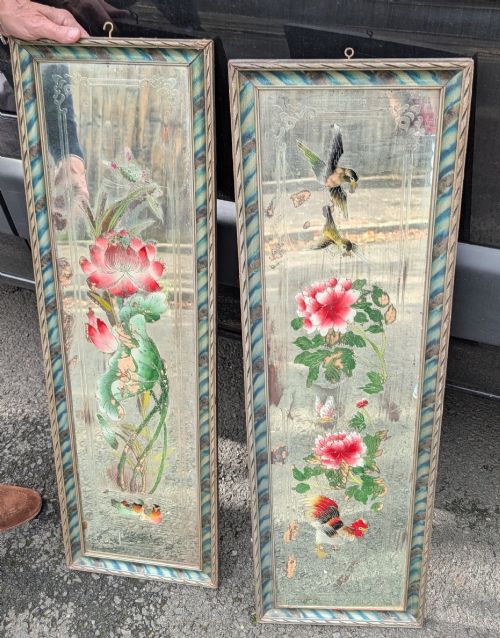
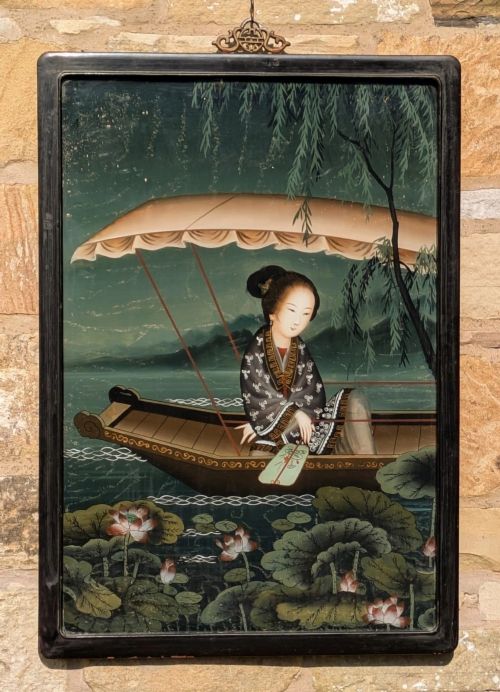
When you search for chinese glass painting, you are looking at intricate reverse-painted works created on glass panels and mirror glass. These pieces encompass wall art, reverse glass paintings, and detailed portraits depicting figures such as emperors, dignitaries, and attendants.
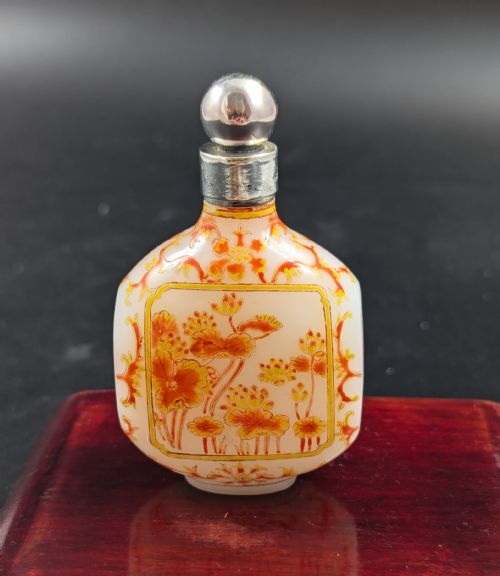
You are most likely to meet nineteenth-century examples on this page, alongside works spanning into the early twentieth century. The selection also includes related items like painted snuff bottles and decorative hanging mirrors.
The aesthetic bridges traditional Qing Dynasty motifs with export trade sensibilities, frequently appearing in Chinoiserie styles and original frames.
How they were made
These works are created by applying oil paint and enamel directly onto the reverse side of glass or mirror glass panels, requiring the artist to paint background details before foreground subjects. Gold leaf and gilt wood often accentuate the composition, adding metallic depth to the painted surfaces.
Frames play an integral structural role, utilising wood and brass elements to house and protect the delicate glass panes. Miniature forms such as snuff bottles demonstrate the same meticulous interior painting technique on a curved glass surface.
Listings feature items predominantly from the nineteenth century, alongside examples from the early twentieth century and the 1930s to 1940s.
What varies in quality
The skill of the brushwork defines the upper tier of these works, particularly in the facial expressions and textiles of portraits depicting dignitaries or attendants. Superior examples display precise control in reverse application, where every layer of oil paint or enamel must sit correctly without revision.
The condition of the underlying glass and mirror plate also distinguishes finer pieces, alongside the preservation of original wood and gilt frames. Depth of colour and the integration of gold leaf elevate the visual impact across larger wall panels.
The Chinese Glass Painting Glossary
- Reverse glass painting
- A technique where the artist paints the image backward on the rear surface of a glass pane so the final picture appears correctly when viewed from the front. This method requires immense precision as errors cannot be corrected from the front side.
- Chinoiserie
- A European stylistic interpretation of Chinese artistic motifs and cultural themes, prevalent in decorative arts and furnishings. It often merges local European manufacturing techniques with imagined Eastern imagery.
- Export trade
- Goods manufactured specifically for overseas markets, particularly during the Qing Dynasty, combining traditional domestic craftsmanship with Western aesthetic demands. These items frequently reached European and American collectors via maritime trade routes.
- Mirror glass
- A reflective glass substrate utilised as a base for painting, creating an interplay between the painted subject and the reflective background. Painters integrated the reflective qualities into the composition of the artwork.
- Snuff bottle
- A small container designed to hold powdered tobacco, often intricately decorated inside the glass vessel using specialised miniature brushes. These portable objects served both functional and decorative purposes in Qing society.
Chinese Glass Painting: Frequently Asked Questions
How do you display them?
Hang these glass pieces on interior walls away from direct sunlight to protect the pigments and original wood or gilt frames from fading. Ensure the wall fixings securely support the combined weight of the glass panel and its housing.
Position them at eye level in rooms with stable temperature and humidity to prevent thermal stress on the glass and paint layers.
What subjects appear most often?
Portraits of emperors, dignitaries, attendants, and figures with koi fish dominate the pictorial subjects. These traditional motifs reflect historical Qing Dynasty iconography.
Landscape elements and decorative export trade scenes also frequent the surviving works seen in the inventory.
Are the frames original?
Many pieces retain their original wood, gilt wood, or brass frames, which show age-appropriate wear consistent with nineteenth-century manufacture. Examining the joinery and finish helps confirm whether the housing dates to the same period as the glass panel.
Original frames significantly contribute to the historical integrity of the piece.