



Chinese Floor Vase
A chinese floor vase commands a room with sheer scale, bringing grand Qing Dynasty and Victorian era presence to an interior.
Chinese Floor Vase
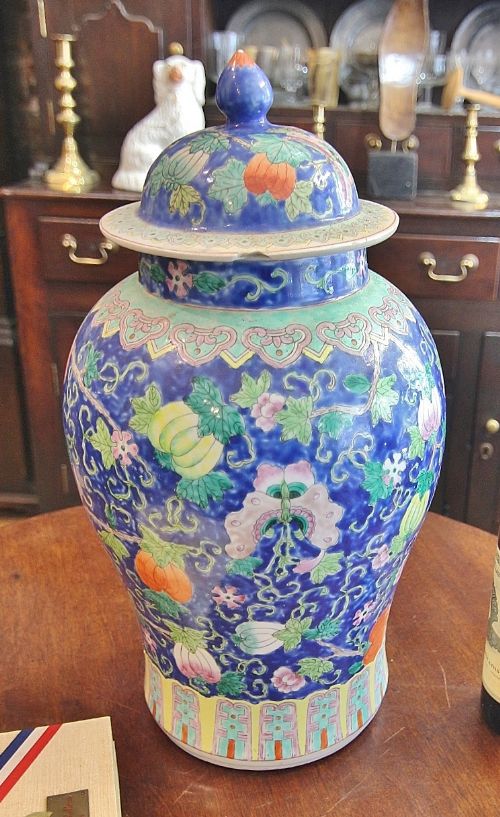
When you search for a chinese floor vase, you encounter monumental vessels designed to stand directly upon the floor rather than on a table or cabinet. These striking objects span the nineteenth century, including specific decades such as eighteen eighty and eighteen ninety, alongside twentieth century examples from nineteen twenty, nineteen thirty, and nineteen forty.
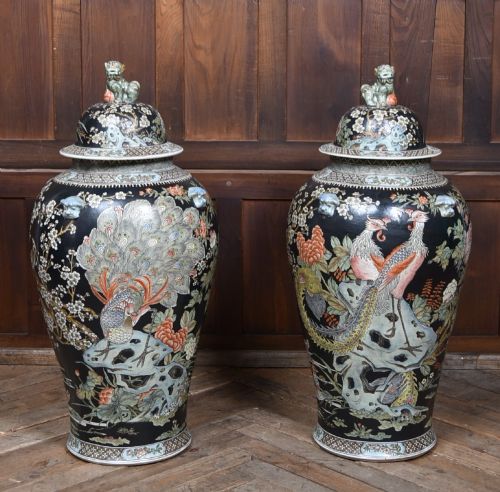
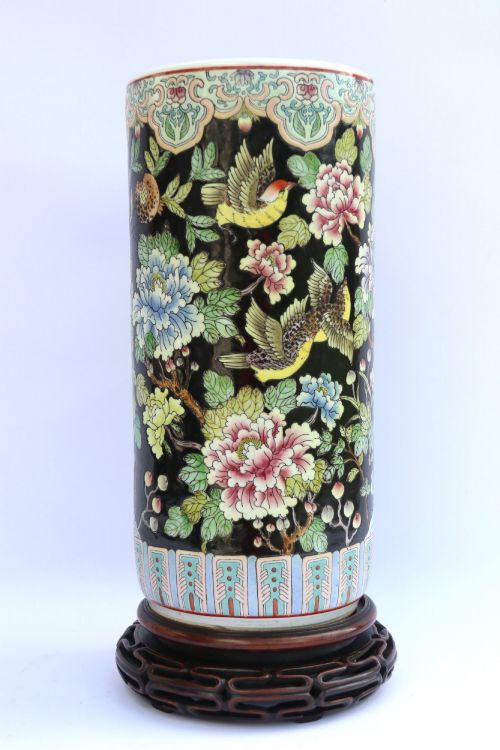
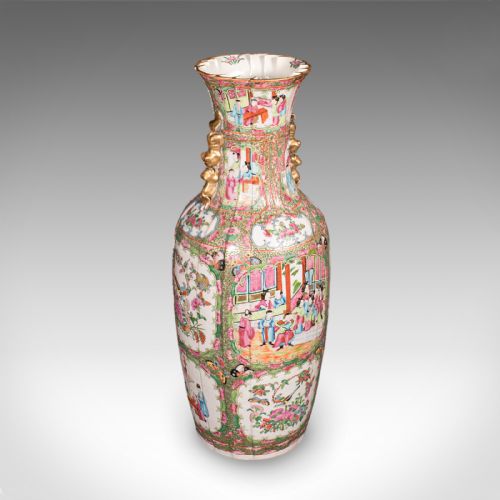
You meet several distinct decorative families amongst the listings, most notably Famille Rose, Famille Verte, Famille Noire, and Rose Medallion or Canton styles. Many pieces arrive accompanied by their original carved hardwood stands or plant stands, which elevate the heavy ceramic bodies.
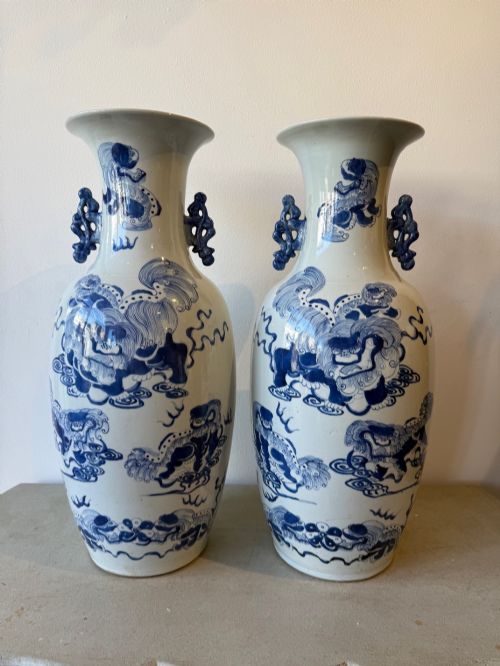
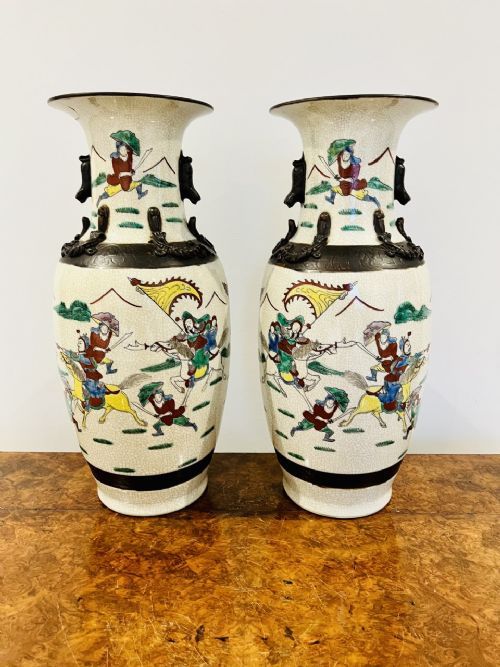
The forms range from baluster vases and palace jars to temple vases and monumental covered urns. Whether rendered in blue and white porcelain, cracked glaze, or cloisonné enamel, each vessel dominates its spatial setting through sheer height and colourful painted detail.
Materials and construction
Potters shaped these heavy vessels from ceramic and porcelain, frequently applying elaborate hand-painted enamel decoration in polychrome palettes. Artisans utilised gold leaf to highlight intricate borders and motifs, while certain pieces incorporate bronze elements or elaborate cloisonné wirework.
Support structures play an integral role in the construction of these large items, with makers fashioning robust stands from hardwood to bear the considerable weight of the ceramic bodies. Lacquer work also appears on specific temple vases, alongside carved marble top stands designed specifically for display.
Some nineteenth-century temple vases stand at an astonishing eighty-six inches, towering over anyone who walks past them.
The spectrum of quality
Quality reveals itself in the crispness and density of the hand-painted enamel work across the ceramic surface. Superior examples display meticulous detail in figures, flora, and fauna, whereas simpler pieces show looser, more repetitive brushwork.
The presence of original associated elements, such as fitted hardwood stands or matching covers on baluster vases, elevates an example. Furthermore, the ambition of the scale, ranging from tall vessels to monumental heights exceeding ninety centimetres, distinguishes grand palace pieces from standard decorative wares.
The Chinese Floor Vase Glossary
- Famille Rose
- A palette of opaque enamels dominated by pink or rose colours, introduced during the Qing Dynasty. This style characterises many nineteenth-century palace jars and baluster vases.
- Rose Medallion
- A distinct pattern featuring panels of figures alternating with birds, flowers, and butterflies, arranged in geometric medallions. It is frequently seen on nineteenth-century Canton pieces.
- Cloisonné
- A technique where enamel paste is applied within compartments created by soldered wire on a metal base. This method produces richly coloured, tactile surfaces on large vessels.
- Baluster
- A vase form characterised by a bulbous lower portion that tapers towards a narrow neck and flared rim. This classic silhouette provides stability for monumental floor displays.
- Cracked Glaze
- A decorative glazing effect featuring a deliberate network of fine cracks across the ceramic surface. Victorian-era makers prized this texture for its antique aesthetic.
Chinese Floor Vase: Frequently Asked Questions
Where should I place a floor vase?
These monumental vessels demand open floor space where their height and painted detail can be appreciated without obstruction. Hallways, wide landings, and spacious reception rooms provide ideal settings.
Because of their substantial weight and size, keep them away from heavy foot traffic areas or spots where they might be accidentally knocked. Utilising their original hardwood stands helps anchor them safely to the floor.
How do I clean a large ceramic vase?
Dust the surface regularly with a soft, dry cloth to prevent grime accumulation on the enamel and painted details. Avoid harsh chemical cleaners or abrasive materials that could damage the antique glaze or gold leaf.
If the interior requires cleaning, use a damp cloth only where reachable, taking care not to submerge or strain the heavy ceramic body.
Are these vases stable on their own?
Most floor vases possess a wide, heavy base designed to support their considerable height. However, due to their monumental proportions, stability varies depending on the specific shape and centre of gravity.
Many nineteenth-century examples come with fitted hardwood stands that broaden the footprint and provide a secure foundation. Ensure the vessel sits level on a flat floor surface.