



Chinese Export Silver Dragon
Chinese export silver dragon pieces are tactile, intricately chased works from the late nineteenth and early twentieth centuries that bring historic craftsmanship straight to a desk or table.
Chinese Export Silver Dragon
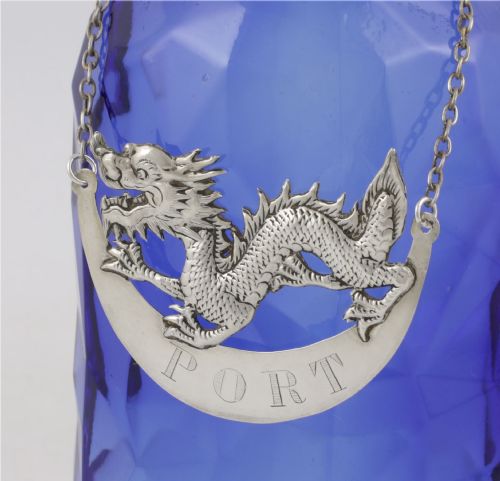
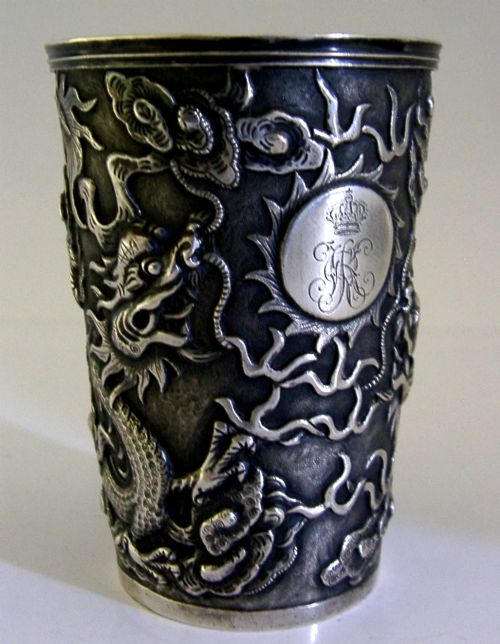
Chinese export silver dragon items encompass a striking variety of decorative and utilitarian forms produced primarily for Western markets from the late nineteenth century through the early decades of the twentieth. You will frequently encounter table boxes, card cases, cigarette boxes and small vessels adorned with sinuous scaled creatures worked in high relief. The aesthetic blends traditional Qing Dynasty motifs with the functional demands of European and American households.
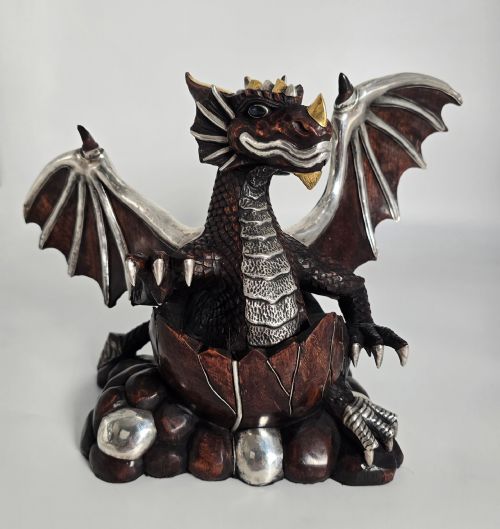
Vessels range from slender beakers and decanter labels to substantial bowls, jugs with bamboo handles, and butter dishes. Alongside pure silver items, the inventory reveals sculptures combining carved hardwood with mixed metal mounts, as well as cherry wood vases and ashtrays featuring enamel details and jade rims. These objects display a distinct regional identity through meticulous hammering, chasing and embossing.
What varies in quality
The distinction between standard commercial pieces and masterworks rests on the crispness of the chasing and the depth of the relief work. Superior examples exhibit sharply defined scales, expressive claw details and deep undercut bodies that stand clear of the background rather than appearing flat or hastily stamped. The integration of maker marks also influences the standing of a piece.
Material pairing further separates the range, as seen in the precision of the joinery where silver mounts meet carved hardwood, cherry wood or jade rims. Heavier weight and balanced proportions in functional objects like boxes, bowls and tea caddies indicate a more substantial commitment of metal and labour by the silversmith.
Chinese Export Silver Dragon Retail Price Guide 2026
Typical asking prices for chinese export silver dragon among the pieces listed under this phrase on Sellingantiques today, from the lower quarter to the upper quarter. They describe what is for sale here now, not the wider market.
Listings for chinese export silver dragon span the late nineteenth century through nineteen thirty, incorporating materials like jade, enamel, cherry wood and hardwood.
Wang Hing & Co.·Luen Hing·Tack Hing·T&C·Hong Cheung
The Chinese Export Silver Dragon Glossary
- Chinese export silver
- Silverware manufactured in China primarily for Western export during the nineteenth and twentieth centuries. These items typically carry artisan or workshop stamps alongside pseudo-hallmarks.
- Chasing
- A metalsmithing technique where a design is hammered into the front of a metal object to create a raised or textured relief. It is often paired with repoussé work done from the reverse.
- Repoussé
- The process of shaping metal from the reverse side by hammering to form raised decorative elements on the front. On these pieces, it brings the dragon motifs into high relief.
- Qing Dynasty
- The final imperial dynasty of China, spanning from sixteen forty-four to nineteen twelve. Its artistic conventions heavily influence the dragon imagery seen on these export items.
- White metal
- An alloy term used in historical and modern trade descriptions to denote silver of varying purities or nickel-silver compositions. Many unmarked or regional export items carry this designation.
Chinese Export Silver Dragon: Frequently Asked Questions
How were these silver items used?
Original owners used them as practical luxury goods in Western households, ranging from card cases and cigarette boxes to decanter labels and tea caddies. They served both functional purposes and decorative displays in formal rooms.
Today, collectors use them in similar ways on desks, sideboards and display tables to add tactile historic character.
How do I date Chinese export silver?
Dating relies on recorded workshop marks, stylistic shifts between nineteenth-century naturalism and twentieth-century Republic period production, and occasional engraved presentation inscriptions. Comparing weight, construction and material combinations also helps narrow the decade.
Many pieces carry specific workshop stamps that link them to known active periods in treaty ports like Canton and Shanghai.
How do I care for silver dragon pieces?
Maintain the metal by gently dusting with a soft, dry cloth and avoiding harsh chemical dips that strip the dark oxidised contrast in the dragon crevices. Store or display them away from direct moisture and extreme temperature shifts.
If the piece incorporates wood, enamel or jade, keep cleaning solutions strictly away from those non-silver sections.