


Chinese Dragon Planter
When you handle a chinese dragon planter, you hold centuries of metalwork and ceramic craft shaped for domestic foliage.
Chinese Dragon Planter
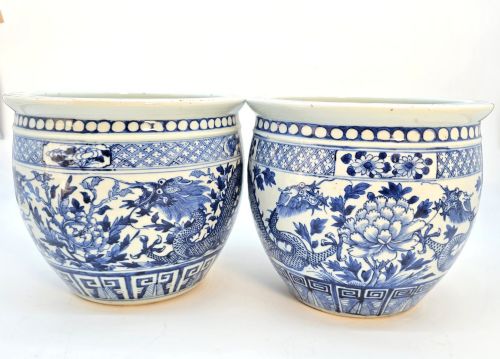
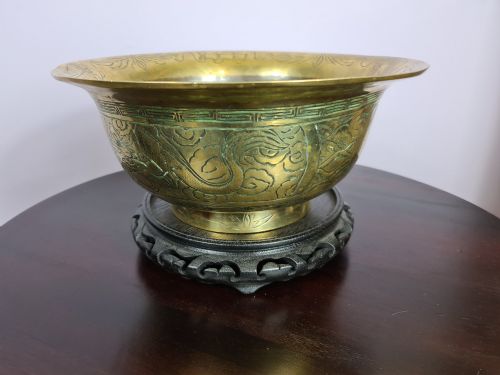
A chinese dragon planter appears in several distinct forms across this selection, most commonly as a heavy bronze or brass jardiniere or a blue and white porcelain vessel designed to hold plants.
The periods represented span from the nineteenth century through the early twentieth century, taking in Victorian interpretations alongside Qing Dynasty and Chinese Export aesthetics.
Vessels range from large sectional jardiniere bowls to troughs and vase-form display urns, frequently accompanied by decorative stands or zinc liners.
Materials and construction
Metal vessels rely heavily on cast bronze and brass, sometimes formed in sections or fitted with zinc linings to handle moisture from live plants.
Ceramic examples employ porcelain finished with cobalt underglaze decoration, while wooden elements incorporate lacquered finishes and giltwood details.
Listings feature bronze, brass, and porcelain pieces spanning from the 1870s through the 1930s.
Judging quality in dragon planters
Quality reveals itself in the crispness of the casting on metal surfaces and the depth of the cobalt underglaze on porcelain pieces.
Substantial weight, careful sectional assembly, and original linings separate superior examples from more ordinary decorative vessels.
The Chinese Dragon Planter Glossary
- Jardiniere
- A large ornamental pot or bowl used for holding flowers or plants. These vessels form the core of the available selection.
- Cobalt Underglaze
- A blue pigment applied to ceramic pottery beneath a clear glaze before firing. This technique produces the deep blue patterns seen on porcelain pieces.
- Chinoiserie
- European artistic styles reflecting Chinese motifs and decorative techniques. Victorian interpretations often blended these influences with local taste.
- Hu
- An ancient vessel form adapted for ornamental display. These pieces function as flower pots and decorative urns.
Chinese Dragon Planter: Frequently Asked Questions
What is a chinese dragon planter used for?
These vessels serve primarily to display large indoor plants, ferns, or floral arrangements within domestic rooms. Many include protective metal liners to manage soil and water.
They also function purely as decorative display urns or decorative bowls without plants, particularly the heavier bronze and porcelain examples.
How do I date a chinese dragon planter?
Dating relies on examining the materials, casting methods, and stylistic markers recorded in the piece. Nineteenth-century examples often show heavy bronze construction or traditional porcelain techniques.
Later pieces from the early twentieth century reflect changing industrial methods while maintaining traditional decorative motifs.
Are these planters waterproof?
Many metal examples feature fitted zinc linings designed to hold soil and moisture safely. Unlined vessels require a secondary inner pot to contain water.
Porcelain and ceramic versions are typically glazed internally, but checking the condition of any antique lining is sensible before direct planting.
What styles are common in these pieces?
The aesthetic spans Qing Dynasty traditions, Chinese Export work, and Victorian Chinoiserie interpretations. Bronze items often display deep relief casting of dragons and traditional motifs.
Porcelain versions rely on blue and white underglaze painting to create contrasting patterns across the surface.