


Asian Brass Planter
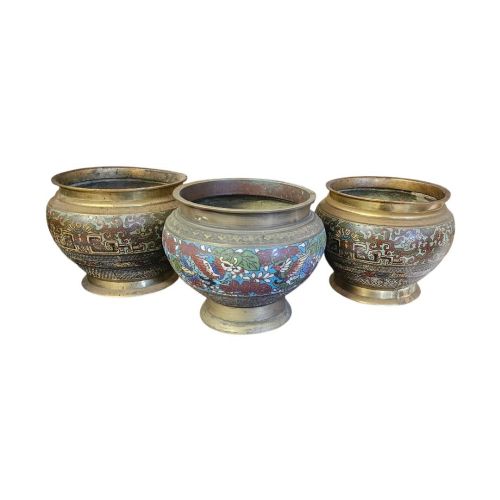
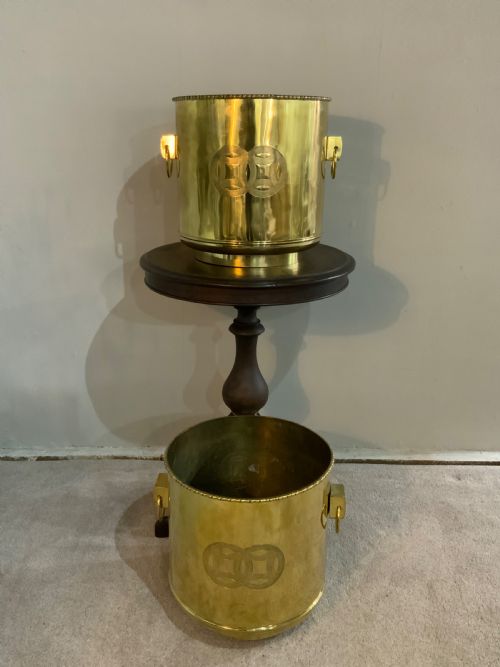
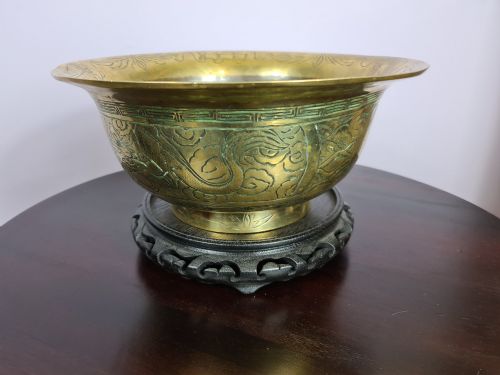
These heavy Asian brass planter vessels bring striking craftsmanship and rich patination to any room, offering a distinct focal point for interior displays.
Asian Brass Planter
When you search for asian brass planter, you are looking at substantial decorative vessels originating from Chinese and Japanese workshops, primarily taking the form of jardinières, bowls, and troughs. These pieces span periods from the Victorian era and the Meiji period through to the late Qing Dynasty and the early twentieth century.
The versions you are most likely to meet on this page include large Chinese bronze and brass bowls, paired jardinières, and zinc-lined troughs. Their origins stretch across distinct stylistic movements, encompassing Asian Revival, Victorian Orientalism, and traditional Qing Dynasty aesthetics.
Makers and artisans fashioned these vessels to serve as ornamental containers for plants or as standalone decorative bowls within grand interiors. Each piece reflects the cross-cultural exchange of the nineteenth and twentieth centuries, blending Eastern metalwork techniques with Western domestic tastes.
Materials and construction methods
Metalworkers utilised heavy brass and bronze as the primary structural materials for these vessels, frequently achieving notable weight and durability. Some examples incorporate internal zinc linings to protect the metal body from moisture when holding plants.
Advanced techniques such as champlevé and cloisonné enamel work appear across the surface decoration, embedding coloured glass within recessed metal partitions. Other pieces rely on polished brass finishes and cast bronze reliefs to create texture and visual depth.
Listings feature items from the Victorian period, the Meiji period, and the late Qing Dynasty, constructed from brass, bronze, enamel, and zinc.
Distinctions in craftsmanship and form
The division between standard production and superior craftsmanship rests in the weight of the metal and the precision of the surface decoration. Heavier bronze and brass bodies, combined with intricate enamel detailing, indicate higher workshop standards.
Condition and originality dictate the standing of individual pieces, particularly where patination remains undisturbed and internal linings survive intact. Cast relief work and complex champlevé patterns demand greater skill, separating ornate display vessels from simpler utility bowls.
The Asian Brass Planter Glossary
- Jardiniere
- An ornamental pot or stand for holding plants or flowers. These vessels form the majority of the metal planters found in this category.
- Champleve
- An enamelling technique where troughs or cells are carved into the surface of the metal and filled with vitreous enamel before firing. This method creates vibrant patterns across bronze and brass bodies.
- Meiji
- A period in Japanese history spanning from eighteen sixty-eight to nineteen twelve. Metalwork from this era often displays refined casting and detailed surface ornamentation.
- Cloisonne
- A decorative metalwork technique using thin metal wires to form compartments that are filled with coloured enamel paste. It frequently appears on heavy bronze bowls from East Asian workshops.
- Patina
- The surface sheen or colour alteration that develops on metal over decades of exposure to air and handling. Collectors value a natural, undisturbed patina as an indicator of age.
Asian Brass Planter: Frequently Asked Questions
What is an asian brass planter used for?
These vessels were originally designed to house potted plants or serve as decorative jardinières within nineteenth-century interiors. Their substantial weight and water-resistant linings allowed them to hold greenery safely on wooden furniture.
Today, collectors use them both as functional planters and as striking decorative bowls. They sit well on side tables, mantelpieces, or floor stands, adding a distinct focal point to a room.
How do I identify a Meiji period piece?
Meiji period vessels originate from Japanese workshops operating between eighteen sixty-eight and nineteen twelve. They frequently feature cast bronze construction with precise surface detailing.
Examining the weight, the style of the relief work, and the characteristics of the metal helps distinguish Japanese Meiji pieces from Chinese Qing Dynasty or Victorian Orientalist items.
Are these planters lined with zinc?
Certain large trough and bowl formats include internal zinc linings designed to contain moisture and protect the outer brass or bronze structure from soil and water damage.
Not all vessels feature this addition, as many were produced purely as decorative bowls rather than functional plant containers. Checking the interior reveals whether a metal liner is present.
What distinguishes bronze from brass here?
Bronze and brass both appear across these listings, often categorised together due to their similar golden or dark patinated metallic tones. Bronze typically contains copper and tin, offering a heavier and denser structure.
Brass consists of copper and zinc, generally yielding a brighter golden hue when polished. Over time, both metals develop distinct patinas that reflect their age and handling.