

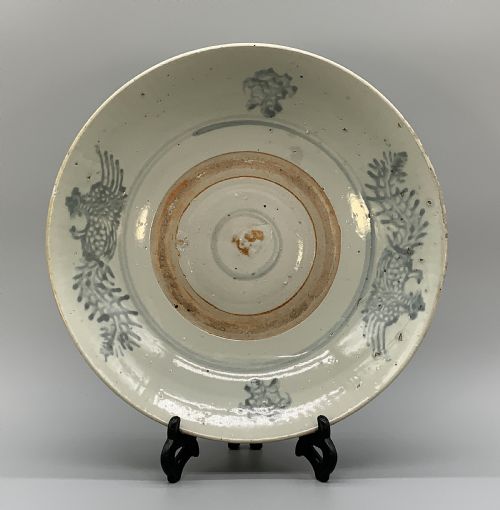


Chinese Ceramic Charger Dish
A chinese ceramic charger dish brings scale, hand-painted cobalt and enamel decoration, and centuries of kiln tradition directly to a room.
Chinese Ceramic Charger Dish
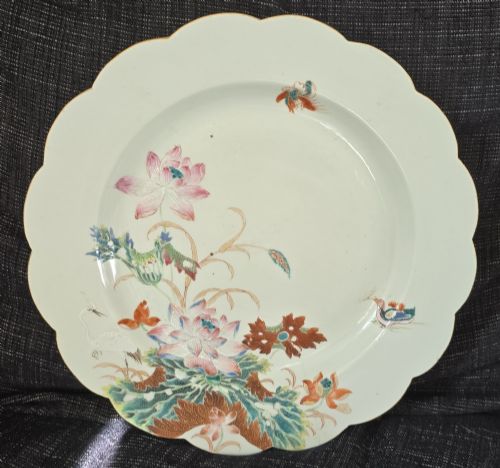
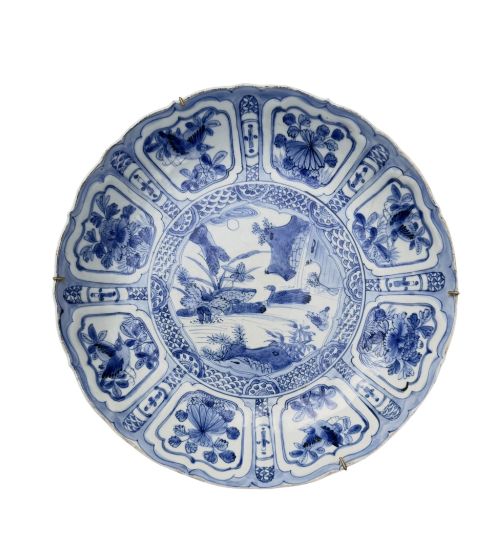
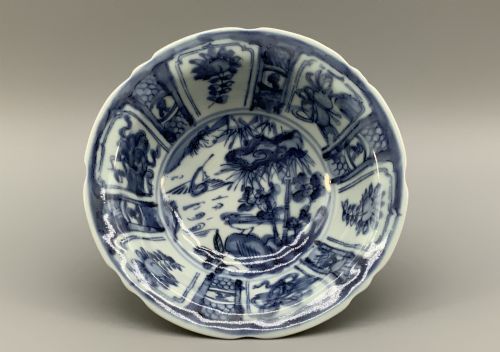
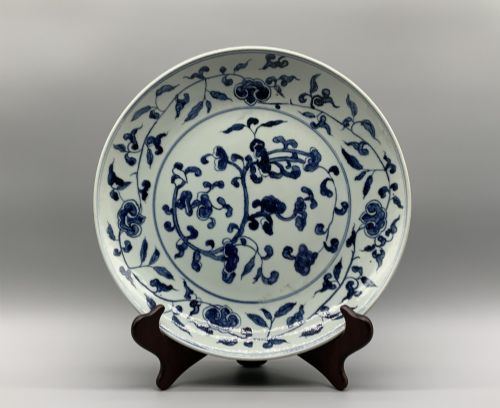
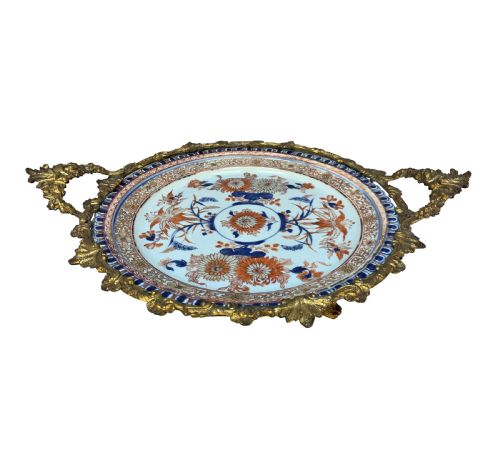
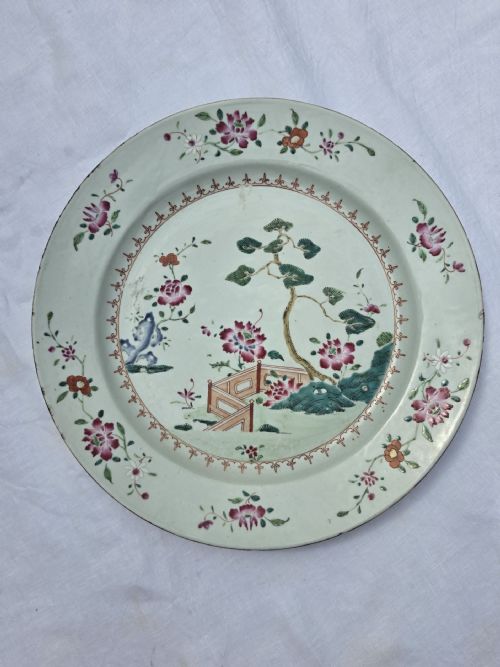
A chinese ceramic charger dish encompasses large circular serving plates and broad display platters intended for formal presentation rather than everyday dining. These pieces range from substantial Ming Dynasty Swatow wares and Kangxi blue and white chargers to Qianlong and Canton Famille Rose export porcelain.
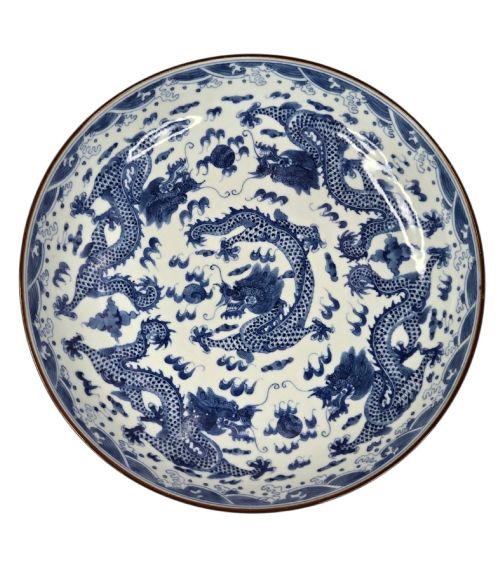
The selections span several centuries, reaching from sixteenth-century Kraak porcelains to nineteenth-century Qing Dynasty dragon chargers and armorial plates. Collectors encounter both deep dishes and wide, flat platters featuring foliate rims, barbed edges, and lobed contours.
Kiln Methods and Decoration
Makers shaped hard-paste porcelain and ceramic bodies before applying cobalt underglaze pigments, enamels, and occasional gold leaf details. Artisans hand-painted intricate motifs including dragons, court scenes, floral scrolls, and armorial bearings prior to high-temperature firing.
Certain pieces incorporate moulded relief decoration on the ceramic body beneath the glaze, creating textured surfaces that catch the light. Techniques evolved from sixteenth-century Kraak formatting to vibrant nineteenth-century iron-red, gilt, and Famille Rose palettes.
Listings span from the sixteenth-century Ming Dynasty to the nineteenth-century Qing Dynasty, featuring porcelain, enamel, and celadon glazes.
Distinctions in Execution and Age
The division between standard domestic ware and imperial commission lies in the crispness of the hand-painted brushwork, the depth and brilliance of the cobalt or enamel colours, and the precision of the potting. Imperial pieces and marked period examples display superior control over kiln temperature and pigment saturation.
Age and provenance further differentiate the pieces, with sixteenth-century Wanli items and seventeenth-century Kangxi productions carrying distinct historical weight compared to later nineteenth-century interpretations and European adaptations.
The Chinese Ceramic Charger Dish Glossary
- Charger
- A large decorative plate or platter, typically exceeding thirty centimetres in diameter, used historically for formal presentation. These vessels anchor table settings and display surfaces.
- Kraak porcelain
- A type of Chinese export porcelain produced mainly during the Wanli period, characterised by panelled border designs and central motifs of birds, flowers, or landscapes. The style proved immensely popular across Europe.
- Famille Rose
- A palette of opaque enamel colours introduced in the eighteenth century, dominated by pink or rose tones derived from colloidal gold. This palette allowed for nuanced shading in floral and figural compositions.
- Celadon
- A term for ceramics featuring a pale green jade-like glaze, achieved through an iron-oxide mixture fired in a reducing kiln. Longquan kilns specialised in this tactile, thick glaze.
- Armorial porcelain
- Custom-ordered Chinese export porcelain painted with European family crests, coats of arms, or initials. Wealthy merchant families commissioned these services through trading companies.
Chinese Ceramic Charger Dish: Frequently Asked Questions
How are chinese ceramic charger dishes displayed?
These large plates rest securely on specialist wire wall hangers or sturdy plate stands on furniture surfaces. Their broad diameters make them natural focal points in a dining room or hallway.
Because the decoration covers the face and often the reverse, positioning them where adequate light hits the glaze brings out the cobalt underglaze or enamel details.
What defines a Kangxi period charger?
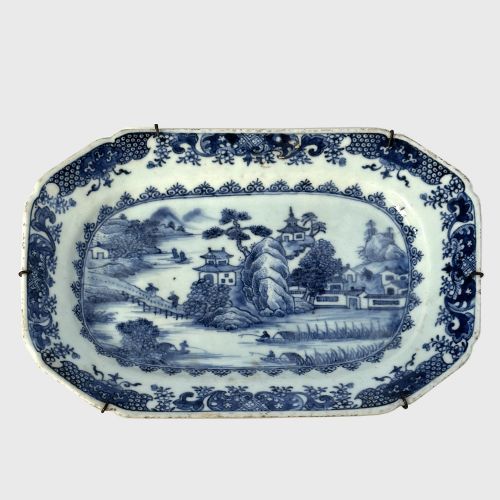
Dishes from the Kangxi reign exhibit vibrant cobalt blue tones under brilliant white porcelain glazes, often featuring dynamic landscape or botanical scenes. The foot rims are typically finely finished.
Marked examples may bear six-character Kangxi reign marks or auspicious symbols on the base, though many fine export pieces carry only art symbols or empty concentric rings.
What is Chinese export porcelain?
This category covers ceramics manufactured in China specifically for overseas markets in Europe and the Middle East from the sixteenth century onwards. The forms and patterns frequently catered to Western tastes.
Export wares include armorial services, Famille Rose platters, and Kraak dishes ordered through maritime trading companies.
How do celadon dishes differ from blue and white?
Celadon pieces rely on a thick, translucent green or grey-green glaze over a heavy ceramic or porcelain body, often featuring carved or moulded floral relief. Blue and white pieces depend on painted cobalt pigment beneath a clear glaze.
While blue and white highlights graphic contrast, celadon focuses on subtle colour and tactile glaze depth.