
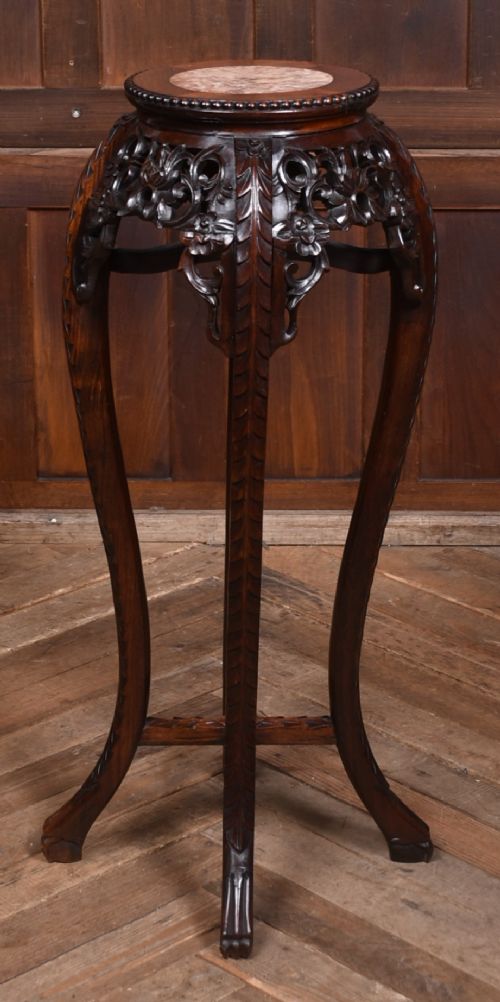


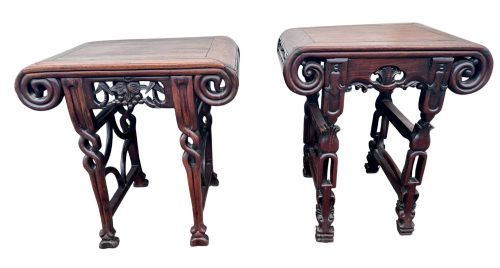


Chinese Carved Wooden Pedestal
A chinese carved wooden pedestal lifts a pot or vase to eye level, bringing weight and balance to a room.
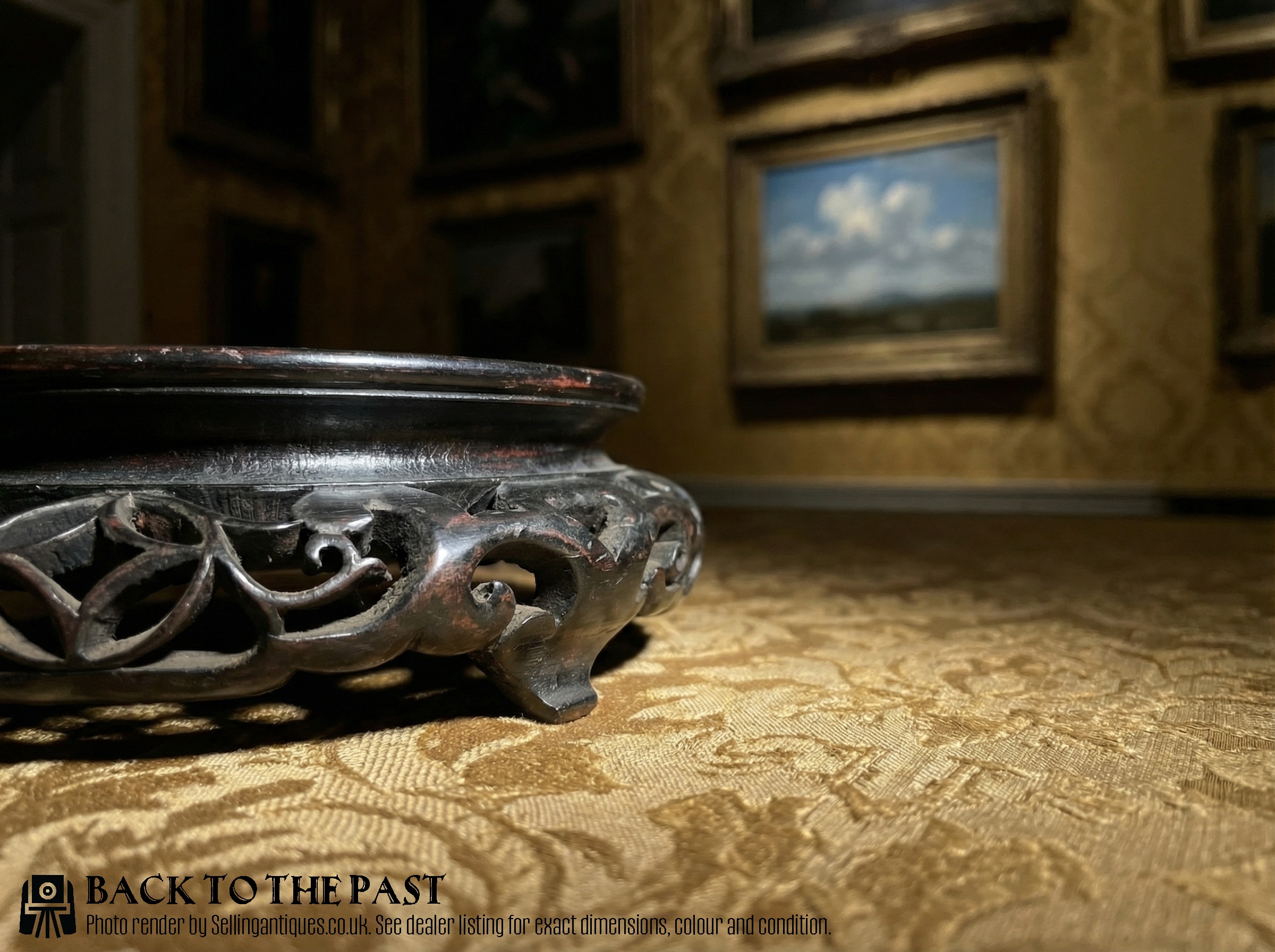
Chinese Carved Wooden Pedestal
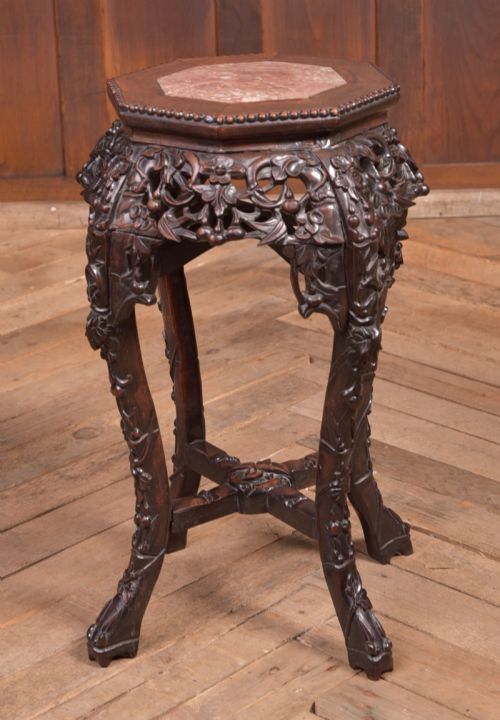
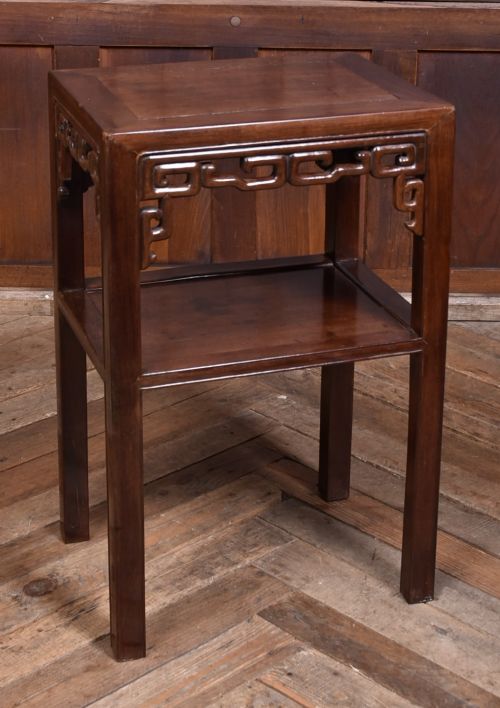
A chinese carved wooden pedestal takes the form of a plant stand, jardiniere table or torchère, designed to display decorative objects in the interior. Most examples on this page date from the nineteenth century or the early twentieth century, spanning late Qing Dynasty production down to the early decades of the twentieth century.
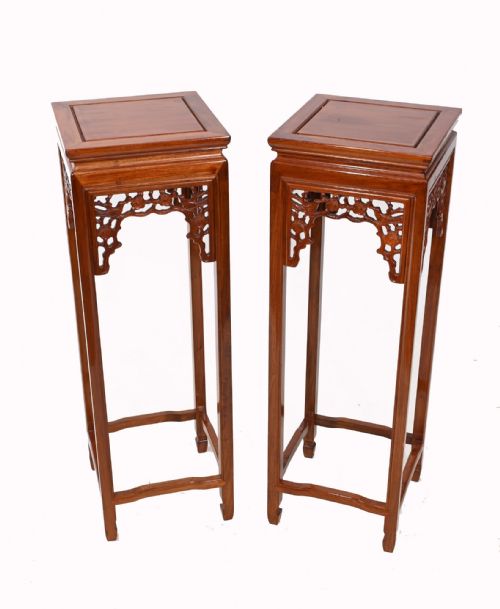
The primary shapes are tall column stands and low plant holders, often fitted with circular or multi-lobed tops. Makers fashioned these pieces to support heavy ceramic vessels, bronze urns or marble planters without tipping.
The origins lie in traditional Chinese furniture workshops, alongside export pieces made for Western domestic interiors. Collectors meet matching pairs as well as single stands carved from dense tropical timbers.
How they were made
Makers utilised dense timbers such as rosewood, hongmu, padouk, huali and teak, selected for weight and strength. These hardwoods take a sharp edge under chisel work, allowing deep relief carving of floral motifs, dragons and scrolling foliage.
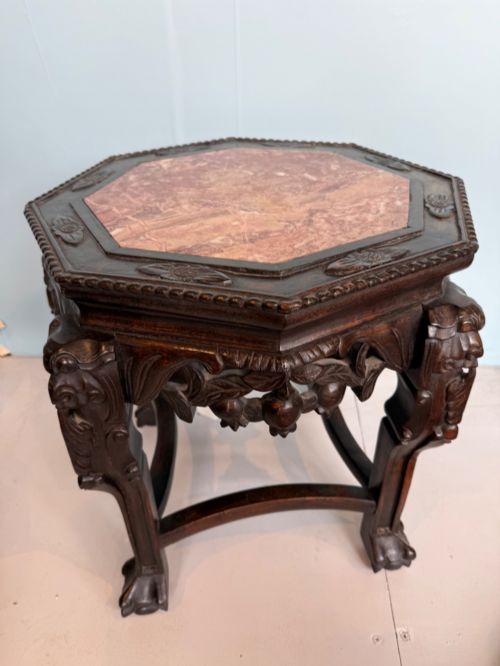
Many stands incorporate inset marble or rouge marble panels within the wooden top to provide a cool, flat surface for damp plant pots. Joinery relies on traditional interlocking frames and pegged joints rather than modern metal fixings.
What varies in quality
Depth and crispness of the hand carving separate standard commercial stands from finer examples. Superior pieces display undercut foliage and expressive figures where every petal and scale remains distinct.
Selection of the timber grain and the stability of the joinery dictate the standing quality. Heavier, well-seasoned hardwoods resist warping and maintain a solid stance under heavy marble tops and large ceramic urns.
The Chinese Carved Wooden Pedestal Glossary
- Jardiniere stand
- A tall table or pedestal specifically built to hold a ceramic plant container. These pieces often feature water-resistant marble inserts.
- Torchère
- A tall standing support or pedestal designed to hold a lamp or candleholder. The form elevates light sources above seated eye level.
- Hongmu
- A traditional Chinese term for dense red hardwoods. The timber supports intricate, deep-relief carving without splintering.
- Marble inset
- A stone slab fitted flush into the wooden top of a stand. This detail prevents water damage from potted plants.
- Qing Dynasty
- The final imperial dynasty of China, lasting from sixteen hundred and forty-four to nineteen hundred and twelve. Most nineteenth-century export furniture falls within this period.
Chinese Carved Wooden Pedestal: Frequently Asked Questions
What is a chinese carved wooden pedestal used for?
These stands serve to elevate heavy ceramic vases, bronze vessels and potted plants to a prominent height within a room. They function as focal points in corners or beside seating.
The sturdy construction handles substantial weight, making them practical tables for lamps or decorative ornaments.
How do I date a nineteenth century stand?
Dating relies on timber choice, carving style and the construction methods visible underneath the top frame. Nineteenth-century pieces typically show heavier tropical hardwoods and hand-cut joinery.
Comparing the decorative motifs to Qing Dynasty ornament patterns helps narrow the decade of production.
How do I care for antique rosewood furniture?
Keep the wood away from direct heat sources and rapid temperature shifts to prevent timber shrinkage and split joints. Dust regularly with a dry cloth.
Applying a traditional wax polish occasionally maintains the natural sheen of dense tropical hardwoods.