



Carved Wooden Display Base
A carved wooden display base elevates a cherished object, giving height and focus to ceramics, bronzes, and natural specimens.
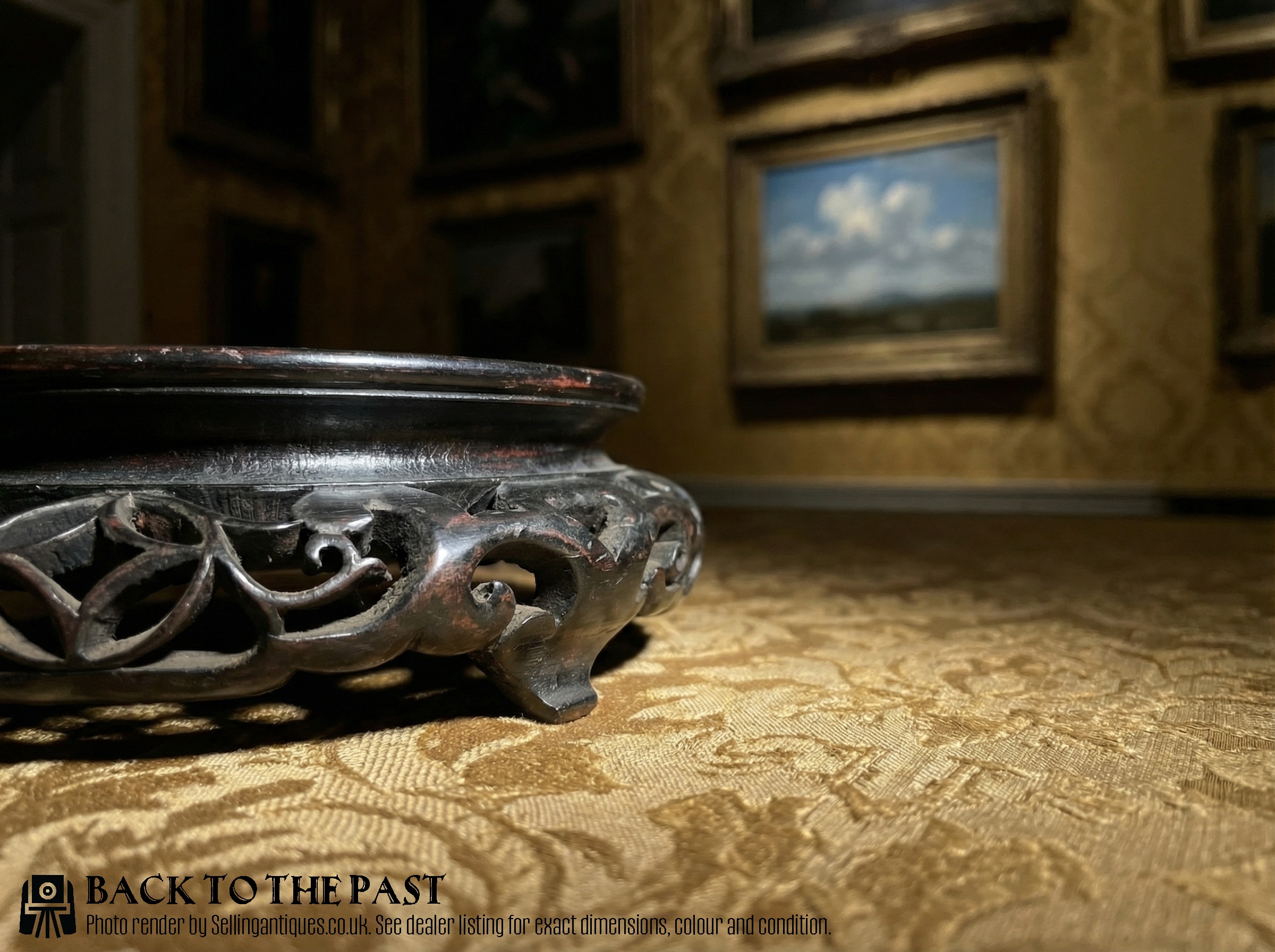
Carved Wooden Display Base
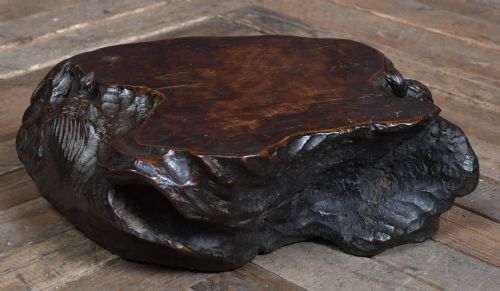
A carved wooden display base serves to support and frame smaller decorative items, raising them above surface level to command attention. When searching for a carved wooden display base, buyers encounter items ranging from compact nineteenth-century bonsai stands to grander plant stands and pedestals.
The materials span mahogany, oak, walnut, and sycamore, often echoing the dominant timber of the period in which they were made. Origins stretch from English country workshops to Japanese Meiji period studios, reflecting diverse regional carving traditions.
Forms vary from simple round platforms to elaborate stands incorporating marine motifs, animal carvings, or architectural columns. Each piece was designed specifically to complement the proportions of the object it originally held.
How they were made
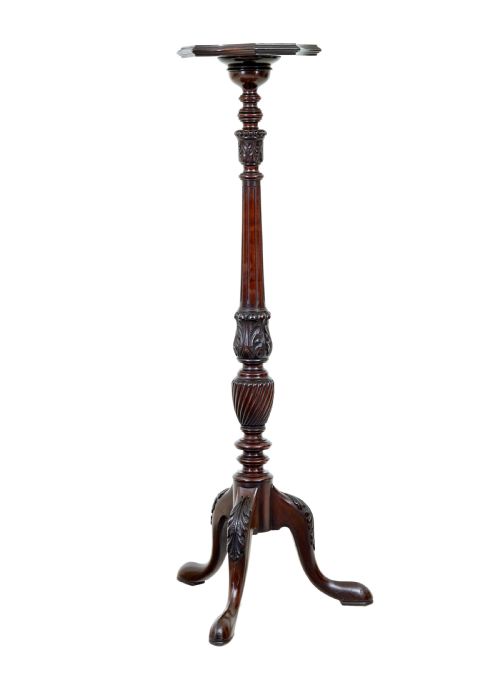
Carvers shaped these stands using dense timbers such as mahogany, walnut, and oak, which allowed for crisp detail without splintering. Hand-carving tools such as gouges and chisels created the undercut foliage, rope twists, and figural elements seen across the selection.
Surfaces received various finishes, including French polish or wax, to protect the wood and highlight the natural grain patterns. Structural joints were typically pegged, dowered, or neatly tenoned to ensure stability under heavy decorative objects.
Object forms range from traditional plant stands and torcheres to specialised bonsai stands and decorative carved platforms.
What varies in quality
Depth and crispness of the carving separate standard turned items from superior sculptural works, where every leaf or edge retains sharp definition. The choice of timber also dictates the tier, with figured flame mahogany or dense old-growth walnut commanding greater respect.
Proportion and structural integrity define the upper tier, ensuring the stand remains perfectly balanced even when supporting heavy marble or ceramic pieces. Original surface patination, untouched by modern stripping, marks out an example that has aged gracefully.
The Carved Wooden Display Base Glossary
- Torchere
- A tall, slender stand designed to hold a light, plant, or decorative ornament. They often feature carved columns and circular tops.
- Patina
- The surface sheen and colour developed by wood through age, handling, and regular polishing. It provides a visual record of the piece's history.
- Flame mahogany
- A distinct timber cut characterised by a rippling, flame-like grain pattern. Cabinet makers reserved this veneer for the most prominent surfaces.
Carved Wooden Display Base: Frequently Asked Questions
What fits on a display base?
These stands suit bronzes, ceramics, models, and natural specimens like minerals or bonsai trees. The key is matching the weight and footprint of the object to the platform.
Larger plant stands or torcheres accommodate heavier planters and urns, while smaller carved bases highlight tabletop curiosities.
How do I date a wooden stand?
Dating relies on timber choice, tool marks, and stylistic clues from periods such as the Georgian, Victorian, or Arts and Crafts eras. Earlier pieces often display hand-sawn timber and simpler joinery techniques.
Comparing the decorative motifs, such as rope twists or naturalistic foliage, against established period styles clarifies the timeline.
Where should I place a pedestal?
Tall torcheres and pedestals work best in corners, hallways, or flanking doorways where they draw the eye upward without obstructing movement. Ensure the floor is level so taller, narrower stands remain completely stable.
Smaller display bases sit comfortably on desks, sideboards, or mantels to give cabinet objects greater prominence.
How do I care for antique wood?
Maintain the finish by dusting with a soft, dry cloth and applying occasional coats of traditional beeswax to nourish the timber. Avoid placing wooden stands near direct heat sources or in strong sunlight, which can dry out the grain.
Keeping the environment stable prevents the wood from warping or shrinking over time.