






Chinese Carved Splat Armchair
A chinese carved splat armchair brings robust structural timber and traditional Oriental seating design into a room with striking presence.
Chinese Carved Splat Armchair
A chinese carved splat armchair is a substantial seating form seen across the nineteenth century, the Victorian era, the Edwardian period, and into the nineteen thirties. These chairs appear in several distinct styles including Qing Dynasty, traditional Chinese, and oriental designs.
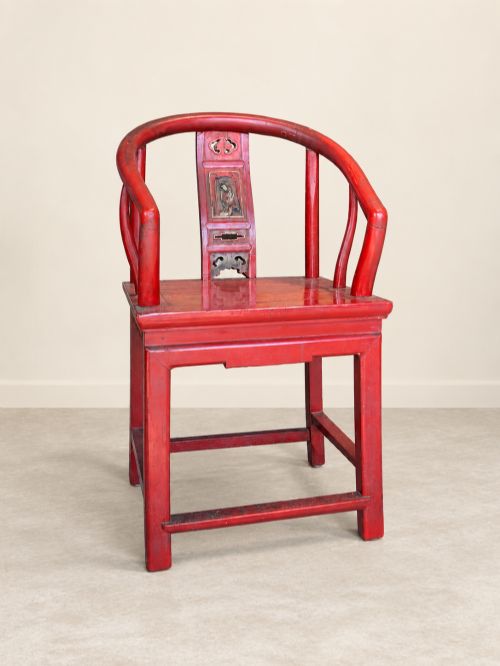
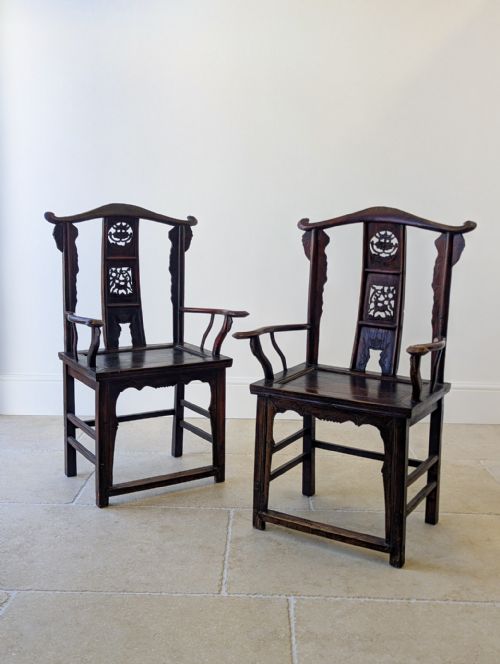
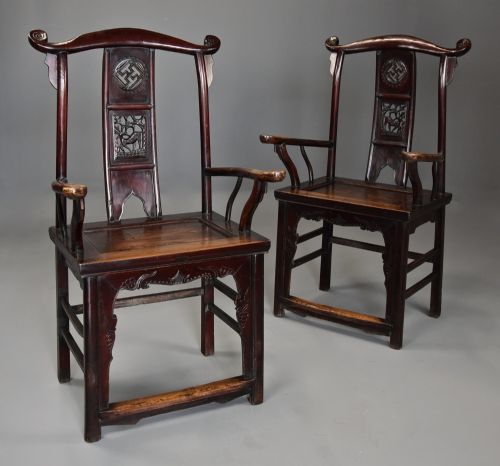
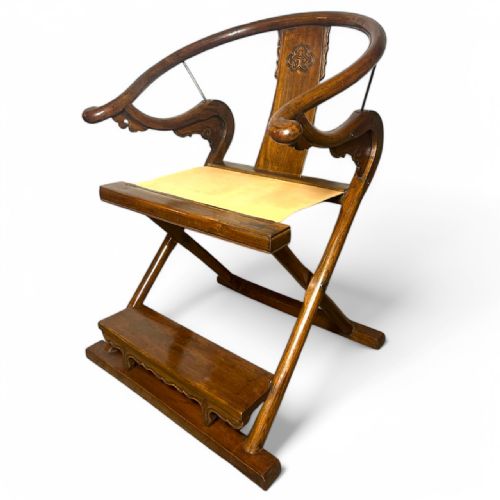
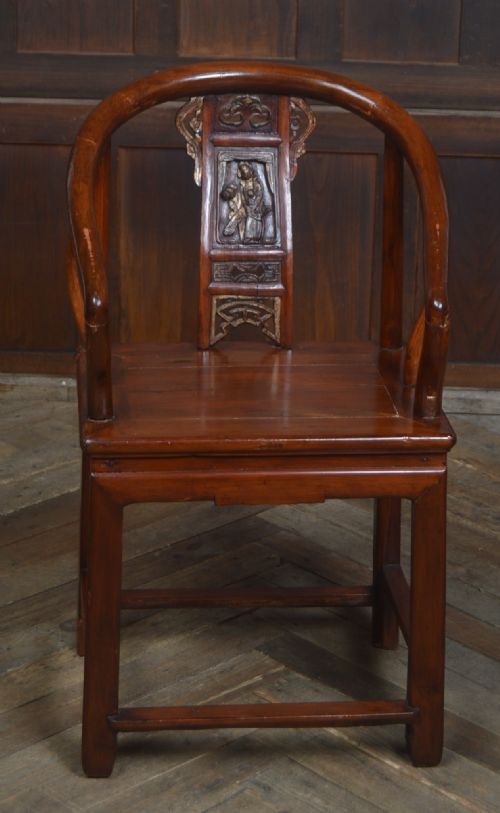
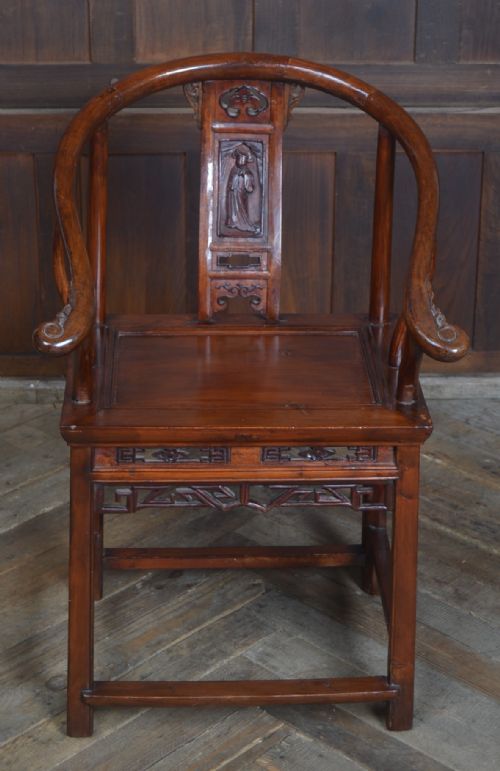
The most common examples on this page are yoke-back armchairs, scholars chairs, horse shoe hall benches, and folding horseshoe-back throne chairs. These pieces originate from distinct periods such as eighteen seventy, eighteen eighty, eighteen ninety, nineteen twenty, and nineteen thirty, alongside general nineteenth-century production.
Buyers encounter individual chairs as well as matched pairs and seating sets. The forms draw on classic Chinese woodworking traditions adapted for domestic halls and reception spaces.
Materials and Construction
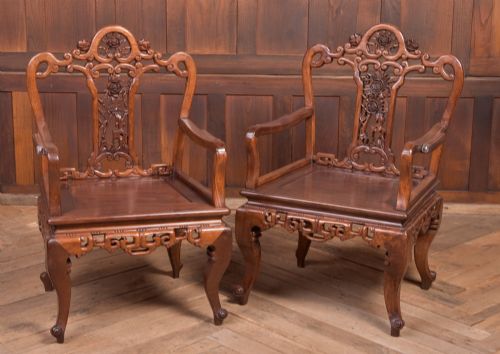
Makers construct these chairs primarily from elm and various dense hardwoods, often selecting rosewood for finer examples. Elm appears frequently in nineteenth-century yoke-back and scholars chairs, valued for its durable grain and structural resilience.
Surface treatments play a vital role in the finish, with examples featuring red lacquer, black lacquer, or polished hardwood surfaces. Cane seating inserts also appear alongside solid wooden panels, adding texture and variation to the construction.
Materials recorded across the current selection include elm, rosewood, hard woods, cane, and red lacquer.
Assessing Quality and Execution
Quality rests upon the depth and crispness of the carved splat and the integrity of the timber joinery. Finer pieces display a rich original patina on the elm or hardwood, whereas lesser examples show heavy restoration or muted surface detail.
The preservation of original red or black lacquer coatings distinguishes superior items from those with stripped or heavily retouched surfaces. Structural balance in the arms, yoke, and horseshoe frames further separates standard production from exceptional examples.
The Chinese Carved Splat Armchair Glossary
- Splat
- The vertical wooden strip down the centre of a chair back, often carved with traditional motifs in these seating forms.
- Yoke-back
- A chair back style featuring a top rail curved to resemble an ancient Chinese yoke, sometimes called a scholars chair.
- Horseshoe-back
- A continuous semicircular rail forming both the arms and the upper back of the chair, sweeping down from a central crest.
- Patina
- The surface sheen and texture developed on wood and lacquer through age and use over decades.
- Lacquer
- A durable glossy finish applied in multiple layers to wood, frequently seen in red or black on Oriental seating.
Chinese Carved Splat Armchair: Frequently Asked Questions
How do I care for lacquered wood?
Lacquered surfaces require protection from direct sunlight and sustained moisture to prevent cracking or lifting.
Dust gently with a soft dry cloth and avoid harsh chemical polishes that can damage the historical finish.
Are these chairs comfortable for daily use?
Traditional Chinese armchairs were built for upright seating rather than lounging, offering firm support through wooden seats or cane panels.
Many owners add simple custom cushions if they plan to sit for extended periods.
How do I identify a Qing Dynasty piece?
Qing Dynasty pieces exhibit traditional joinery techniques, specific hardwood or elm timbers, and historical surface wear consistent with nineteenth-century production.
Stylistic markers like carved splats and horseshoe rails help link them to this extended dynastic period.